
Duygu is a music programming and booking consultant, ethnomusicologist, and curator from Istanbul, Türkiye, currently based in Southern Aegean. With a background in Ethnomusicology and International Relations, she has spent nearly a decade working across festivals, cultural platforms, and radio, shaping how music is experienced and understood across borders.
In this interview, Duygu discussed her journey from being a jazz vocalist to becoming a curator. She emphasized the power of music to challenge existing systems and highlighted the importance of inclusive representation in global music circuits. Additionally, she shared insights into her multidisciplinary work and her vision for integrating music, politics, and education.
To start, could you tell us a little about yourself? Who is Duygu, how did your journey in music begin, and what’s one interesting fact about you that people might not know?
I’m a music professional from Istanbul with a background in Ethnomusicology and International Relations. I’ve spent nearly a decade working across festivals, venues, and cultural platforms; curating programs and radio shows, connecting artists and professionals, and exploring how music travels between cultures. My journey began as a jazz vocalist; I later became a radio host and expanded into programming major venues and festivals such as Zorlu Performing Arts Center, Sónar Istanbul, and Babylon. An interesting fact about me: I now live in a village in the Southern Aegean with my partner, where we grow our own herbs and vegetables and share our land with dogs, cats, and chickens.
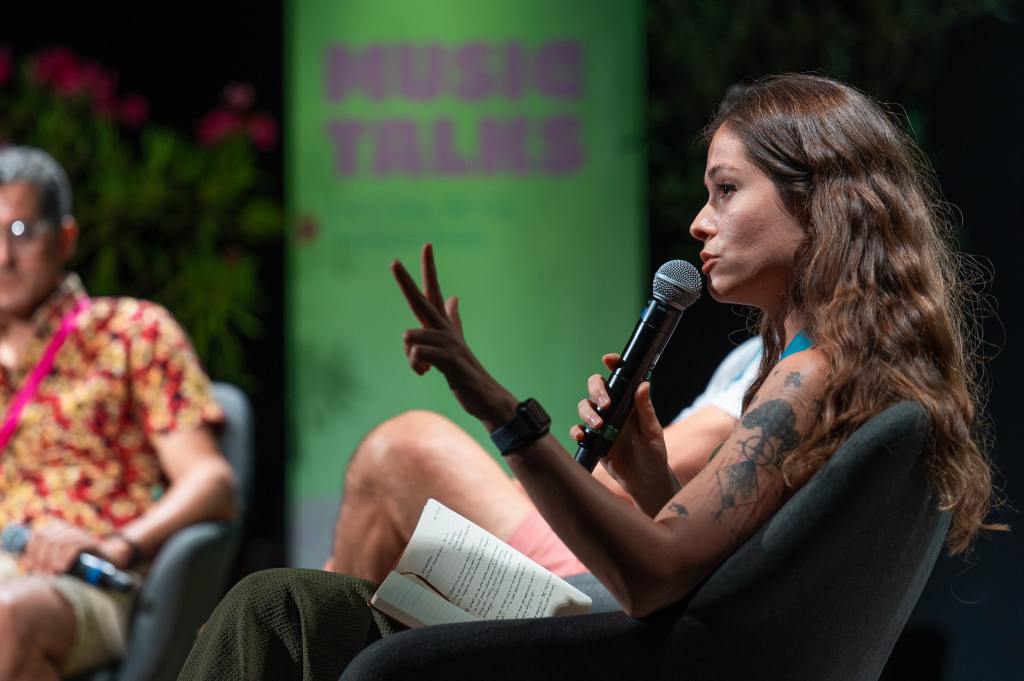
In one of your recent videos, you’ve spoken about the music industry’s orientalist framing of cultures. How can music be a tool to rethink and challenge these stereotypes, particularly around the Balkans and the Mediterranean?
Music can do what borders and contemporary politics cannot, it connects. The Balkans and the Mediterranean have long been viewed through orientalist and exotic lenses, often simplified into clichés. But when you listen closely, these regions reveal complex layers of influence, migration, and shared histories across cultures and civilizations. By amplifying artists who reclaim their narratives and by creating exchange-driven, non-hierarchical platforms, music can challenge these stereotypes and replace them with genuine dialogue.
Looking at today’s global music circuits, what changes do you think are needed for the industry to genuinely embrace cultural richness—without reducing it to tokenism or exoticism?
We need more decision-makers of all ages who come from the cultures being represented. Real inclusion isn’t about adding another “world music” slot or stage—it’s about who gets to curate, contextualize, and define what’s heard. The industry must move from showcasing difference for the Anglo-Saxon ear to sustaining true exchange between cultures. That means fair budgets, infrastructure, and equal visibility for artists and professionals from so-called “other” regions.
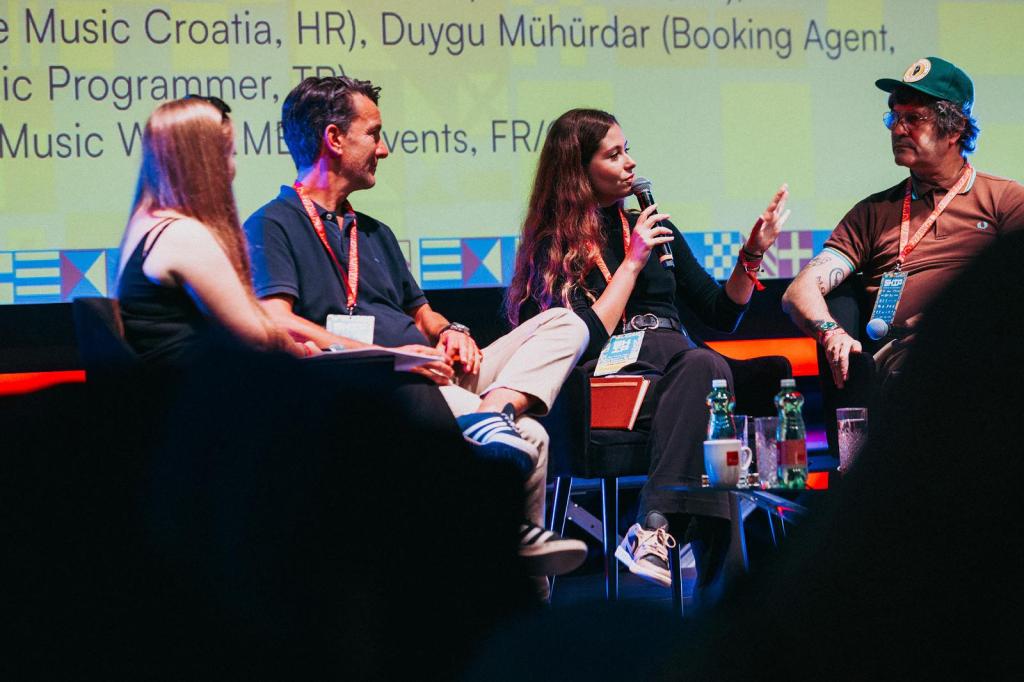
Where do you see the biggest opportunities for young musicians from Türkiye and the wider region to break into international music circuits?
Independent showcase festivals, cross-border residencies, and digital collaborations are now opening doors faster than conventional industry routes. European listeners are more interested than ever in regional voices with distinctive artistic visions. I believe the key is not to “fit in,” but to stay rooted, bringing authenticity instead of adaptation, and creating work that speaks from where you stand rather than to what buyers expect.
You work across multiple fields, editing, music-making, art, programming, and consultancy. What inspires you to move between these worlds, and how do they inform one another?
I see them all as extensions of storytelling. Whether I’m curating a lineup, writing about music, or leading workshops, I’m essentially trying to translate sound into context. My background in ethnomusicology helps me read the social layers of sound; my programming work turns that understanding into experiences for varying audiences; and my writing connects those experiences back to meaning. I’m forever inspired by curiosity and by an instinctive need to understand music from every angle.
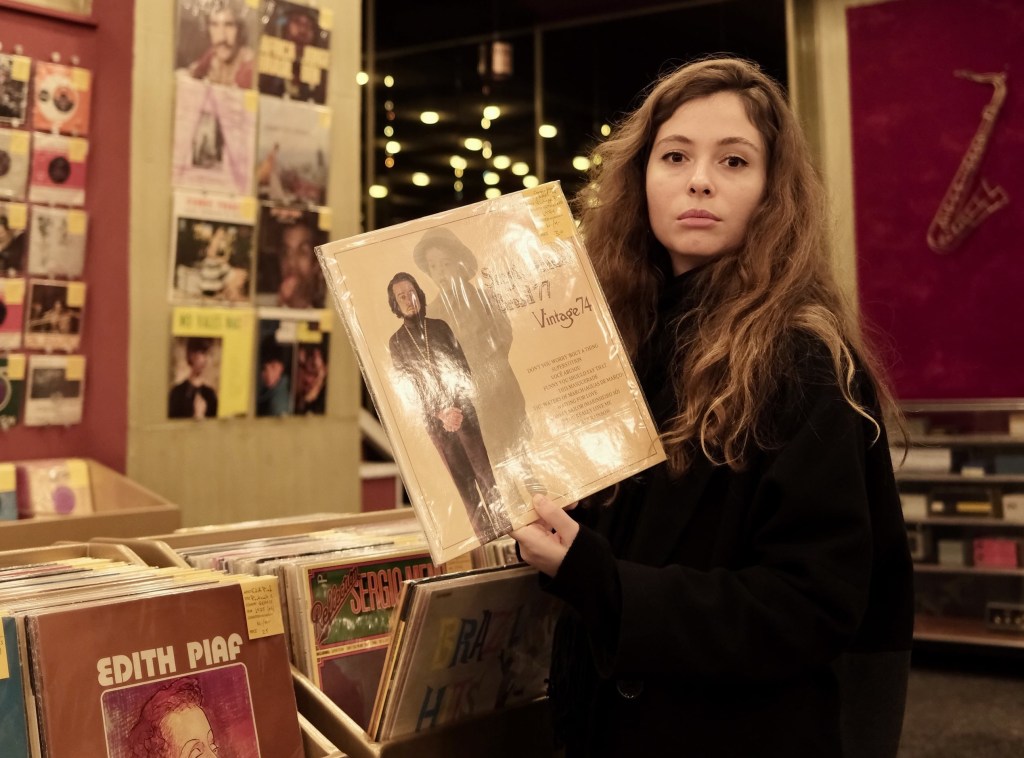
Could you share a bit about your upcoming projects? What are you most excited about right now?
We’re currently working on the second season of my YouTube show “Duyduk mu?”. Recently, I’ve been focusing more on knowledge brokering and curatorial work, developing connections that bridge music, politics, and cultural narratives. I’m also exploring ways to bring my professional experience into academia through lectures and educational programs on live music, programming, and cultural management. I’m most excited about the upcoming international teaching projects, which will be announced in the coming months.
Having moved between journalism, radio, music, and consultancy, what advice would you give to young people interested in pursuing such a multidisciplinary path?
Don’t try to fit into one box, forget the idea of a box altogether. You don’t have to follow a single path. Each field you try, if you have the determination and energy of course, teaches you a different rhythm, and together they create your unique voice. Stay curious, collaborate across disciplines, and remember that authenticity will always travel farther than trends.
 Mediterranean Commune*