
Tashattot is a socio-cultural collective founded in 2022. Based in Belgium, it brings together artists and cultural practitioners from the SWANA region who have been displaced or are currently navigating life in Europe. The collective was initiated to respond to the isolation and fragmentation many artists face after migration. Its core purpose is to create a supportive network and platform for collaboration, dialogue, and visibility.
Through residencies, exhibitions, concerts, workshops, and public discussions, Tashattot supports artists in continuing their practices and connecting with local and international scenes. Tashattot, meaning “dispersion” in Arabic, reflects both the realities of forced movement and the potential of scattered voices coming together to form a shared creative space.
In this interview, the founding members of Tashattot discuss the collective’s origins, mission, and journey since its establishment in 2022, and highlight the importance of solidarity and shared artistic practices in overcoming isolation and fragmentation.
To begin, please tell us a little bit about yourself, your background, personal interests, and how the founding members came together to create Tashattot. What was the decision-making process like when you first launched the collective?
We are Charbel Alkhoury, a visual artist, Rami Moukarzel, a multidisciplinary artist, and Gaëlle Khalife, a production manager. Born and raised in Lebanon, we carried our practices and identities with us when moving to Belgium between 2020 and 2021.
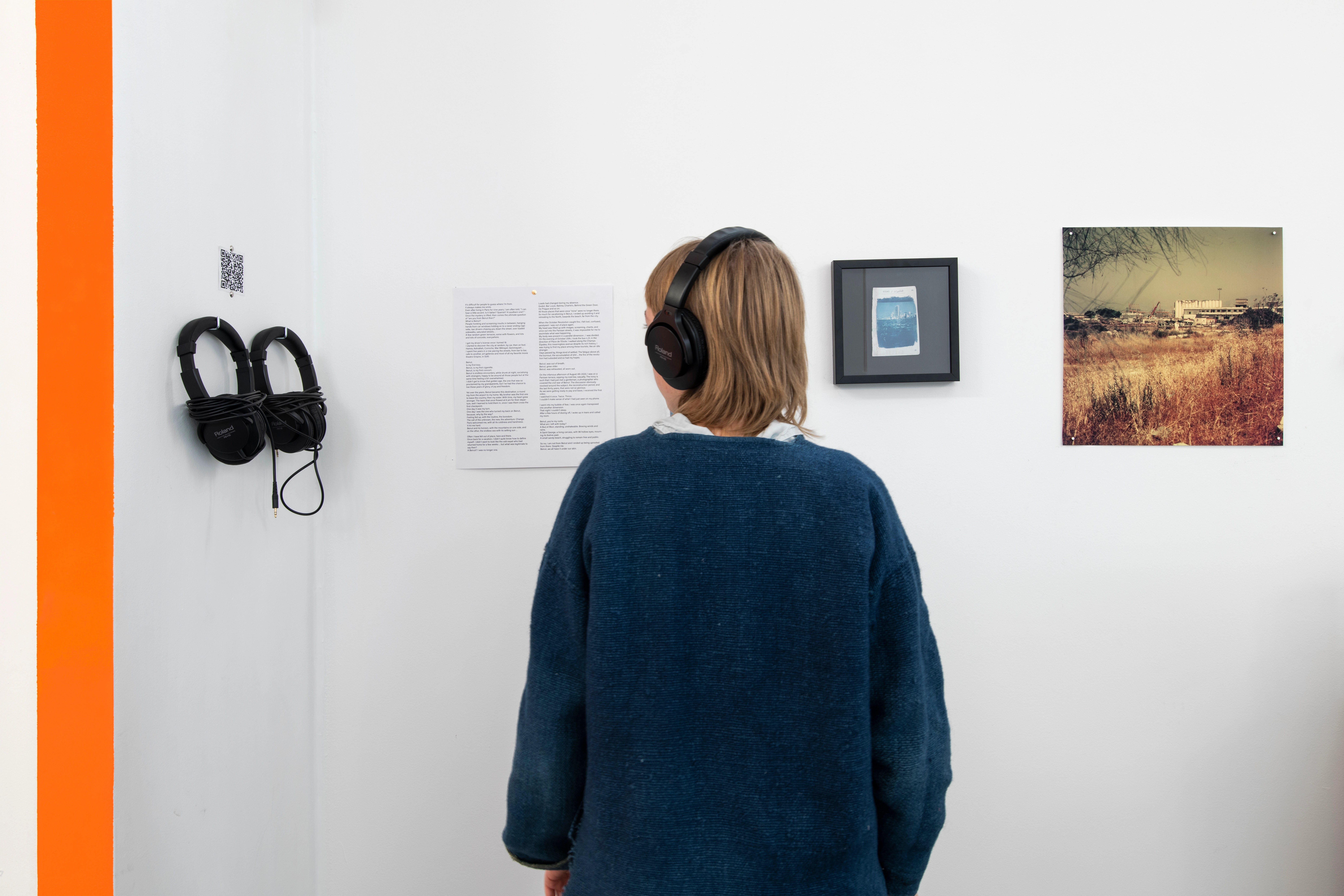
Arriving here meant starting over, without networks and without community. Conversations about displacement, identity, and longing naturally drew us together. In 2022, sparked by an exhibition invitation, Tashattot came to life as a collective effort to bring together scattered voices into a shared space. Our first project, an exhibition showing the works of 13 Arab artists based in Europe, set the tone of building bridges between lived experiences of exile and new cultural landscapes.
What does collective creation mean to you? Why do you think it is important, and how do you navigate the challenges of working across borders, cultures, and institutions as a dispersed collective?
For us, collective creation means survival. Tashattot was never imposed; it emerged from a shared desire to stand with others walking a similar path. Together we brainstorm, imagine, and work tirelessly to make projects happen. The process restores a sense of identity continuity, our roots feel alive through the community. Despite financial and logistical barriers, we extend our reach across borders, creating a European network of SWANA artists. Each collaboration reinforces our belief in solidarity as an artistic method.
We have created a database feature on our website which invites SWANA artists based in Europe to fill out their information if they would like us to reach out to them in case we have a project that could fit their profile. Many artists have newly signed up and we are always happy to include more in the database!
How do you approach working with partners, whether cultural institutions, other collectives, or local communities? And on a practical level, how do you go about securing funding and supporting projects?
Partnerships often begin organically: through conversations at events, chance encounters, or direct outreach. We introduce Tashattot with openness, proposing collaborations that place artists at the center. Most of our projects follow a shared model: the partner institution provides space and funding, while we curate, coordinate, and ensure the voices of artists are heard. This balance keeps the process sustainable and collaborative.
Looking back, what have been some of the most memorable or transformative experiences for Tashattot so far?
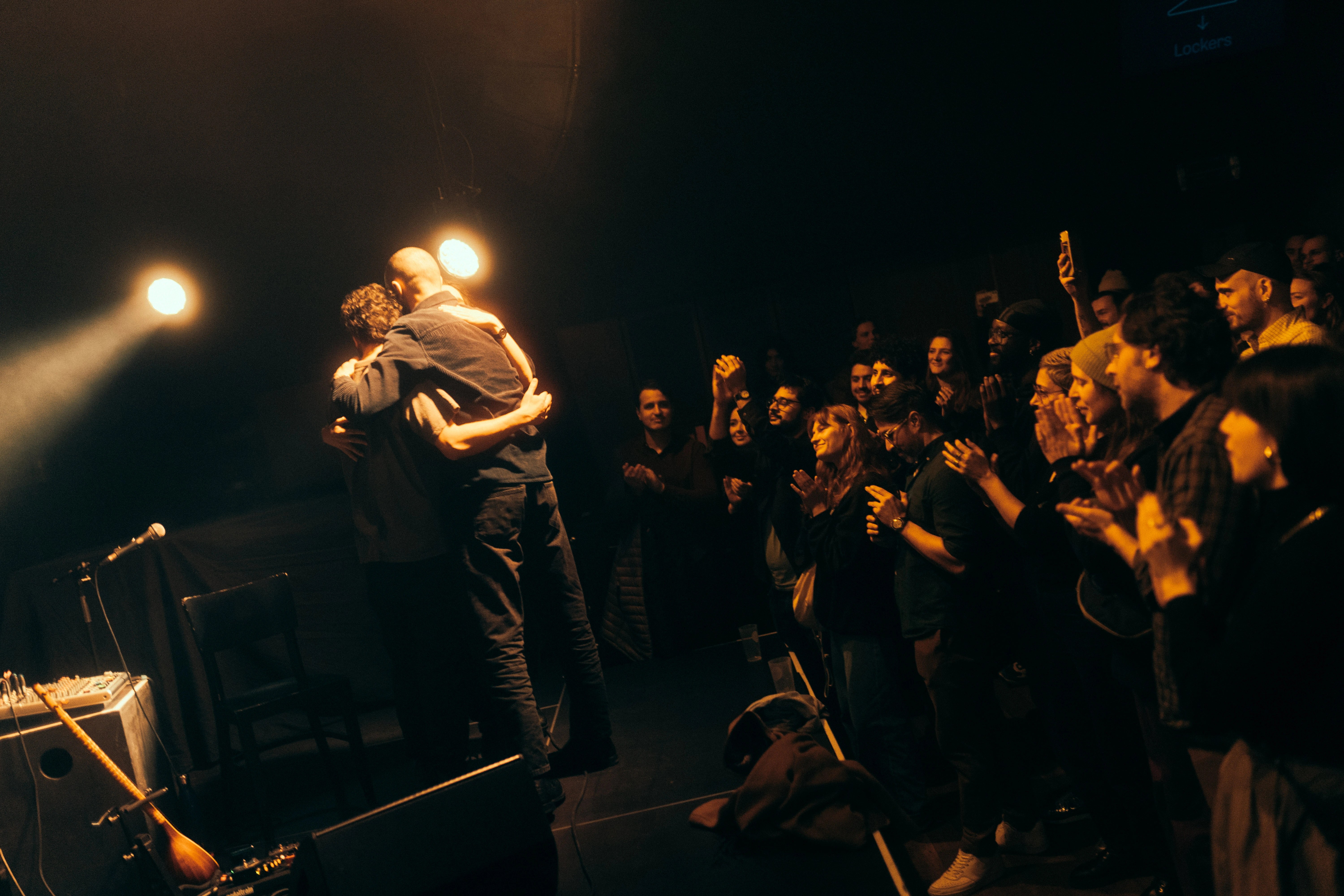
Our first exhibition in 2022 remains unforgettable: thirteen Arab artists and multiple performers gathered under one roof, reclaiming visibility and community. Another transformative milestone was the Sonic Sessions music residency in 2024-2025, where three musicians composed together for two months and performed live at Ancienne Belgique. This residency was a nice success and we are currently working on the second edition!
We are proud of all of our projects, they’re all shared in detail on our website!
What upcoming projects, collaborations, or experiments are you most excited about?
The months ahead are full of anticipation: Akram Hajj’s live music performance at Gula Gula Festival, a talk on Food and Memory with Sabine Boghossian and Kinan Mansour at FAME Festival, and a film screening at Pilar with the Setting the Table initiative. Beyond these, we prepare the second edition of Sonic Sessions, a photography exhibition at FOMU in Antwerp, and more projects that are still being developed.
In your view, how does being “dispersed” influence the way you think, create, and connect as artists?
Being dispersed does indeed affect the way we connect with artists. Dispersion shapes everything we do. Distance forces us to think across borders, to map where artists live, and to imagine how to bring them together despite geography. In Lebanon, our community was close; here, it is scattered across Europe. That distance has made us more intentional, more deliberate in building bridges.
What advice would you share with emerging SWANA artists or collectives who are also trying to build space and visibility in Europe?
We do not claim to have all the answers; we are still searching ourselves. But one lesson we hold is to keep reaching out. Collaboration is often the door that opens new worlds. Not every attempt will lead to a project, but each attempt will create a connection. Visibility is built together, never alone.
Finally, how do you imagine the future of Tashattot?
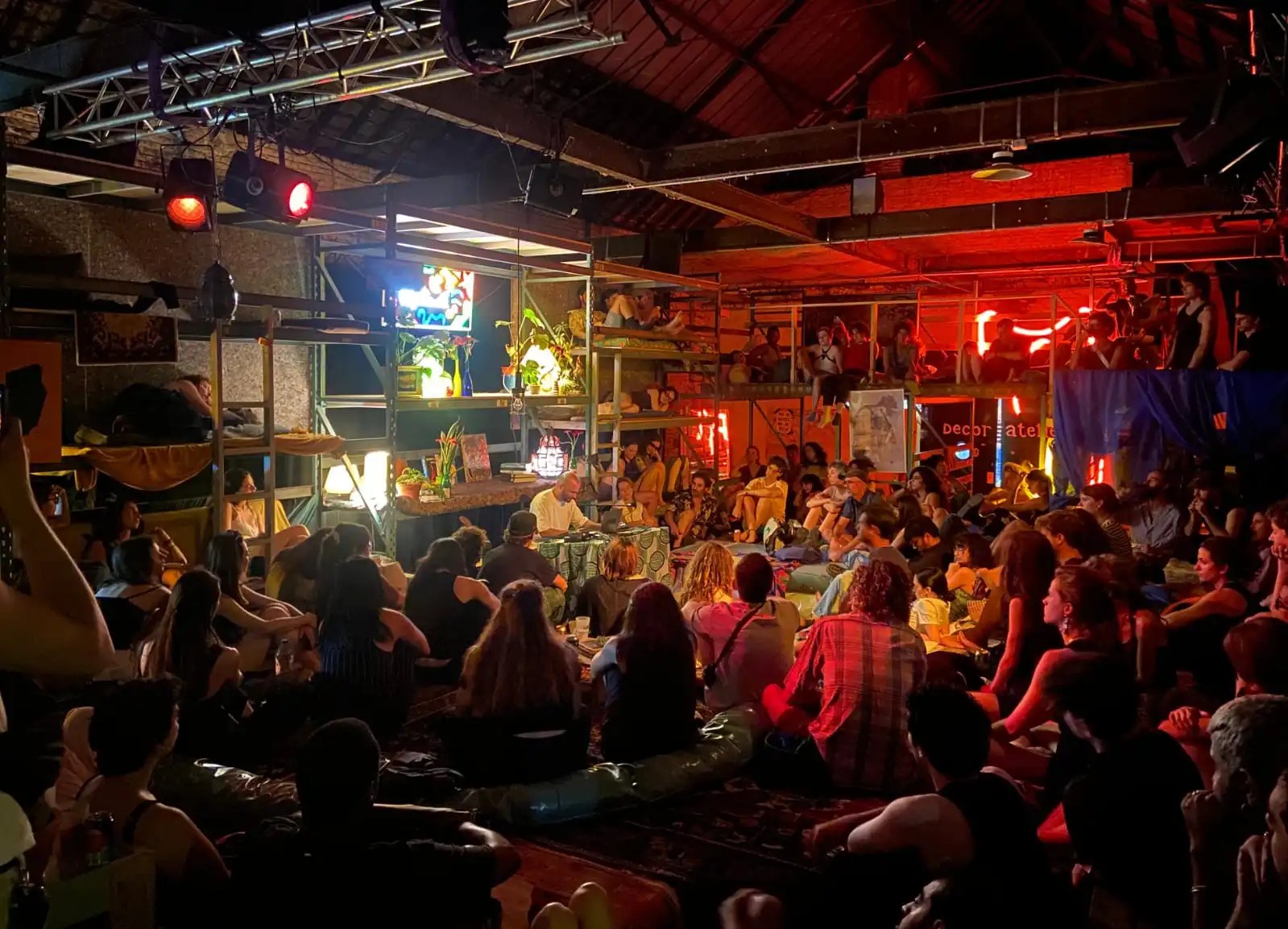
We imagine a future where Tashattot grows with stability: a team whose labor is sustained, a structure that can endure beyond individual capacities, projects that continue to connect artists across Europe. We dream of expanding our collaborations, curating bold new formats, and becoming a reference point for SWANA artists navigating life and practice in Europe. Yet our sustainability relies on support. We hope for the means to ensure Tashattot continues to evolve as a living platform for exchange, creation, and collective growth.
Take a look at their Instagram for more details!
 Mediterranean Commune*