
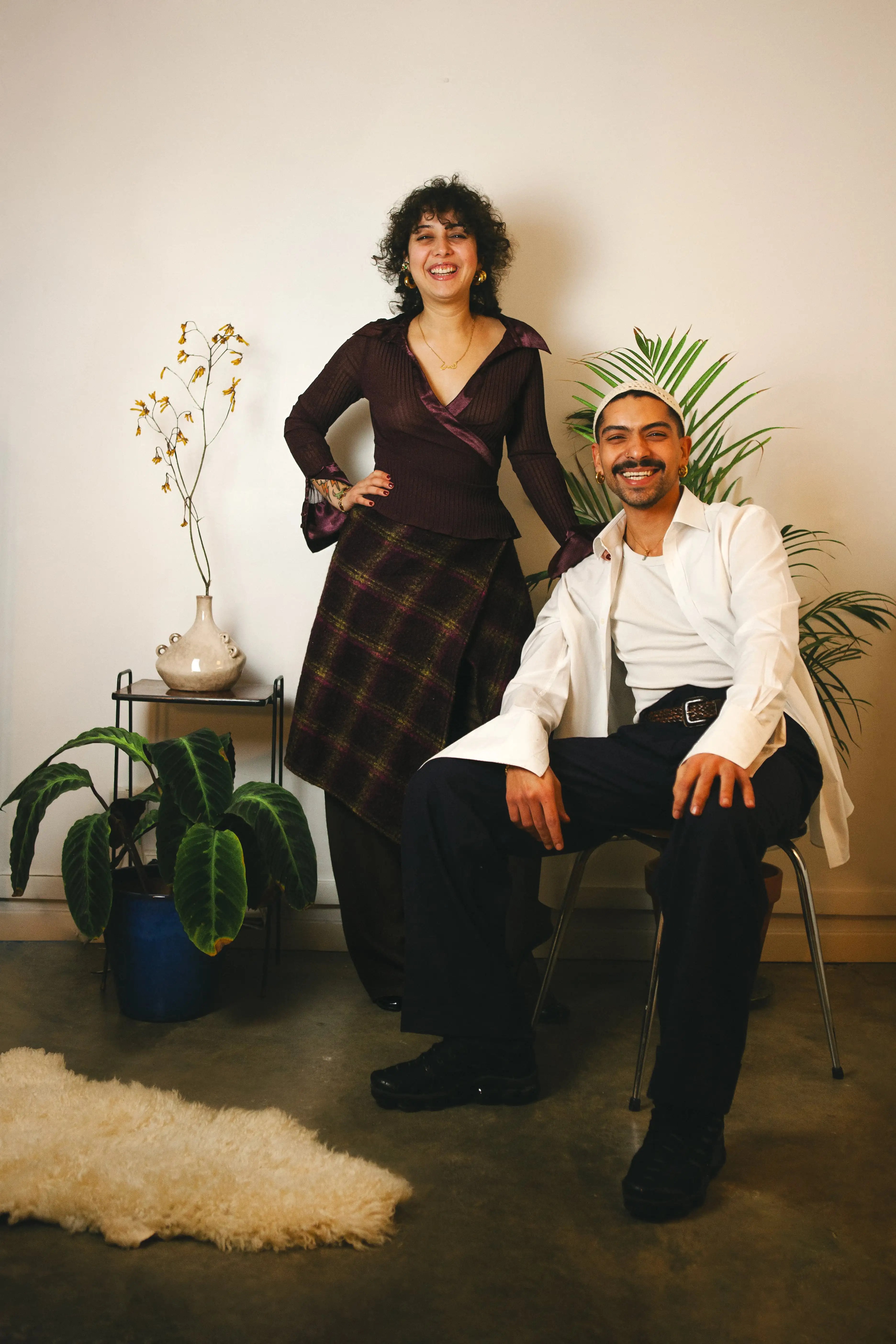
Uncivilized is a Marseille-based collective rooted in radical decentering, decolonial resistance, and the creation of alternative cultural infrastructures. Founded by Kmar Douagi and Amine Bejaoui, Uncivilized is more than a collective, it is a sanctuary for narratives often erased or co-opted by the Western cultural canon.
Kmar Douagi (b. 1996, Tunis) is a visual artist and photographer based in Marseille. Trained in product design and scenography in Paris and mentored by ENSP Arles in 2025, she works across image, sound, writing, and archives to explore fractured memories shaped by exile and colonial erasure. Through an aesthetic of the crack and the fragment, she creates counter-narratives that articulate both presence and absence. Her work has been shown in France and internationally (Off Festival – Les Rencontres d’Arles, Salon Polyptyque, Galerie AUROI, UNIDEE, Faber Llull) and featured in critical publications such as MyKali and Lusted Men. As co-founder of Uncivilized Collective, she roots her practice in radical decentering, reclaiming narratives through publishing, archiving, and transmission.
Amine Bejaoui is an independent Tunisian producer and coordinator. His work challenges dominant narratives through the lenses of spirituality and intersectional identities. His background spans cultural engineering, publishing, and production. Co-founder of the collective uncivilized, he explores decolonial practices and narratives from the Global South. He serves as strategic coordinator for Arabic Archive Design, an alliance dedicated to the reactivation and circulation of visual archives from the Arab world.
In this interview, the co-founders reflect on the urgency that gave rise to Uncivilized, born out of grief, disillusionment, and love in the wake of October 7th. The collective stands as a refusal to be “civilized” on colonial terms and a commitment to reclaiming erased narratives with dignity and rage. Operating without institutional support, they build spaces of resistance and care through publishing, performance, and collaborative creation. Uncivilized is both an act of defiance and a spiritual offering rooted in faith, solidarity, and radical imagination.
How did Uncivilized come into being? What experiences, needs, or conversations brought you together and made you feel this collective was necessary?
Uncivilized was born out of friendship, rage, and the deep need for a space that could hold us: emotionally, politically, and artistically. In the aftermath of October 7th, we found ourselves suffocated by the silences, complicities, and betrayals we witnessed in the Western art world. Being in Paris, we felt isolated and deeply disillusioned.
Most institutions and collectives remained silent or actively hostile to any form of solidarity with Palestine. We were grieving, angry, and desperate for a place that wouldn’t force us to choose between our values and our visibility. That’s when we decided to create Uncivilized; a collective built by and for people and individuals from the Global South, where our work is not tokenized, depoliticized, or reduced to its aesthetics. We wanted a space where our narratives, our struggles, and our ways of being could exist without needing to be translated, softened, or made digestible for Western institutions. A place that honors our politics, our anger, our joy, and our complexity. Uncivilized is our refusal to be civilized on someone else’s terms.
The name “Uncivilized” is bold and thought-provoking. What does it mean to you, and how does it reflect the values and vision you’re building together?
The name Uncivilized emerged as a direct response to the blatant racism we witnessed during the war in Ukraine. In Western media, Ukrainian refugees were described as “civilized,” unlike those fleeing wars and genocides in Syria, Palestine, Congo, or elsewhere. This moment violently highlighted the colonial hierarchy of whose lives are seen as worthy, grievable, and human.
So, many of us started ironically calling ourselves the Uncivilized Club; proudly embracing the label that the West projects onto us. Uncivilized became a word of resistance, a refusal to play along with the narratives that cast us as backward, barbaric, or disposable. But it goes even deeper. We are constantly painted as savages, as threats to Western “civilization” and yet, civilizations from the Global South, including Arab and Muslim civilizations, are some of the oldest and most foundational to world knowledge, philosophy, science, and art. These contributions have been erased, looted, or appropriated. It’s a way of saying: if your civilization requires our silence, our erasure, or our complicity, we want nothing to do with it. We are building something else, on our own terms.
Working as a collective can be both powerful and complex. What kinds of challenges have you faced along the way, and how do you support one another through them?
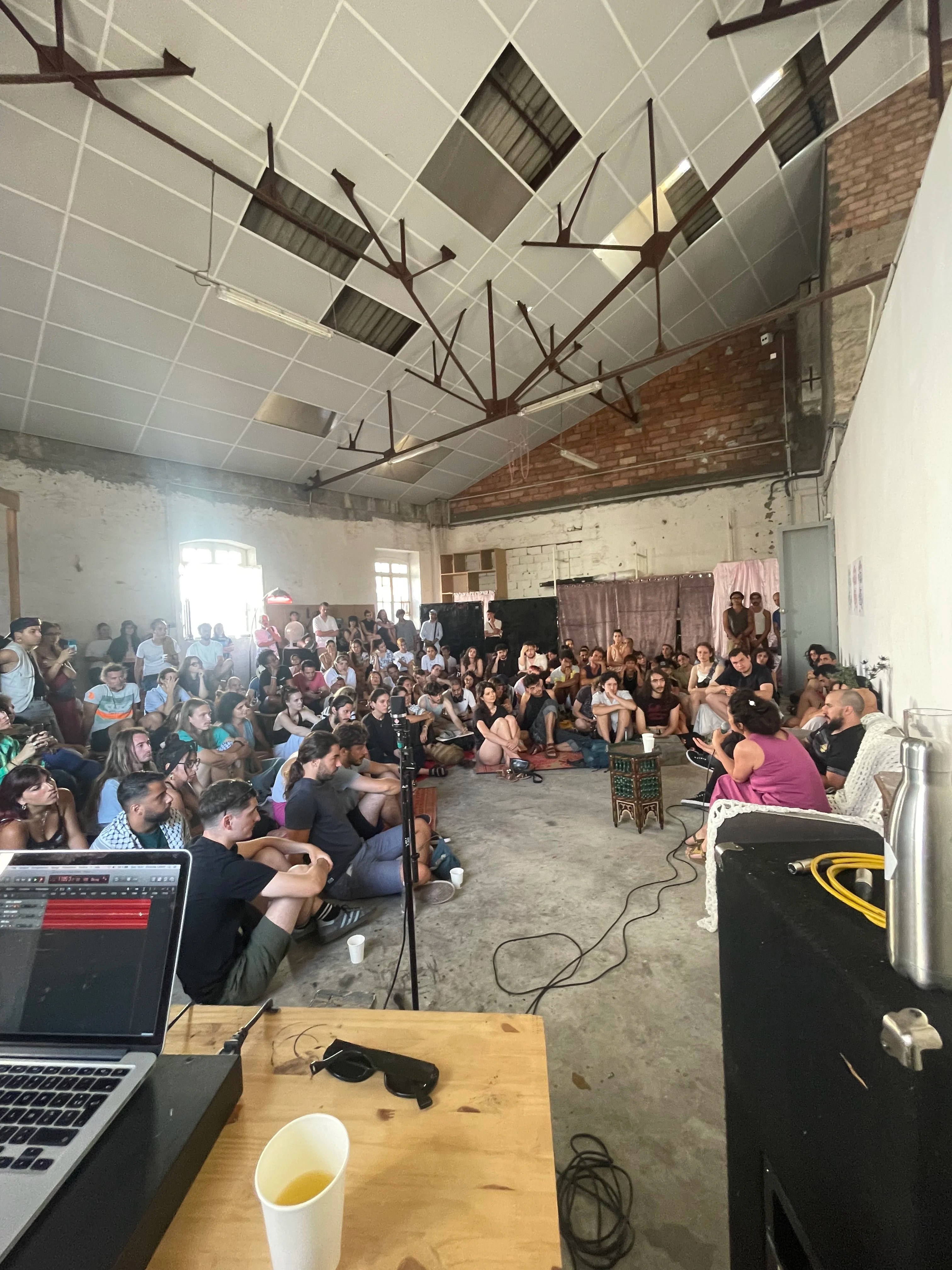
Working as a collective has been both a necessity and a real challenge. Since the beginning ( and still today) we haven’t received any financial support. It’s just the two of us holding everything together: the vision, the communication, the logistics, the writing, the events. That level of responsibility, with so little structural help, can be extremely draining. At first, it was difficult to let others in. We felt a strong need to protect the political and emotional core of the collective. Little by little, we began including other people and while some collaborations helped us grow and brought new energy, others made things feel unstable. That’s why we decided to remain two core members who shape the direction of the collective, and invite collaborators for specific missions or projects.
Our role is to create spaces that carry the voices of thinkers, artists, and individuals. In that sense, the collective is shaped by all those who take part in it. So we are here to set the context, hold the space, and facilitate what emerges. It’s a way of keeping our structure agile while still embracing collective energy. The biggest challenge remains the lack of funding. It’s exhausting to keep creating and organizing without any institutional or financial support. But every time we see the impact of our work; people feeling seen, heard, connected, it reminds us why we do this. That keeps us going. As for how we support each other: we hold space for one another’s fatigue. When one of us wants to give up, the other offers hope. We remind each other that what we’re building matters, and that our work is necessary. That mutual care ,along with the commitment to collective healing, is what sustains the collective.

Palestine is central to your collective’s message and mission. What role do you think artists and collectives can play in standing in solidarity for Palestine through creative action?
Supporting Palestine and being vocal about it is essential because it shows people that they are not alone in this struggle, and that standing with Palestine means being on the right side of history. Palestine is not only a specific geopolitical struggle. It is also a symbol of broader systems of oppression, of colonialism, racism, capitalism, and militarism. It awakens people to the violent structures we live under and often unknowingly sustain through our choices of comfort and compliance. It encourages others not to be afraid to speak out loudly and proudly.
Creative actions are also vital. Through art, we can raise awareness, build empathy, and mobilize resources. While fundraising is important, the most necessary and urgent role is to keep talking openly about armed resistance :what it represents in the Palestinian struggle, and to normalize this conversation. We want to help people understand that the fall of imperialism is what will truly liberate indigenous lands everywhere. Artists and collectives have a responsibility to contribute to this understanding by breaking silences, challenging dominant narratives, and standing firmly in solidarity.
In a world that often tries to silence or co-opt radical voices, how do you stay grounded in your purpose? What helps you stay connected to your values and each other?
Our connection to God reminds us of our community, and our community reminds us of its suffering: especially in Palestine. Whenever there’s an attempt to instrumentalize our work or silence our voices, we return to why we started in the first place. That clarity keeps us grounded.
Faith, community, and the bond we’ve built between us are what sustain us. Amine and I built this from scratch, and that shared foundation allows us to keep going, to keep growing, and to keep doing this work together, rooted in our values. Amine is family to me, not just in the figurative sense, but truly a member of my family. And like all deep family ties, that connection creates something unbreakable. Even when we each feel called to create in different places or directions, we always return to our core. Because that core is durable, indestructible, and fertile. It’s where things grow, and where things are protected. That’s what keeps us anchored.
Looking ahead, what are your hopes for Uncivilized? Are there any upcoming projects, ideas, or collaborations that you’re especially excited about?
Honestly, our biggest hope is to achieve sustainability and the mental space needed to fully dedicate ourselves to the collective. We want to create without the constant pressure of financial instability or the distraction of side jobs just to survive. We’re tired of creating in urgency and scarcity; we want to keep creating urgently, yes, because urgency is part of our fire, but not from a place of exhaustion or financial pressure.
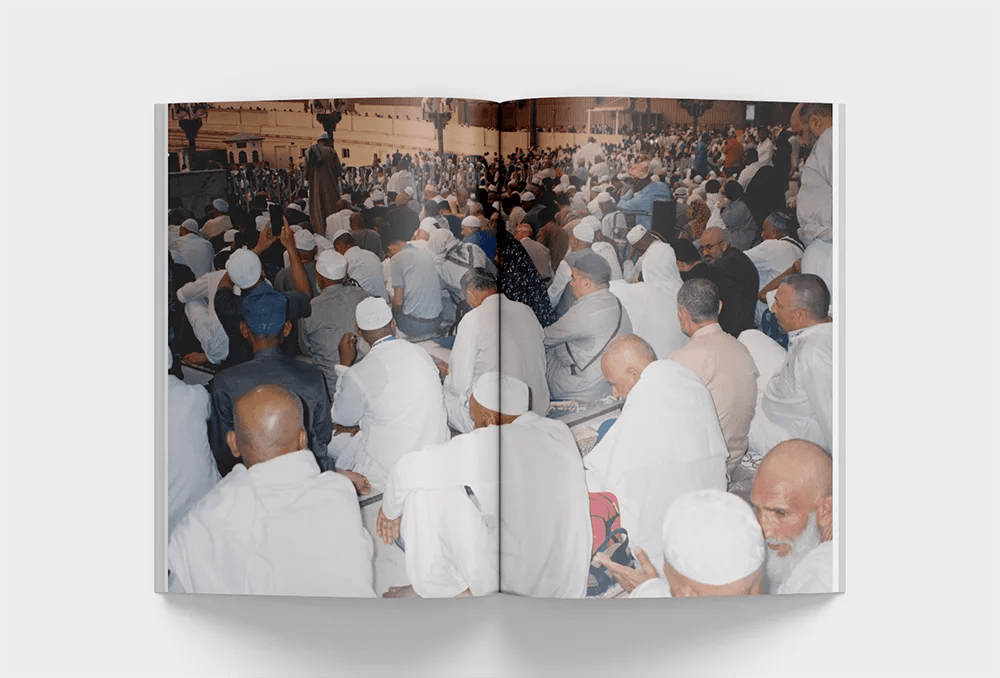
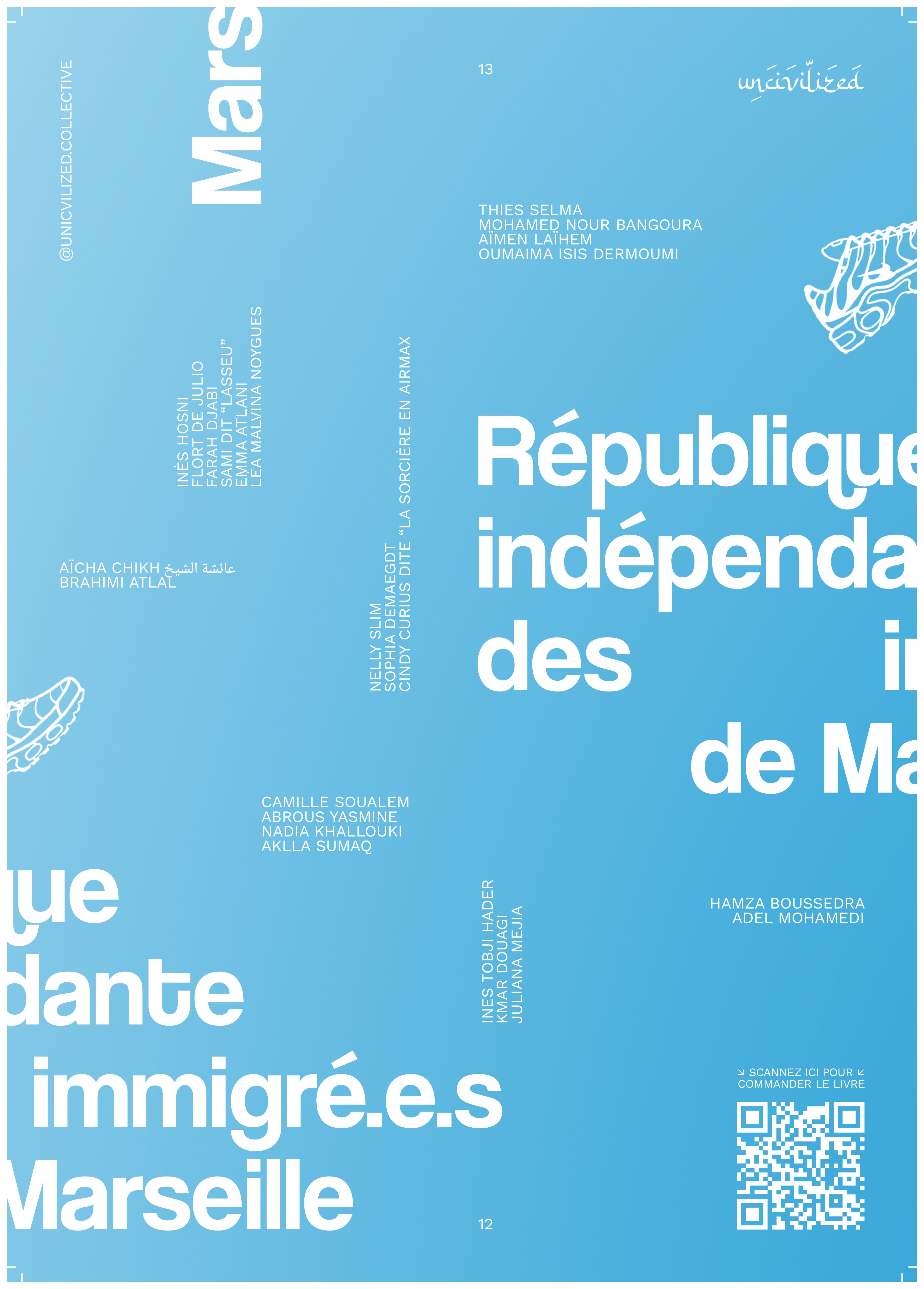
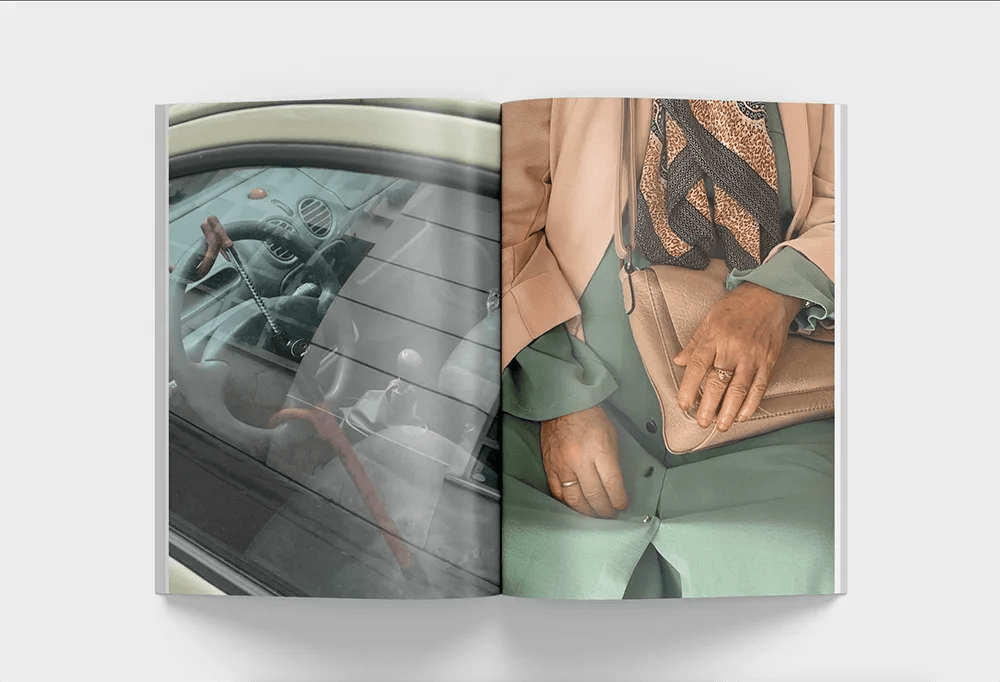
So, first of all, we wish ourselves money. Stability. Space to breathe and grow. Of course, we have many exciting projects coming up. Right now, we’re working on a writing workshop in collaboration with the collective Comme Nous Brûlons Littératures, which will lead to a new publication on the theme of shared pain. We’re really looking forward to seeing that book take shape. In September, we’ll finally publish République Indépendante des Immigré.e.s de Marseille, a collective book that means a lot to us, as well as the first edition of Uncivilized Review, themed ummah. We’re planning a full launch with an exhibition and performances; we can’t wait for people to experience it. And honestly, even with all of that, what excites us most is the unknown. What hasn’t arrived yet. What’s being prepared behind the scenes by the universe. God always has plans for us, and His plans are always better than ours. We’re constantly being surprised, in the best ways.
For others who want to build something similar, especially artists from the Global South, what advice would you offer? What lessons have you learned that might help others on a similar path?
I don’t know if we’re in a position to give advice, but if there’s one thing we’ve learned, it’s to choose carefully the people you build with. Make sure there’s a solid core; shared values, shared rage, shared dreams. Take time to think about how you do things, and don’t reproduce Western structures or dynamics just because they’re familiar or legitimized. Try to find the smartest, clearest ways to move collectively without burning yourselves out or creating unnecessary friction. Don’t silence yourselves or others. The work shouldn’t be done for exposure or consumption, but to build the spaces we once needed but couldn’t find, and to share the love and care we want to give each other. Understand that this work requires endurance. It might not feel easy or sustainable at first, but if you believe in it, it’s worth the breath.
One lesson we’ve learned the hard way is that we tried to do way too much from the beginning. And while we don’t really regret it, we’ve come to realize the importance of slowing down, doing things with care, and protecting our energy. Burnout is real, especially when you’re working without resources. And also: don’t trust institutions blindly. We were once approached by an institution (we won’t name them) that promised support, funding, visibility, all that.
But in the end, they backed away, calling our politics “too radical,” afraid we’d threaten their own funding. It was crushing at the time. We felt defeated, rejected, exhausted. But because we have each other, we kept going. We reminded ourselves that our energy is greater than their fear, and we won’t let violent institutions decide what’s possible for us.
For more, check out their website and Instagram.
 Mediterranean Commune*