
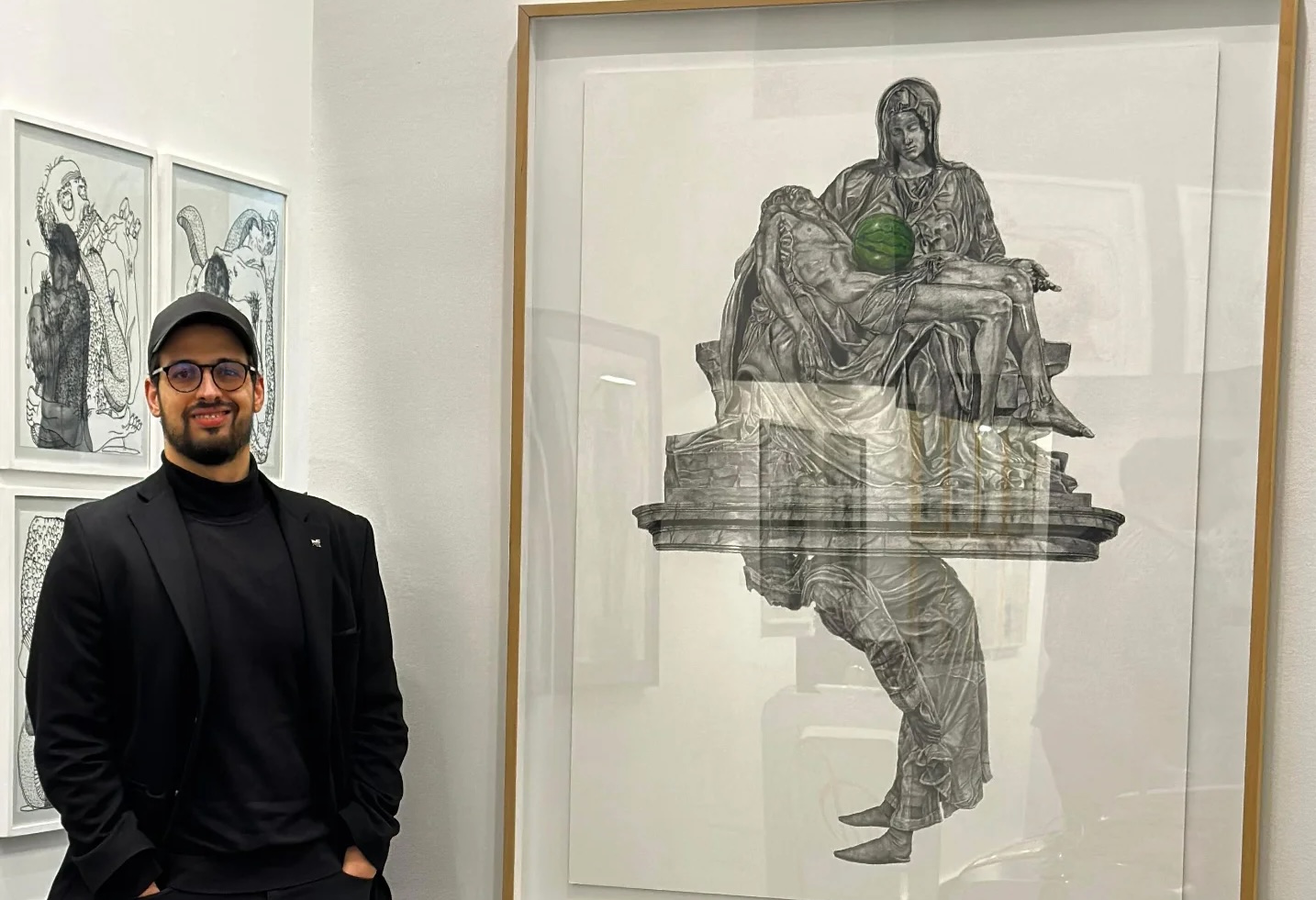
Malek Sordo is a multidisciplinary visual artist whose work bridges the personal and the philosophical, the intimate and the universal.
Born and based in Tetouan, Morocco, and currently active between Morocco and Spain, Sordo’s artistic journey is deeply rooted in memory, identity, and the quiet power of observation. With a calm, analytical nature and a lifelong passion for visual storytelling, his practice has evolved into a meditative exploration of self and society.
In this interview, he shared thoughtful reflections on his journey as an artist, the cultural influences that shaped his visual language, and the evolving relationship he has with his work. From his early fascination with cartoons and Egyptian cinema to his academic experiences in Morocco and Spain.
Let’s start with a simple introduction. How would you describe yourself in your own words? Where are you from, where are you based now, and what’s something unexpected or little-known about you that might surprise people?
It’s actually hard for me to describe myself, but I’d say I’m a silent, calm, and analytical person. I’m currently based in Tetouan, Morocco, and I’m a huge football fan.
Can you share a bit about your early life in Tetouan? What kinds of experiences or influences from your childhood do you think nudged you toward becoming a visual artist?
I was raised in a middle-class family. My uncle, who was also an artist, was actually my first reference and inspiration. But my early obsession with TV, especially cartoons and Egyptian cinema, was the foundation for my current visual expression.
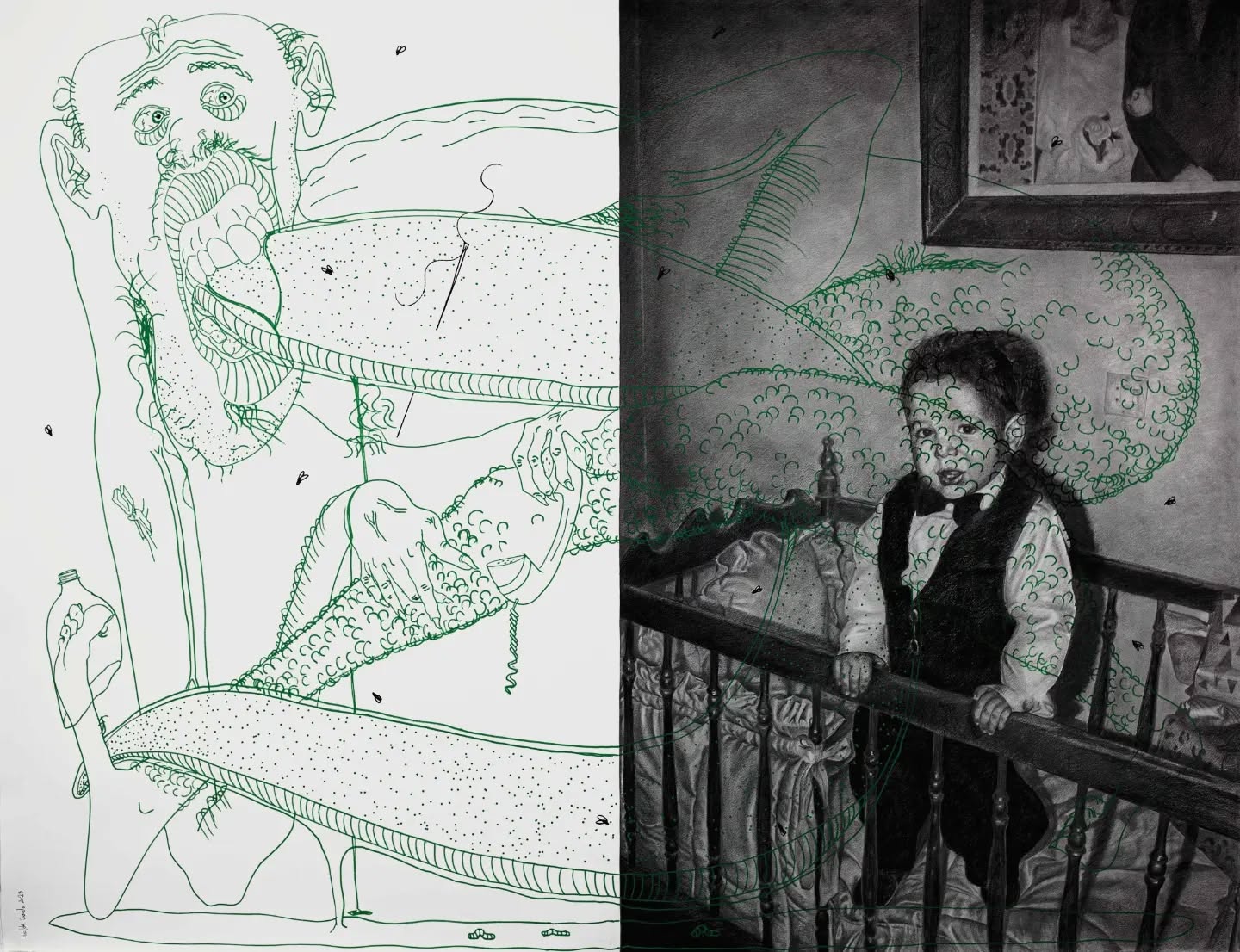
You’ve studied in both Morocco and Spain. How did those two environments shape you, not just as an artist, but as a thinker and a person? Were there any moments of contrast or connection that stood out?
Yes, I can say that studying in both Morocco and Spain shaped me, actually more as a person than as an artist. Over time, I stopped separating those two concepts. My residency at the Antonio Gala Foundation introduced me to some of my best friends—amazing artists and writers—and it was there that I decided to return to drawing as my primary visual language.
Your work often explores identity, memory, and discourse. How have these themes evolved for you over time? Are there new layers or meanings that have emerged as you’ve grown?
As I mentioned, TV was my first cultural source. But later, I started reading—history, philosophy, poetry—and accumulating experiences and perceptions, especially around art. So, discourse, memory, and identity became fascinating concepts to explore through my work. In that space, I become completely individualistic and a dreamer.
How would you describe your relationship with art today, compared to when you first started creating? Has your motivation or sense of purpose changed?
Compared to when I first started, I’ve stopped separating art from personal life, they’ve become one and the same. I’ve never really understood the idea of being a “professional artist,” because I’ve never felt like one. So yes, my current motivation is more meditative and personal. Maybe I’m just more mature now.
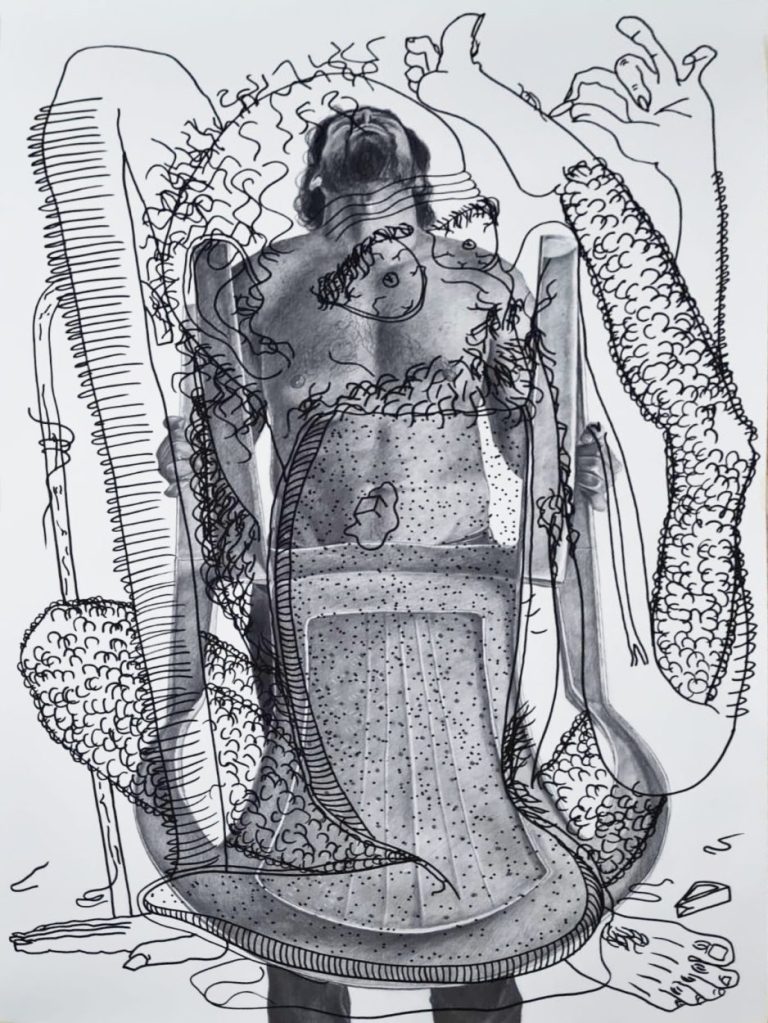
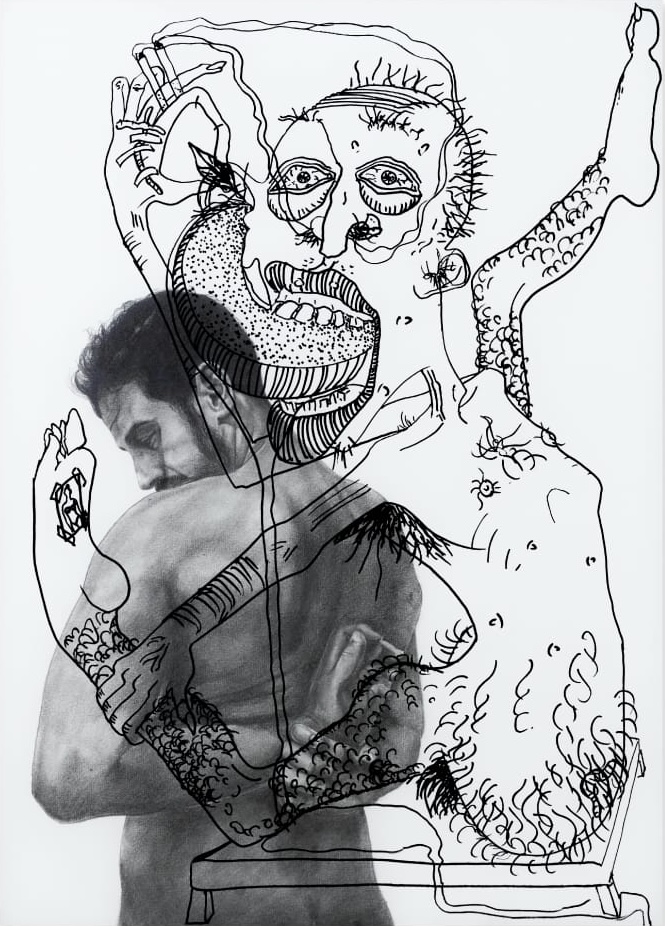
What are your current or upcoming projects? Are there new directions you’re excited to explore?
“Maintaining the Balance” and “Fainting” were the titles of my last two drawing series, where self-portraiture played a central role. Currently, I’m developing a new body of work I call “The Archive of Dreams,” where memories, old photographs, and even video calls appear more like fantasies than reality.
How do you keep your creative energy alive?
I don’t force it. Of course, discipline is more important than passion when it comes to creating consistently. But when my mind is exhausted, I take a break. When I stop drawing, I watch movies, read, or listen to music, hoping to renew my energy.
For emerging artists, what advice would you offer?
I’m not really in a position to give advice—maybe because I still consider myself an emerging artist too. But all I can say is: do it as a way of life, not as a job!
 Mediterranean Commune*