
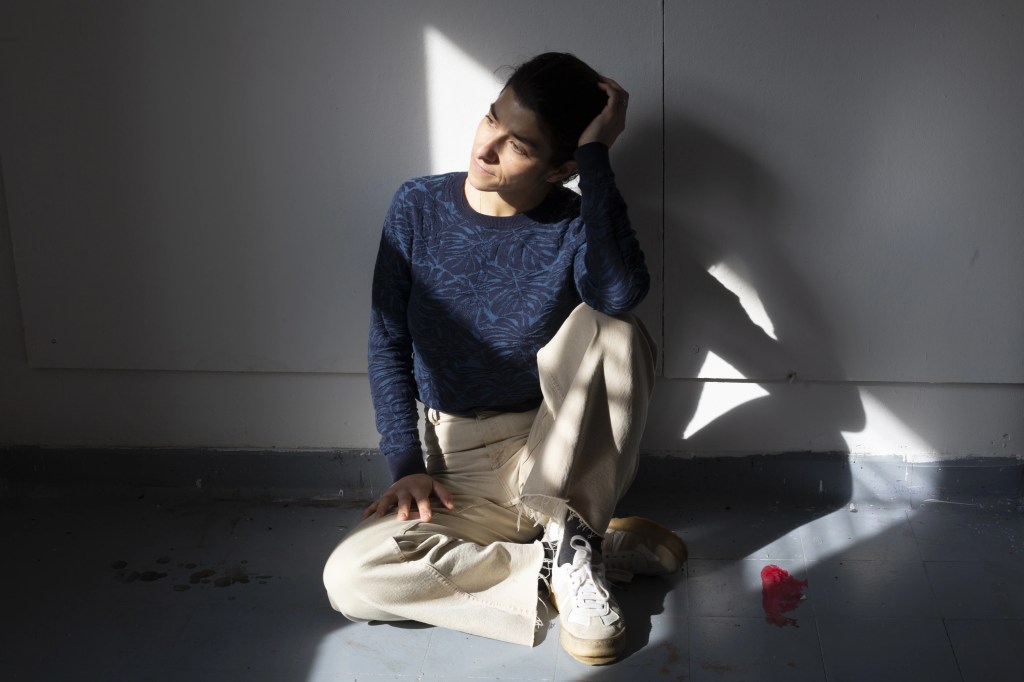
Francesca Faulin is an Italian visual artist working between Santarém, Lisbon, and Venice. Her practice explores the construction and deconstruction of personal identity through image-making, research, and the reinterpretation of archives. While photography is her primary medium, Francesca’s projects often combine found images, alternative printing techniques, and mixed-media elements to create intimate, multilayered narratives. Her work is rooted in memory, family history, and the spaces where language, image, and identity intersect.
In this interview, Francesca talks about the role of archives in her creative process, the evolving nature of identity, and how personal memory and place shape her work. She reflects on her journey as an artist, her relationship with language, and the complexities of working with family history, sharing how struggle, self-discovery, and a deep commitment to authenticity inform her practice.
Can you tell us a bit about yourself? Where are you from, where do you live, and what do you do? Also, an interesting fact about you?
Hi! I am Francesca, and I am a visual artist. In my work, I explore, through image making and the reinterpretation and manipulation of archives, the construction and deconstruction of personal identity. Although my main medium is photography, each project comes to life through a mix of research and the use of existing images and reproduction of archival material through alternative processes of printing and manipulation, I wrote about remaking and creating out of “fissures”. Lately, I’ve found myself working with smaller formats, the analogue quality of which can be better experienced in an exhibition context together with other multimedia materials and handmade artist books which offer an even more intimate reading.
I grew up in Venice with my maternal grandparents. I studied communication and politics at the Universitá degli Studi in Milan. After my bachelor’s, I moved to Berlin, where I lived for seven years, and in 2017, I moved again to Lisbon with my partner. We lived in the city until a couple of years ago, when a rent increase, in the context of a well-known and general housing crisis, forced us to move to a very unfinished house in the countryside, near Santarém.
Until last January, I ran a shared studio-gallery in Lisbon – Studio Seco – which I founded in 2023. I still keep a connection with the city’s artistic scene and have my workspace in a shared studio in Lisbon where I can focus on my work. I regularly travel to Italy to visit my mother and my friends in Milan, and I always spend some time, mostly alone, in my grandparents’ house in Venice.
An interesting fact about myself… Although my main medium is photography, language plays a very important role in my work, whether it becomes a visible part of a final work or not, when I work on something I always use language to understand, to question and to connect: I write my ideas down incessantly and when relevant I use literature, philosophy and feminist art theory to fuel my projects. Which language is sometimes hard to pin down… I spent a good part of my teenage years in Italy wanting to learn another language well enough so that I could, in a way, become someone else, and now that my life mostly takes place in English and Portuguese, I find myself longing for my Italian self. This may be why I often title my work in Italian.
You mention that identity is in a constant process of de- and re-construction. How has your own sense of identity evolved through your artistic practice?
I think in my artistic practice, I found space to listen to myself more. I’ve always used writing as a form of self-reflection—sometimes in a journal, but mostly in a scattered wa,y writing on anything I had at hand. And I’ve been taking photos for almost twenty years, but it wasn’t until I started creating something cohesive with my thoughts and images that I began to find some kind of “consolation”, a sense of understanding towards myself which goes beyond just my immediate personal experience. My artistic practice has given me a sense of meaning and, in a way, given me access to a feeling of belonging I was never able to truly feel before.
It has also helped me find my integrity. I come from a generation in between: before us, people defined themselves through their work—or at least most did—and after us, hopefully, it’s more common for people to be involved in many different things and take on various roles, both publicly and privately without having to question their sense of integrity. It took time and effort for me to reach that point, which is perhaps why I still struggle to define myself as an artist. There’s a certain responsibility attached to that word, a commitment to fill the role fully and authentically.
Speaking about authenticity and integrity, I did eventually come to realise that many of the things that have made my life difficult in more formal settings, I can fully embrace in my artistic practice. I can truly be myself with all the contradictions and unanswered questions.
Your fascination with archives and family history is central to your work. How do you choose which materials or stories to explore in a project?
I feel there are different answers to this question… on one side, what brought me to work on certain projects, based on my family archive, has felt inevitable to a point. On the other, the process of material and technique selection requires much longer and is a more rational process.
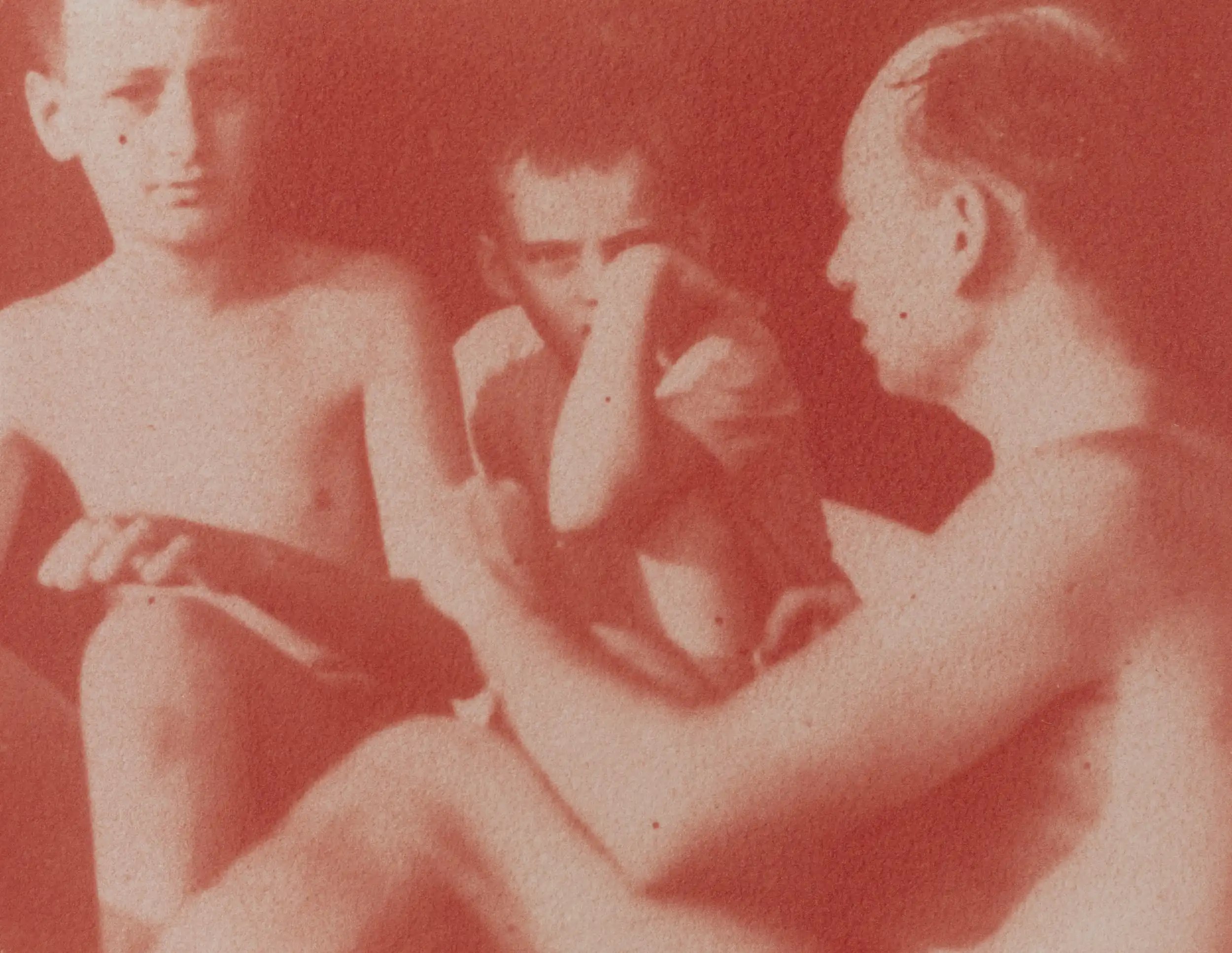
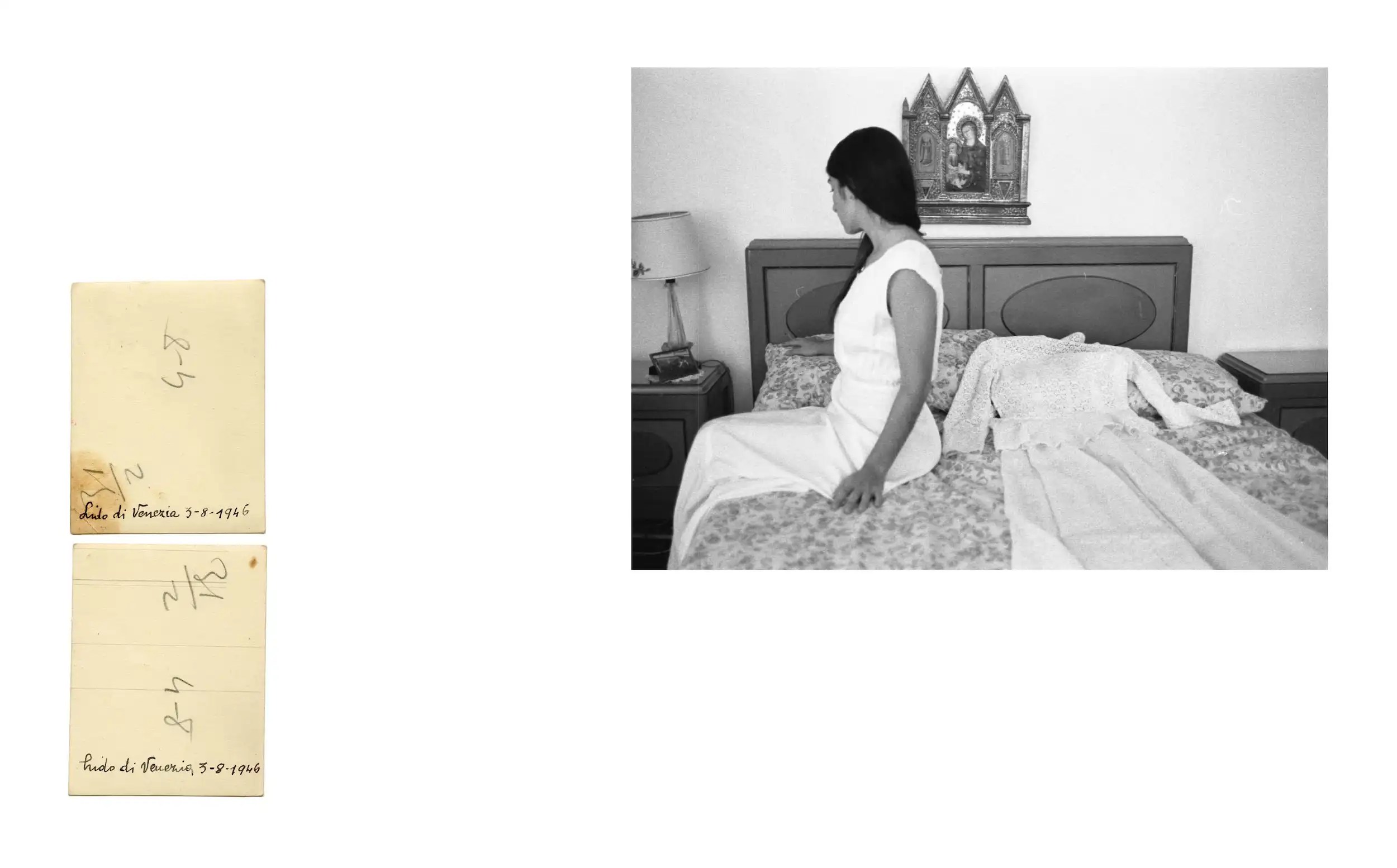
Perché ti ricordi sempre / For You to Always Remember, a project featuring family archive images and self-portraits, was somehow the consequence of a desire to explore my relationship with my mother. After realising it would be impossible to work directly with her, I found myself looking back, as I often do when looking for answers, at our relationship in connection with two previous mother-daughter relationships. I was trying to understand what these women were never able to tell me—and perhaps not even each other. And I had all these negatives, photographs and albums I had previously collected from my grandmother’s house after she died. I started looking especially at the images that did not make it into the official albums. In the photos, mostly taken by my grandfather, I found some of the answers, and then I felt the written material was adding that friction that sometimes the images were lacking.
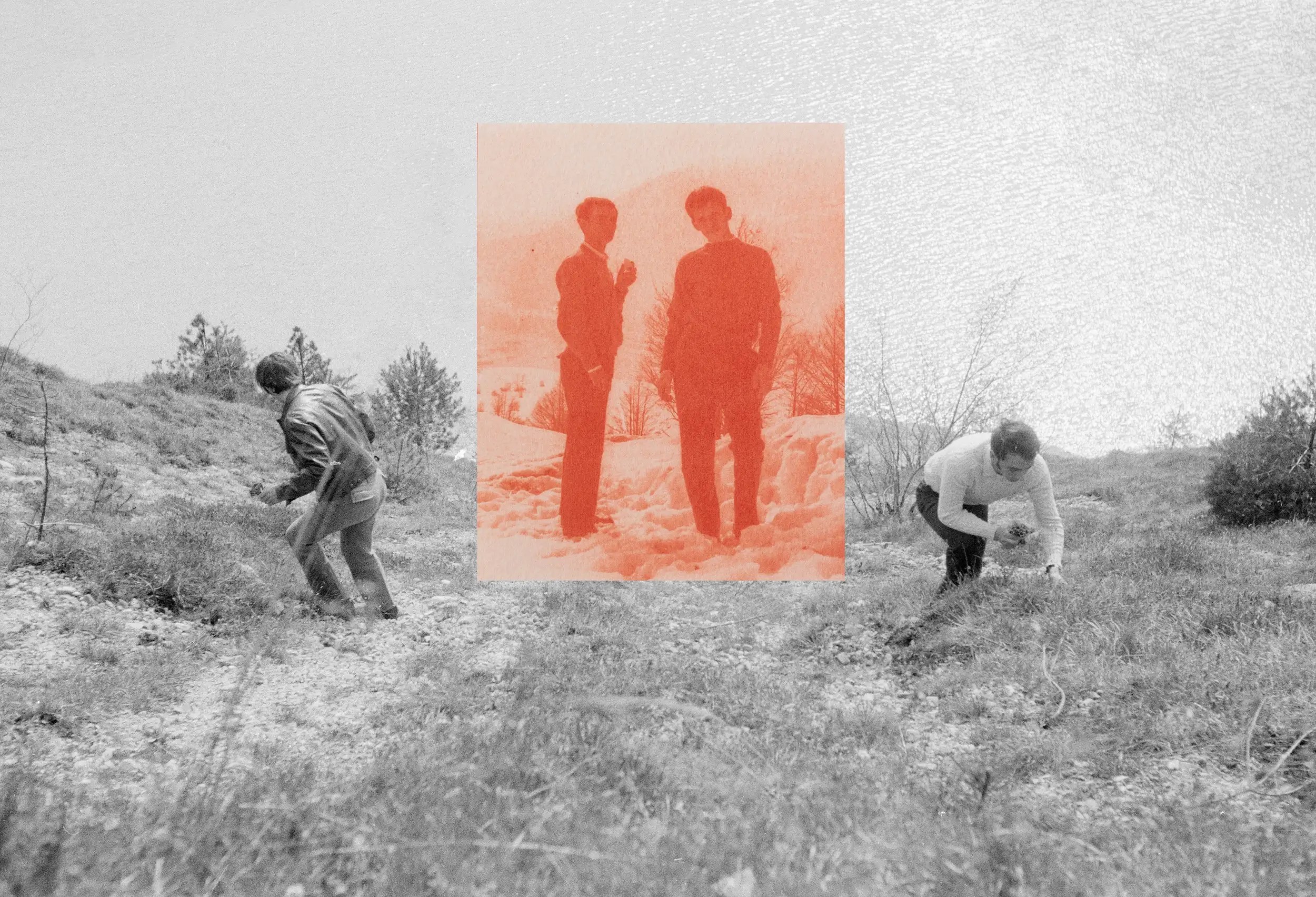
A similar inevitability was at the origin of L’ombra, l’originale e la ripetizione / The Shadow, the Original and the Repetition, a project about my maternal uncle. I already felt a connection with this person, who died when I was just a baby but whom I was named after. After the death of both my grandparents, I found an old journal written by my grandfather, and I simply felt that it was important to tell the story—a story that had never been told to me before but that had such a big impact on my family. This project presented different challenges: on one hand, I was less involved, but on the other, I had no personal recollection of the main actor in the story and I was touching on the very important topic of mental illness. The key images though, have been clear from the very beginning. I just felt they were saying something true but hard to decipher. A big part of my uncle’s story tells about what it means when we are not able to understand who we love. When it becomes undeniable that truly accepting someone for who they are is the hardest thing. In this story it becomes clear how societal institutions—family being one of them—can become a cage to individual freedom and how mental illness confronts us violently with the evidence of those limits.
I guess in the end, every project we work on can really only truly speak about ourselves. And I could never help but see how family can be a place of nurture but also a structure where we are enforced to fulfil certain roles and pressured with expectations.
I’m now working on a new project about my own family of two, and I am currently going through that process of selection.
You’re living and working between Venice, Lisbon, and Santarém—how do these different places influence your creative process and understanding of identity?
I am currently reading Bell Hooks’, Belonging: A Culture of Place. In one of the essays, she speaks about her decision to return to Kentucky after decades spent away, and how it was only by leaving home that she was able to recognise the importance of her connection to her homeland.
I feel the same. Having left home more than 20 years ago, and having lived in Berlin and Portugal, has made me see what connects me to, and perhaps what also separates me from, my birthplace. When I’m in Venice, I often fantasise about staying. Although my life is mostly here in Portugal now, maintaining that connection to the place where I grew up helps me stay connected to my memories, to my other selves. Memories are deeply tied to place, and when I’m in my grandparents’ house in Venice, my childhood memories become much more vivid and present. More than that, because in Venice one must move almost exclusively on foot, the way I experience space there is very different and evokes a part of myself that would otherwise be hard to summon. “We are born and have our being in a place of memory. We know ourselves through the act and art of remembering”, writes Bell Hooks.
At the same time, I think that leaving a place, although we never really leave ourselves, changes us. When we arrive in a different place and choose to stay we hold on to what makes us truly us and have to let go of the rest if we want to embrace a new home. I remember my first experience outside Venice as a student in Milan, I felt as foreign as I would later in a different country. And then gradually learnt with all my senses that everything is relative and we can’t take some part of our identity too seriously because our identity is multi-faceted and is constantly changing. In the end, I think what is most important is that the process of construction and deconstruction of one’s identity is one’s own and it’s a hard one, labels and other people’s opinions only get in the way.
You describe your work as a process of struggle and (self)discovery. Could you share a specific project where this struggle was particularly intense or transformative?
Working on the project about the women in my family really changed how I saw my mother, my grandmother and even myself. The taking of the self portraits was quite a struggle for me, being on the other side of the camera. The artist book that resulted from this work features fragments of journal entries, letters, and judicial reports from the trial for my custody that happened in the 90s. The selection process still feels like a fever dream: I had an enormous amount of different material, and I did it all in one week. I even discovered things I had never known before. I never went back to the original mountain of papers.
When I read the book today, after some years, it still moves me. Going through all that material made me see the struggle we all went through as women in a man’s world, especially how my mother, only 30 years old at the time, was treated by the judge and the social workers for the choices she made and how my grandmother, despite her disapproval, stepped in to protect and support her. And I felt ashamed of having judged her as well for all those years. For the first time I felt on her side and it was painful to realise that the “enemy” I saw in her all those years was much more complex and undefined. I think this work made me more of a feminist.

How do you see the relationship between photography and truth, especially in your practice of altering and recontextualizing archival images?
I think the answer to this is a lifetime’s work. A simple answer would be that there is no one truth. When I started working on the project about my maternal uncle, who died when I was only 9 months old, I was searching for the truth about what happened to him. I had many photos, the journal my grandfather, his father, wrote at the time, the story my mum told me about his death, and the sadness in my grandmother’s eyes—how she only spoke of him “before,” when he was “younger”.
Even so, unless I could speak to him today, it’s impossible to know the truth about his death. So I decided to focus on the gaps. What’s left unsaid, what may be unsayable, is more interesting, and it’s in these spaces that photography—and images more generally—can “say” something without the need to define, explain, or choose one version of a story. Ultimately, I think this is what good literature can do too.
People often ask what my family thinks about my work, which is, in a way, a question about truth I think. I’ve thought long and hard about truth and permission to tell the truth. First, in the context of authorship, i.e. using images that are not “mine”, and then in the context of privacy. Although the full names in the work are usually left out as a form of respect, I think my respect for the people involved in the story for their privacy and for the truthfulness of the storytelling is there, and I hope it transpires. But in the end the only truth I value in a project is in the intentions and in the way those intentions shape the work.
In my work I try to create space. What lives outside the images or in between is also true. Ultimately an image, as the words I am writing, are going to be interpreted and experienced in a thousands of different ways we have no control on. And I think what I would prefer is for people that see my work to leave with meaningful questions rather than with true answers.
What advice would you give to emerging artists?
I don’t really know whether I’m in a position to give advice. I still feel very much like an emerging artist myself, and sometimes I’m not even sure I am an artist! But I will share some of the words of a book that found me recently: Letters to a Young Poet by Rainer Maria Rilke.
“The only advice I have is this: to go into yourself and to examine the depths from which your life springs; at its source, you will find the answer to the question of whether you have to write. Accept this answer as it is without seeking to interpret it. Perhaps it will turn out that you are called to be an artist. Then assume this fate and bear it, its burden and its greatness, without ever asking after the rewards that may come from outside. … go through your development quietly and seriously; you cannot disrupt it more than by looking outwards and expecting answers from without to questions that only your innermost instinct in your quietest moments will perhaps be able to answer.”
I’ve been telling myself not to let the need for approval and recognition—something I think many of us feel so strongly—become everything. Instead, I try to focus on what is important to me: what fuels my practice, what gives meaning to my work, and ultimately to my life. Many artist friends, with longer careers than mine, have told me that the world of art can be difficult, even brutal. But ultimately, we do “the work” because there is no other alternative, and because it remains more interesting than not, whether or not we receive the recognition we sometimes feel we need. To introduce recognition and external standards into the work is always a mistake. It pulls us away from ourselves and our instincts, and the work risks becoming false, artificial, and sterile, as Rilke says.
At the same time, community and feedback are vital. Feedback is not approval, it seems obvious, but sometimes I even forget the difference. It can absolutely be negative and usually the more it hurts, the more it is useful, when you find a way to build from it. Not everyone is able to give constructive feedback, and finding those people—forgetting about the others—is part of the process that goes into a project. The work of an artist is often solitary and creating moments of exchange, whether among an art community, with an audience, or with a mentor, is important and so enriching. I feel like my best work was created through collaborations.
Then, of course, there’s the matter of financial support. I feel it’s important, at any stage in our careers as artists, to have our work and intellectual property acknowledged for its value. It’s easy to be fooled by promises of visibility, where really we are doing the work, and others take advantage of it. I haven’t arrived to the point yet where my artistic practice pays for my bills, I have a freelance job on the side. Still, when I look back, I am proud of having brought myself to where I am and have confidence, on most days, that this is the path forward.
 Mediterranean Commune*