
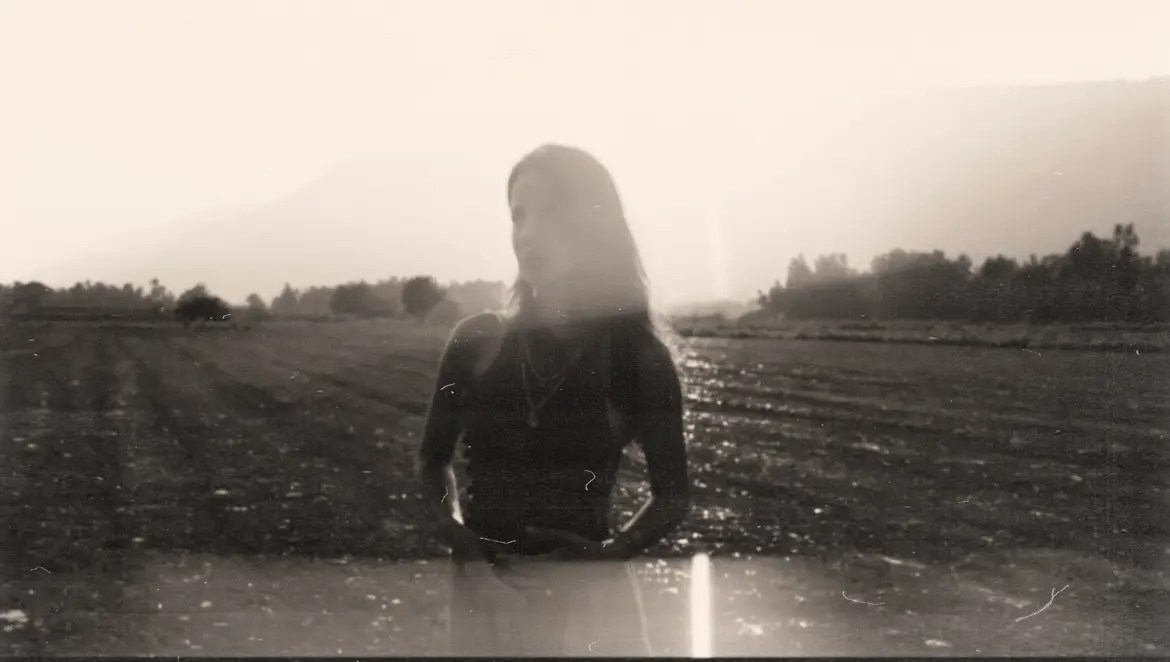
Ezgi Akkaya is a clinical psychologist and psychotherapist whose work blends psychoanalysis, art, and body-oriented approaches to offer a holistic perspective on human well-being. With an academic background spanning psychology, sociology, and art, she approaches individuals as multidimensional beings—considering their mental, social, bodily, and creative dimensions in therapy.
Her expertise lies at the intersection of psychoanalytic thought and artistic expression, particularly in exploring the body’s memory and its role in the therapeutic process. Now based on the Mediterranean coast of Western Turkiye, Ezgi embraces a lifestyle that balances academic research, psychotherapy, and creative projects.
In the interview, we explore the relationship between psychology and artistic expression through international workshops, somatic practices for women, and long-term scientific research.
Can you tell us about yourself? Who are you, where are you from, and what do you do?
I am a clinical psychologist and psychotherapist. While building my career in psychotherapy, I integrate psychoanalysis, art, and body-oriented approaches to develop a multidisciplinary perspective. My education in psychology, sociology, and art allows me to approach individuals not only through their mental processes but also in relation to their social, bodily, and creative dimensions.
I work at the intersection of psychoanalytic thought and art, conducting therapeutic processes that explore the body’s memory. In addition, I engage in script consultancy by examining the connection between narrative and human psychology. By analyzing the psychological depth of characters and the unconscious dynamics of stories, I help create stronger emotional connections with the audience.
Today, I bring together psychotherapy, academic research, and creative projects to provide individuals with a deeper exploration of themselves. These multifaceted studies, aimed at understanding human existence both individually and collectively, are not just a professional pursuit for me but a way of life.
Your background combines clinical psychology, sociology, and ballerina. How do these disciplines influence your approach to well-being?
Adopting an interdisciplinary approach that combines clinical psychology, sociology, and ballet is one of the key elements shaping my understanding of well-being. A person is not a simple entity that can be understood from a single perspective or discipline; rather, the individual is a multi-layered being interconnected across psychological, social, physical, and cultural dimensions. Therefore, focusing solely on individual mental processes within psychology is insufficient to fully comprehend the complexity of human nature. A person’s psychological state is closely related to the societal structure they inhabit, the cultural dynamics, and family interactions. A sociological perspective allows me to understand the effects of a person’s relationships with their environment and societal factors on their psychological processes.
Art, particularly ballet, is an important discipline that deepens this understanding. Moving the body, materializing emotions, and expressing internal experiences are significant forms of psychological expression. Ballet, beyond being a physical art form, possesses therapeutic power as a way to integrate emotional and cognitive processes. Using the body as a means of communication is profoundly meaningful in exploring personal and emotional processes.
Ballet and body-focused practices function as mechanisms for maintaining emotional and psychological balance. These disciplines are shaped not only by theoretical knowledge but also by the lived experiences in practice. The human body is directly related to mental health, and bodily awareness can help an individual better understand their emotional states. In this context, art and body therapies play a crucial role in psychotherapeutic processes.
In conclusion, the interaction between psychology, sociology, and ballet enables me to understand the multi-dimensional nature of human existence. Well-being requires not only mental balance but also physical and social harmony. The integration of these three disciplines is a precious process for me, both as a professional goal and as a personal mission.

Moving from Istanbul to Akyaka was a big shift. How has this change shaped your perspective on belonging and personal growth?
Although I was born and raised in Istanbul, I realized that belonging is not limited to the place of birth; it is shaped by various experiences. Elements such as love, nature, and cultural structures are significant factors that nourish the sense of belonging. With this perspective, I created a transitional way of life between the North Aegean and the South. By embracing both the dynamism of Istanbul and the tranquility of nature, I aimed to create a space of balance that is unique to me.
The primary reason for this shift was not to confine myself to a single framework but to create the opportunity to express myself in different fields, considering my circumstances. Finding a source within myself and nurturing it at every stage of my life became the cornerstone of my personal development. Of course, change is never easy, but having the courage to embrace it is one of the biggest steps in overcoming it. The results of change, although initially intimidating, grow with trust in one’s inner strength and potential.
Thinking of life as a heartbeat reminds me that everything is cyclical and dynamic. It means understanding that we are part of a dynamic existence, not a monotonous one. Realizing that living on a single plane can drain the vibrancy of one’s life gave me a more multidimensional, realistic, and flexible perspective.
What is your biggest inspiration?
My source of inspiration lies in humanity’s constant capacity for self-discovery and transformation. At any given moment, a person can exist with new possibilities, transcend their limits, and bring their inner potential to light. This dynamic process is not only present at an individual level, but is also continuously evolving within social and cultural contexts. The inherent power of human existence to explore infinite possibilities offers an opportunity to create new meaning in each moment, and this is one of the elements that deeply moves me.
In addition, the strong women who have left a mark on my life have shown me what it truly means to fight and persist. Their determination and resilience in the face of adversity remind me not only of the strength required to survive but also of the profound inner resources every individual possesses to realize their potential.
However, my sources of inspiration are not limited to this. Sometimes, it is the small yet deeply meaningful details in daily life that inspire me. The voice of a stranger, the sudden scent that reaches my senses, the gentle melodies of nature, or the tranquility left behind by rain — these moments serve as reminders of the depth and meaning of life. These experiences touch the purest aspects of humanity, leaving simple yet powerful impressions. Each of them reshapes my thoughts and emotions.
I’d love to hear your thoughts on artistic creation and social media. Many artists today rely on social media for visibility. As a psychologist, what would you recommend to them for maintaining their mental health while dealing with engagement pressures and the social and artistic burden?
Artistic creation is a dynamic interaction between the artist’s inner world and external reality. However, in today’s digital age, social media has become both a space for visibility and a source of psychological pressure for artists. When artistic practice is shaped by metrics such as likes, comments, and followers, it can disrupt the intrinsic and creative nature of art. Therefore, understanding one’s own motivations for creation and the relationship they establish with their art is crucial for psychological well-being.
It is essential for artists to analyze the source of the engagement pressure they experience: Does this pressure stem from external expectations, or is it driven by internal perfectionism and feelings of inadequacy? When artistic creation is reduced solely to a performance metric, it can lead to a sense of disconnection from the creative process and, over time, contribute to feelings of insufficiency, anxiety, or burnout. To develop psychological resilience, artists can benefit from reflecting on key questions: What values shape my artistic practice? What nourishes my creative process? How do external evaluations influence my motivation to create?
Additionally, maintaining psychological well-being requires diversifying the creative process. Relying on a single artistic medium for self-expression may eventually turn art into a burden. Engaging with alternative creative practices outside one’s primary discipline can support emotional regulation and expand artistic perspective. For instance, a visual artist exploring movement-based art or a musician experimenting with written expression can foster a more flexible and enriched relationship with their craft.
Ultimately, in the age of social media, artists must cultivate self-awareness, enhance their understanding of their creative process, and prevent art from becoming merely a tool for performance and validation. The key to sustaining creativity lies in experiencing art not just as a means of visibility but as an intrinsically meaningful and fulfilling process.
You’re currently living on the Mediterranean coast. Do you think the Mediterranean climate contributes to mental well-being and creative inspiration?
My turn towards the Mediterranean emerged as a response to a personal health journey, seeking a more balanced and sustainable living environment for both my body and mind. It is well-established that environmental factors directly influence psychological well-being. Specifically, being in nature has a regulatory effect on the nervous system, reducing cortisol levels, supporting parasympathetic activation, and improving overall emotional regulation.
The Mediterranean climate has a holistic impact on both physiological and psychological processes. The natural and bioavailable quality of foods can support mood-regulating mechanisms through the gut-microbiota axis. Additionally, regular exposure to sunlight positively influences circadian rhythms, thereby enhancing serotonin and melatonin cycles. These elements collectively optimize cognitive functions and creative processes.
The chronic stressors inherent in urban life — fast-paced environments, noise pollution, and the constant state of vigilance — can lead to sustained sympathetic activation in the nervous system. Over time, this may negatively affect both cognitive capacity and emotional resilience. In contrast, living in a more tranquil environment can strengthen one’s emotional regulation and facilitate easier access to internal resources, supporting creative production. In this regard, regions like the Mediterranean, with their integration of nature, can play a protective and supportive role in sustaining psychological well-being.
What are your future plans? Do you have any upcoming projects?
My projects are ongoing, combining my knowledge of art and psychology with workshops that are influenced by neuroscience and philosophy. These workshops are designed to be held in international museums, and the primary aim of these projects is to demonstrate how art and psychology can complement each other and provide individuals with the opportunity to explore their inner worlds through artistic expression.
Another key project I’m working on focuses on somatic practices with women in regions such as the Mediterranean and Southeastern areas. The goal is to help every woman discover her creative power through her body and understand the connection between this process and psychological well-being. I hope these practices will support women’s mental health by promoting the unity of body and mind.
Another dream of mine is to establish a multidisciplinary center. This center will not only provide psychotherapy services but also create a space where a wide range of scientific resources can be utilized. I firmly believe that people, alongside therapy, need broader support networks, and I have no doubt that collective, supportive spaces will contribute to the healing of both individuals and communities.
In addition, I’ve been working on a scientific study for almost 10 years. While I don’t yet know where it will lead, continuing to work on it, even without a clear direction, brings me immense satisfaction.
Reflecting on my dreams and projects, each step leads me to a deeper exploration and a better understanding of human potential. The future, perhaps beyond what I have consciously planned so far, will serve not only the field I have long been a part of (clinical psychology) but also the greater societal good.
Do you have any advice for people who want to work across multiple disciplines?
First and foremost, I believe that having a solid foundational education is crucial for success in multidisciplinary fields. Each discipline has its own depth, theories, and frameworks, which offer unique perspectives. Therefore, it is important for individuals to pursue a fundamental education and then expand their knowledge across different fields. During their undergraduate studies, it can be beneficial to consider double majors or minors, as this broadens one’s perspective and enables a deeper understanding of the dynamics of each discipline.
However, relying solely on foundational education is not sufficient to work in a multidisciplinary approach. This process requires continuous learning and development. Individuals should create an intellectual foundation by engaging with literature, world classics, philosophy, and other fields that expand their worldview. Additionally, maintaining communication with mentors and role models, seeking learning opportunities, participating in projects, and asking questions are essential for accelerating personal and professional growth. These interactions provide valuable opportunities not only for technical skills but also for personal development.
Adopting a multidisciplinary approach also requires individuals to specialize in their core field of expertise. After gaining a solid foundation in their primary profession, they should move to the next stage, where they engage with other disciplines. This process will be most fruitful when it aligns with their resources, talents, and multidimensional mindset. As individuals discover which areas they need to delve into more deeply and which resources satisfy their needs, they are more prepared to integrate multidisciplinary approaches into their work.
Lastly, when working with a multidisciplinary approach, it is important to understand that the individual development process is a journey that is built over time, constantly changing, and evolving. This journey requires patience and consistency. Success is not only measured by the end result but also by personal satisfaction, self-understanding, and the discovery of one’s creative potential.
I believe that those who choose to work in this field must remain open-minded, flexible, and eager to learn. By gaining experience, interacting with others, and constantly reading, observing, and researching, individuals can build a truly meaningful and effective multidisciplinary career.
 Mediterranean Commune*