
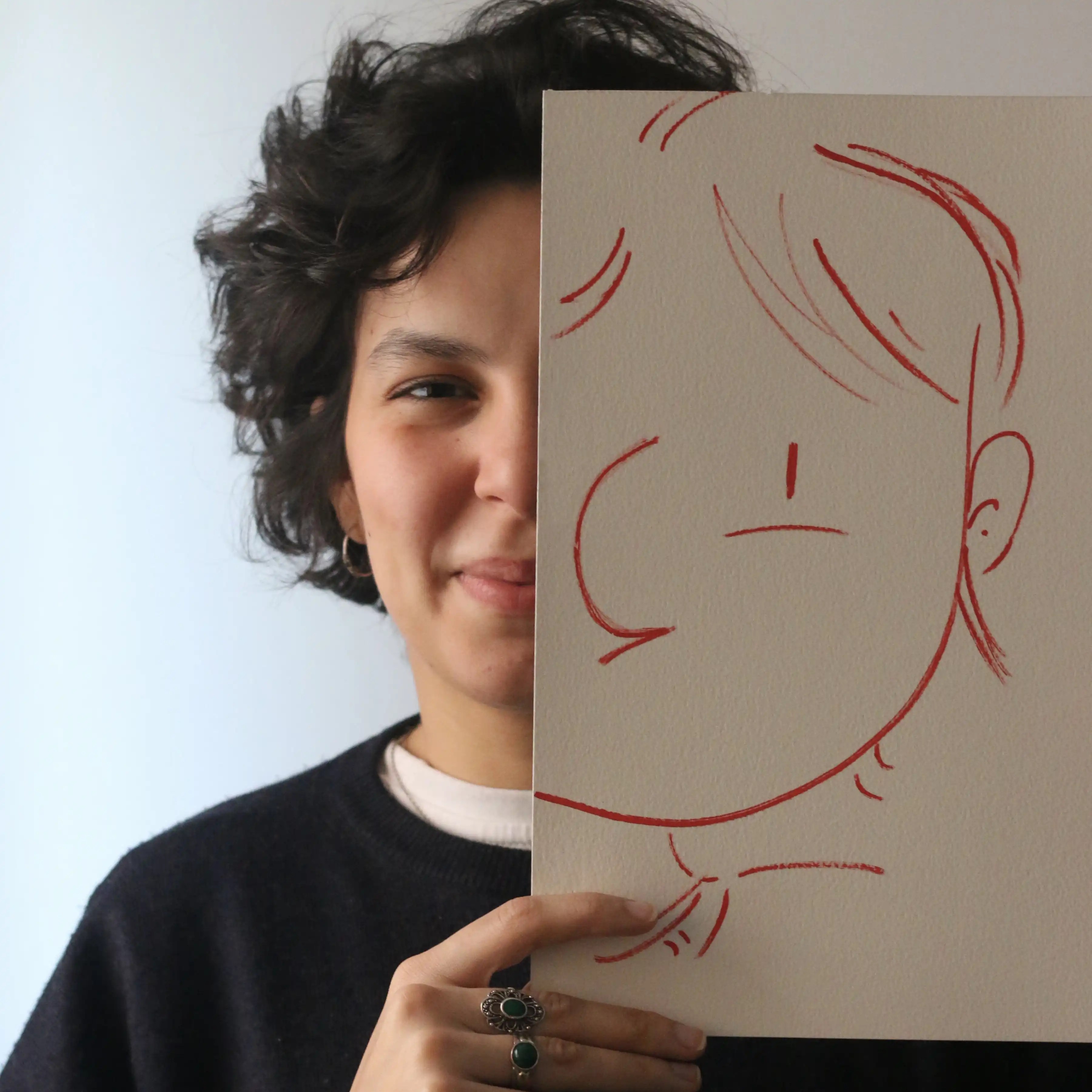
Oumaima El Gamraoui is a comic book author and illustrator based in M’diq, Morocco.
With a background in comics from the National Institute of Fine Arts in Tetouan and an ongoing pursuit of a master’s degree in Documentary Cinema, she explores storytelling through a rich blend of visuals and narratives. Her work often delves into themes of migration, memory, and identity, using comics as a powerful medium to document and question the world around us.
In this interview, she shares insights into her creative journey, the influences behind her art, and the path that led her to publishing her first book, What the Sea Owes the Land.
Can you introduce yourself? Where are you from, what do you do, and is there anything about your journey or background you’d like to share with us?
I am an illustrator and comic book author from M’diq, a small city on the shores of the Mediterranean Sea, once known as The Fisherman’s Village. Growing up in this coastal town, I was surrounded by stories of the sea, movement, and borders, elements that continue to influence my artistic journey.
In July 2023, I graduated from the National Institute of Fine Arts in Tetouan, Morooco, specializing in comics. I am currently pursuing a master’s degree in Documentary Cinema.
Even before finishing my studies, I actively sought to participate in events, festivals, competitions, and residencies. I strongly believe that these real-world experiences have shaped me far more than academic education alone. Engaging with other artists, exchanging ideas, and being part of a creative community has given me a sense of belonging—it’s a reminder that I am not alone in this journey.
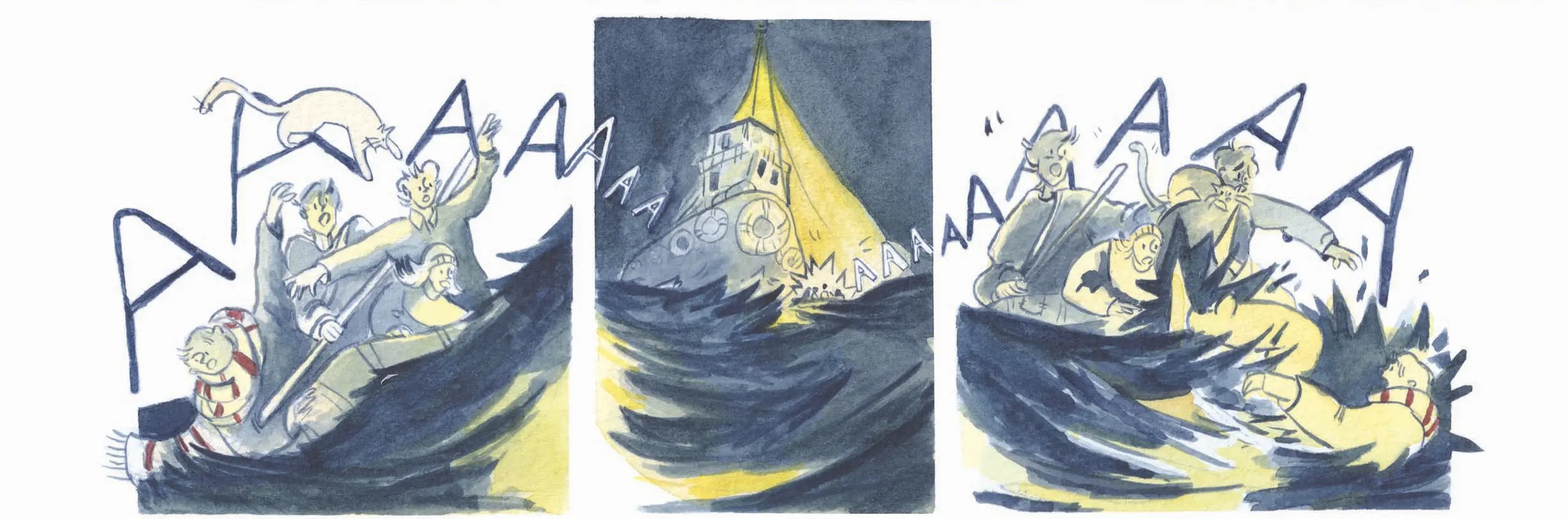
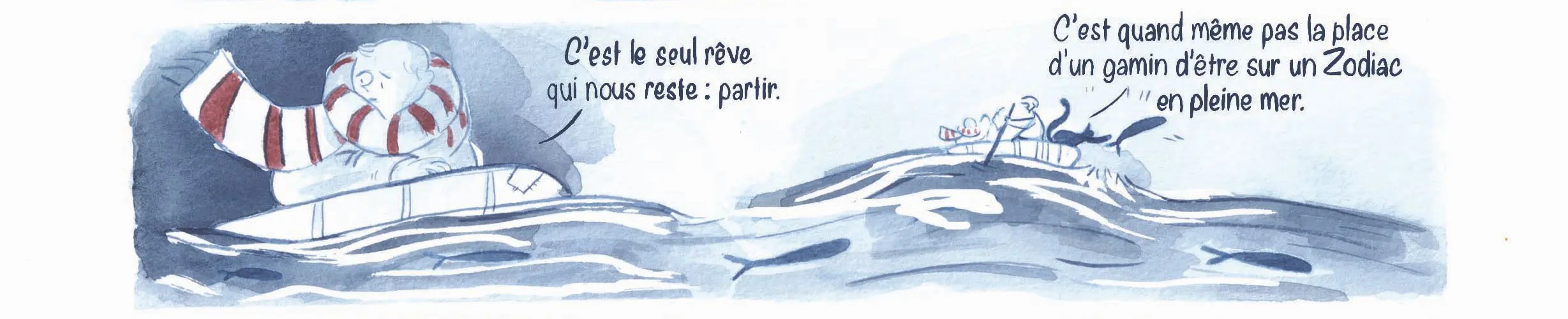
In January 2024, I had the privilege of participating in a residency at the Comic Art Museum in Brussels, Belgium. This journey transformed the way I perceive the world of comics. Immersed in the heart of this art form, my perspective expanded profoundly, especially in understanding how comics can be a powerful medium for storytelling that goes beyond entertainment—it can document, question, and challenge. By May 2024, I had self-published my first book, What the Sea Owes the Land, with the support of the Ministry of Culture of Morocco. The story unfolds in my natal city, It is a reflection on migration, memory, and the invisible lines that separate people and places. Through my work, I aim to tell stories that resonate with both personal and collective experiences, capturing themes of identity, displacement.
© 2025 Comic Art Museum
You use art as a way to tell stories. How did your interest in visual storytelling begin, and what inspired you to explore this creative path?
Yes, stories! I’m always curious to hear them and passionate about telling them. For me, storytelling is the perfect way to express, to feel, to share, to exist. We may forget people, but we don’t forget their stories. And more importantly, stories allow us to say things we often can’t express out loud in real life.
Honestly, my creative journey started quite randomly. After high school, my goal was to attend the National Institute of Fine Arts to study design. I applied twice but wasn’t accepted. During those two years, I studied fashion instead, but I never let go of my dream. On my third attempt, I was finally accepted.
I began my studies in the preparatory year, where students explore different disciplines—Arts, Design, and Comics—before choosing a specialization. For me, comics was my last choice. Before attending the institute, I didn’t really know what comics were. I had never read one or even held one in my hands—not even as a child!
But I’ve always been drawn to adventure, so I chose the most unfamiliar path. And just like that, in the most unexpected way and with a strong sense of challenge, my journey into comics began.
The first two years were really tough. I can’t deny that I thought about quitting many times. But with time, things became more fluid, and I started to realize that this wasn’t just a random choice— it was something that had been a part of me all along.
I remember as a child, I had a small notebook that I treated as my own novel-in-progress. I imagined entire stories filling its pages, convinced I was working on something big. Looking back, I realize that I have always been drawn to storytelling. Comics just became the natural way for me to bring those stories to life.
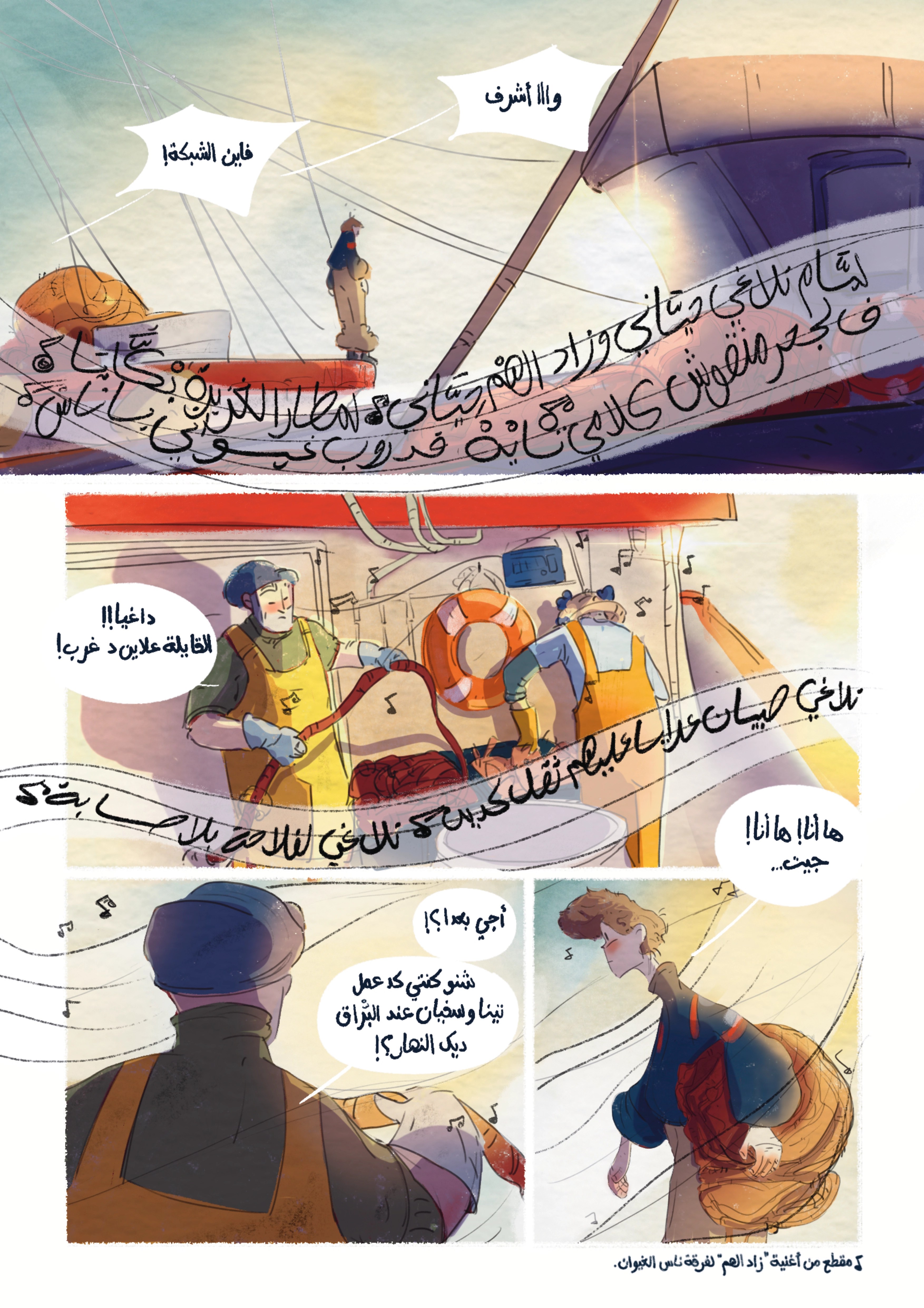
Self-published with the support of the Ministry of Culture of Morocco, 2023
You have experience in book illustration, which is cool. How do you imagine and bring characters to life? Can you walk us through your creative process and share any tips for aspiring illustrators?
It all starts with an idea—often sparked by a concept or an image that resonates with me. I love observing people, contemplating spaces, and immersing myself in the world around me. My characters and stories come directly from life, drawn from real experiences or emotions. I see this process as essential because storytelling isn’t just about creating fiction—it’s a way to deeply understand people, events, and experiences while maintaining a safe distance. Through my work, I’m constantly exploring and making sense of the world around me.
I don’t follow the same creative process for every project. For me, comics are a medium where image and text must work together seamlessly. That’s why, with each new project, I take the time to choose the right medium and technique, treating every story as an opportunity to experiment. I believe illustration isn’t just about drawing—it’s about finding the best way to visually communicate an idea.
One of my favorite parts of the process is writing and developing the scenario. This stage gives me the freedom to explore different scenes, adjust the rhythm, and build a solid structure before moving on to visuals. Once I move to the layout stage, my focus shifts to composition and how the panels flow together to enhance storytelling.
Well, I’m an aspiring artist too, honestly, but I can share some advice that I always try to keep in mind when working: Don’t rush things! Creativity needs to be cooked on low heat. Take your time to let ideas develop naturally. And when you’re in the moment of working, be there! really be present! Don’t judge yourself or your work—just be free. Then, after a while, come back to it and take a step back. Don’t judge right away, but analyze what you’ve done.
Your artistic journey spans various mediums, from comics to collage and paper-cutting. How do you decide which medium to use for a particular story or project?
I enjoy jumping between different mediums—I’ve experimented with digital art, watercolors, collage, black and white, and more. But in the end, I don’t always consciously decide which medium to use; rather, the nature of the story dictates it.
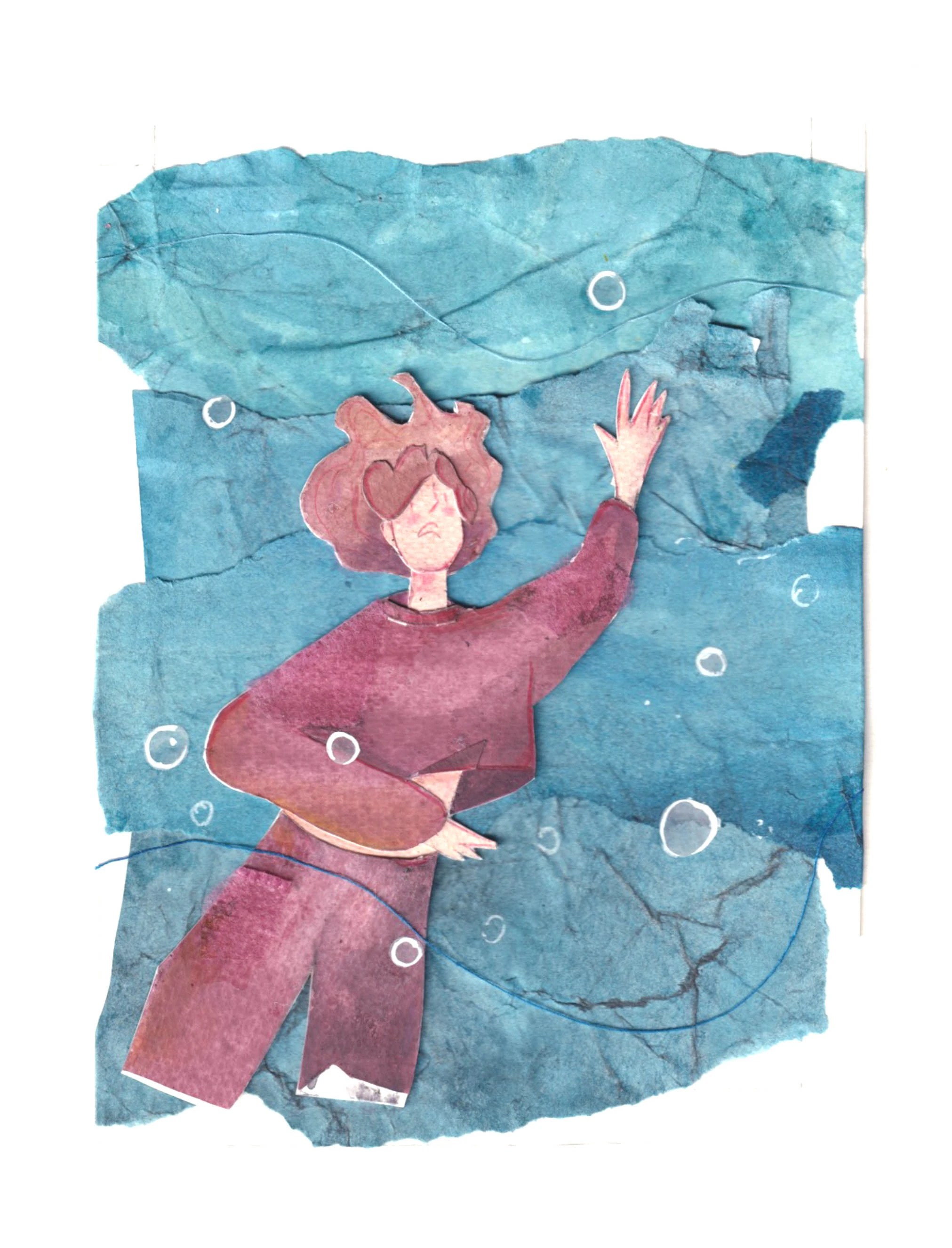
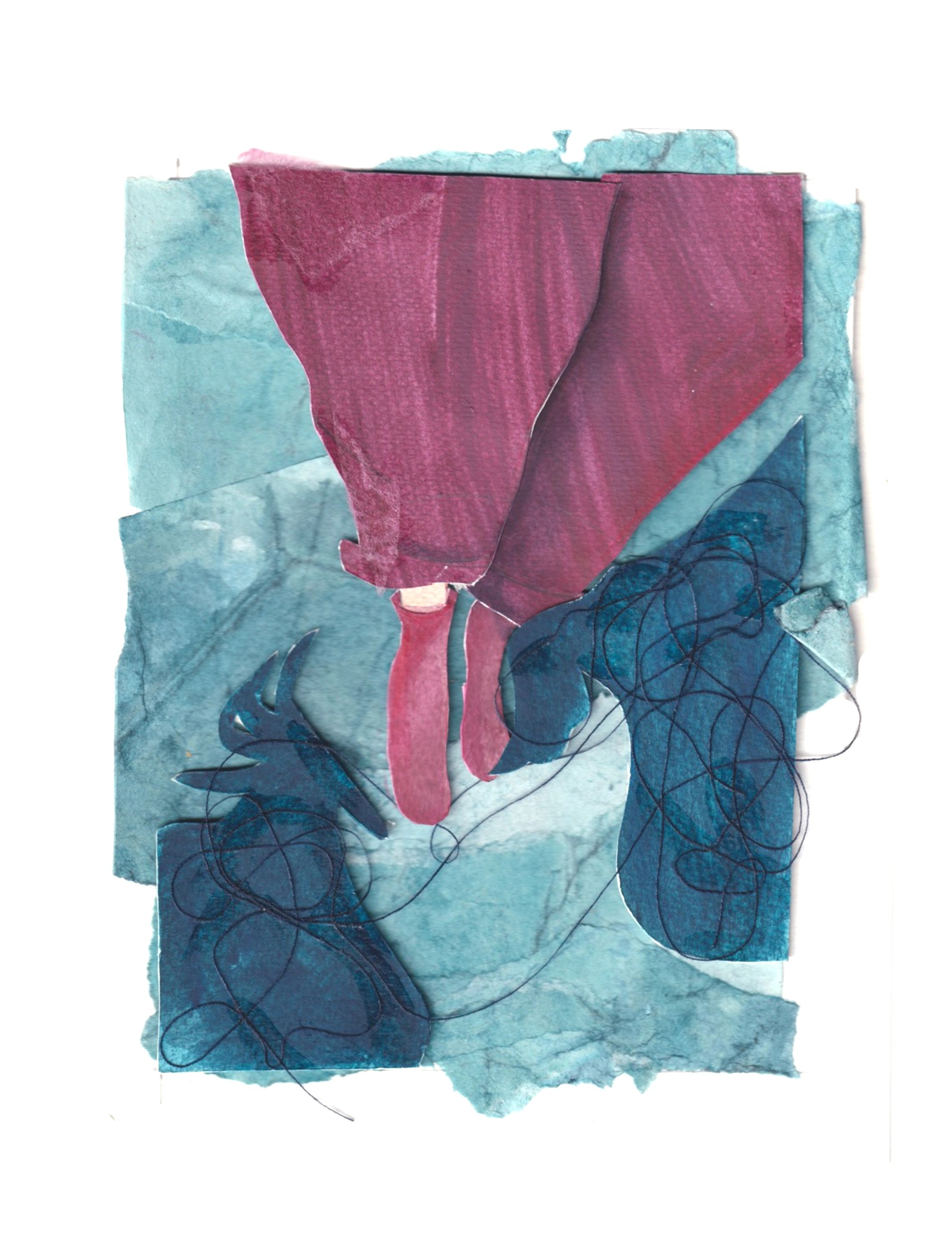
For example, I find that collage works well for more absurd, experimental, or abstract narratives because the medium itself resists realism and intricate details. It has a raw, spontaneous quality that makes it great for certain types of storytelling, like children’s book illustrations, where playful textures and bold shapes can be very effective. In comics, I feel that collage works best when the story doesn’t rely too much on fine details—when it’s more about mood, atmosphere, or abstract expression rather than intricate visual storytelling. But for me, every medium is a window for experimentation, and I’m always curios and exploring.
How has being Moroccan and your connection to Mediterranean culture influenced your work? Are there specific elements of your heritage that inspire your art?
As Ibn Khaldun said, “A person is the son of his environment.” In that sense, I am the daughter of this connection and fusion, and all my work—consciously or unconsciously—is deeply tied to my identity as a Moroccan and a Mediterranean artist.
One of the recurring themes in my work is migration, a subject that is inseparable from the Mediterranean experience. Growing up in a coastal Moroccan city, where Spain is visible from our windows on clear days, I have always been surrounded by stories of movement—of people leaving, crossing, dreaming, and, sometimes, never returning. Migration is not just a political issue here; it’s personal, woven into the fabric of everyday conversations, into the collective memory of my community. We have lost loved ones to this history, and that loss leaves a mark.
As an artist, I feel a deep responsibility to highlight this reality, to explore it through my work, and to document the stories that might otherwise be forgotten. Whether directly or indirectly, this Mediterranean identity—its landscapes, its movement, its cultural richness, and its contradictions—continues to shape the way I tell stories.
Do you have a dream collaboration or project? Is there a specific author, artist, or organization you’d love to work with in the future?
Of course, I would love to collaborate with renowned publishing houses and see my books reach audiences all over the world! That would be an incredible milestone. But honestly, what I dream about the most right now is something simpler yet deeply important to me: having enough time and space to fully dedicate myself to my work.
I dream of a period where I don’t have to juggle multiple jobs just to sustain myself, where I can immerse myself completely in storytelling, experimenting with new mediums, and pushing my creative boundaries without the constant pressure of financial stability. I would love to work in an environment that nurtures artistic growth, whether through a long-term residency, a fellowship, or simply a space where I can create freely.
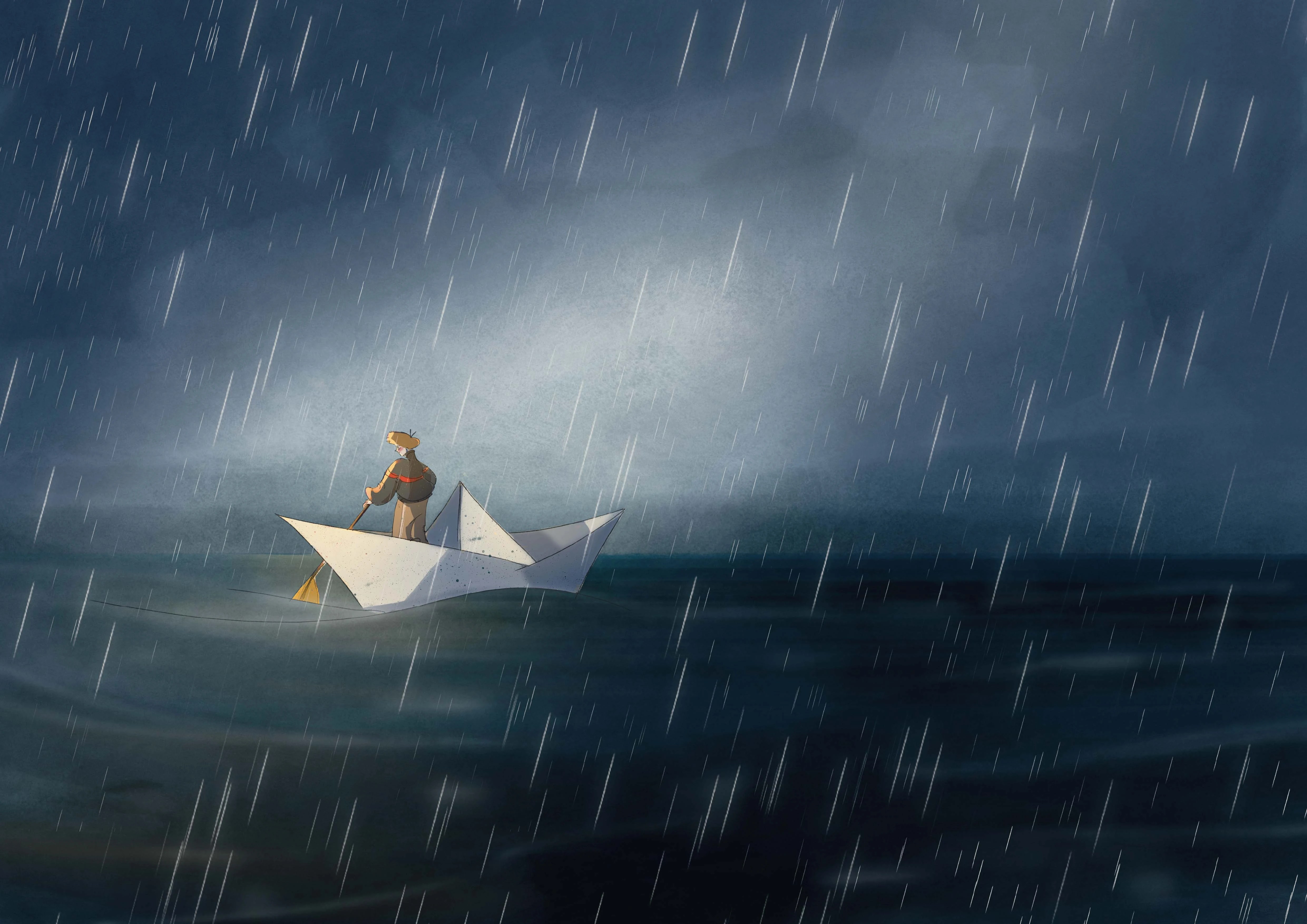
Self-published with the support of the Ministry of Culture of Morocco, 2023
What challenges do you face as a young creative, and what advice would you offer to fellow illustrators having similar struggles?
Honestly, one of the biggest challenges I face as a young creative is the feeling that we are creating comics without an audience. In Morocco, there are very few opportunities to showcase our work—there aren’t enough residencies, open calls, or institutional support for the comic book industry. Publishing is also a major obstacle; only a handful of Moroccan publishing houses (if any) are willing to invest in comic book projects, mainly because there isn’t a strong reading culture for comics, which means there’s no established market. As a result, making a living solely as a comic book author is nearly impossible—you have to take on multiple other jobs to sustain yourself.
But despite these challenges, this should never stop us. We have to keep creating, even when it feels difficult. Passion and persistence are key. The industry may not be fully developed now, but by continuing to produce work, we contribute to shaping the future of comics in our region.
For fellow illustrators facing similar struggles; find your own rhythm, don’t wait for opportunities— create them. Connect with other artists, participate in international calls when possible, self publish if you need to, and most importantly, keep telling stories. The path may not be easy, but our voices matter, and the more we create, the more space we carve out for the next generation.
🌱For more of her work, please check her Instagram.
 Mediterranean Commune*