
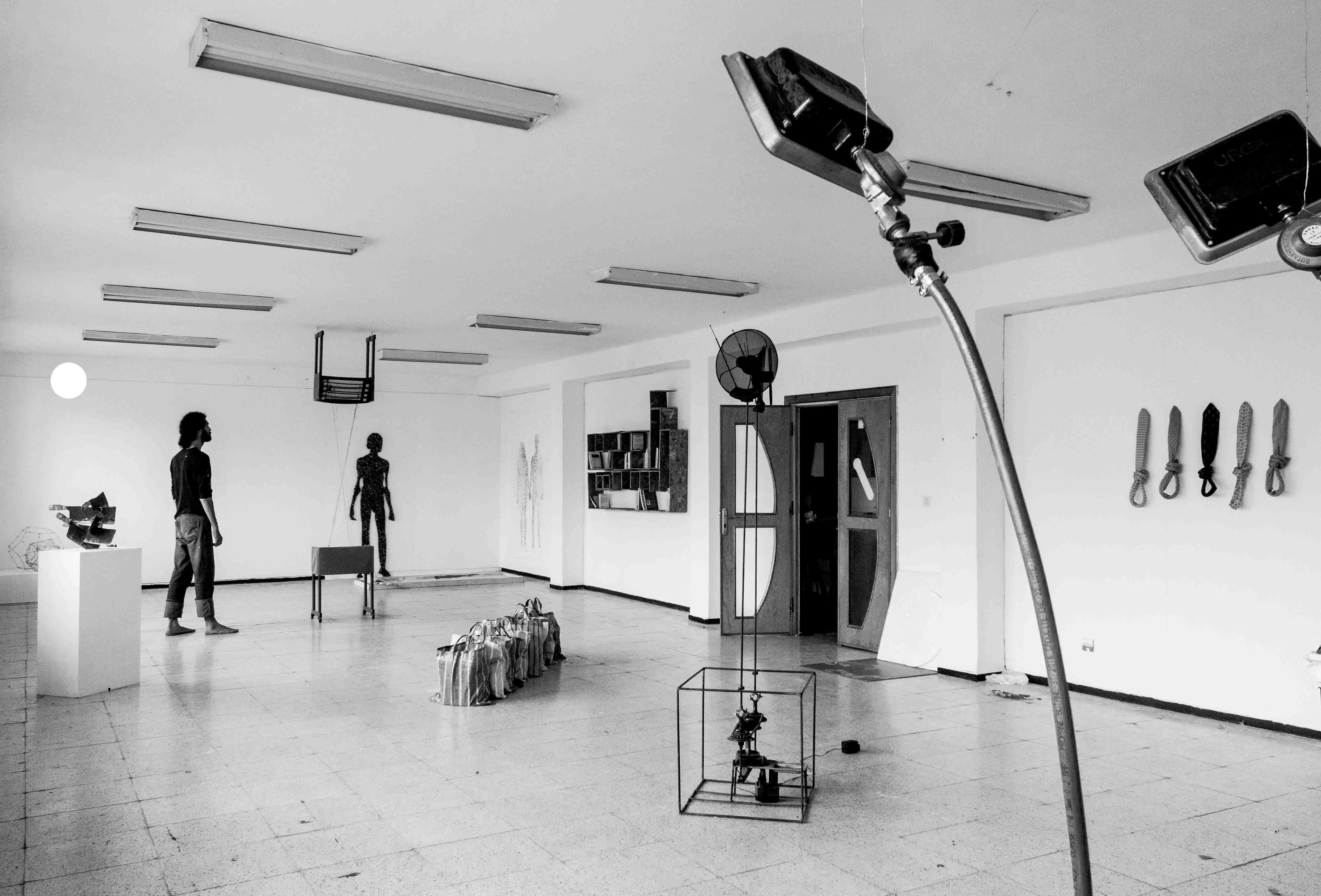
Loutfi Souidi is a multidisciplinary artist based in Kenitra, Morocco, originally from Sidi Slimane. His artistic journey is one of curiosity, experimentation, and a deep engagement with sociopolitical themes.
Souidi’s work spans installations, sculptures, and photography, driven by an insatiable curiosity about the world. He approaches art with an openness to different disciplines, allowing the medium to emerge organically with each concept. For him, art is a tool for questioning rather than answering, especially regarding sociopolitical and environmental issues.
In this interview, we explore Loutfi Souidi’s artistic journey, from his early passion for drawing to his multidisciplinary approach that blends sociopolitical themes with experimentation. He discusses his creative process, the significance of found objects in his work, and his perspective on large-scale projects and artistic exploration.
Can you share your journey as an artist? What first inspired you to pursue an art career, and how have your background and education influenced your creative practice?
It all started when I was a teenager who loved drawing and appreciated the meditative aspect of it more than anything else. I was studying mechanical technology in high school, and later, I went on to study English at university. However, my passion for art was always present. Practicing and learning about other artists from around the world and throughout history gave me a deeper sense of purpose and direction.
That feeling of awe I always had when looking at art created a certain sense of jealousy—how could some people create things that transmit or even evoke unusual emotions in others they don’t even know? I thought that was something truly special, and I wanted to do the same. That’s when I started seriously thinking about pursuing a professional career in art, eventually deciding to enroll in the Fine Arts School of Tetouan.
My first year at art school was all about experimentation, trying to connect it to my passion for mechanical studies and exploring art forms that could bring these experimentations to life.
Your work spans installations, sculptures, and photographs. What drives your multidisciplinary approach, and how do you choose the best medium to express your ideas?
Actually, my practice is very random, which can be tricky at times. I strongly believe that everything is interesting, and this belief feeds my curiosity about the world around me. I enjoy exploring fields I’m not an expert in and trying to understand them by working through them. I think the medium always imposes itself, depending on the ideas I have in mind. A single work of art can never exist in two different mediums. When I catch an idea, it already comes with its medium.
Sociological and political themes are central to your art. How do you explore these themes in your work, and how do you transform them into compelling visual narratives?
Sociological and political themes are central to my work because they are deeply intertwined with how we navigate and impact the world. Everything is political and sociological as long as an individual lives within a community. My approach is less about providing answers and more about asking questions—using my practice to open up spaces for thought and reflection.
In the past few years, I have often focused on environmental issues, exploring the intersections between human activity and natural systems. I try to transform these themes visually by embracing a process of experimentation and discovery. Found objects, for example, often carry layers of history, time, and meaning that resonate with the themes I want to explore. By repurposing these materials or placing them in unexpected contexts, I create a space for thought—both for myself and for the viewer. And this allows the objects themselves to self-produce alternative knowledge.
For instance, juxtaposing a polar bear sculpture with a desert landscape creates a visual and emotional tension that speaks to alienation, a theme I am deeply curious about. To be precise, I trust the medium, materials, or objects to guide me. They carry their own weight and significance, which I strive to amplify most of the time.
Your recent project involves repurposing objects from streets and second-hand markets. Can you walk us through your process of selecting and transforming these objects, and what emotions or messages you aim to communicate through them?
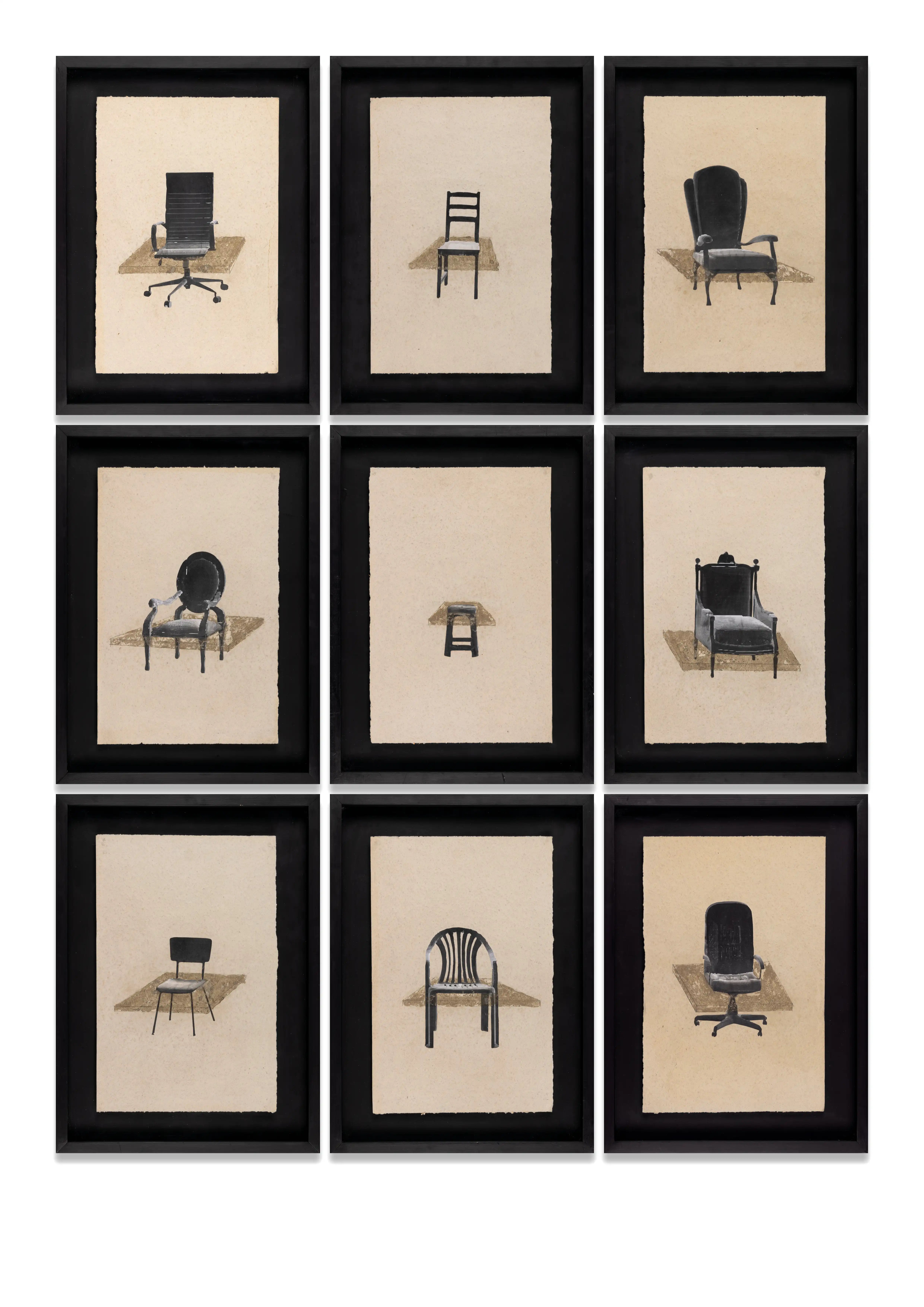
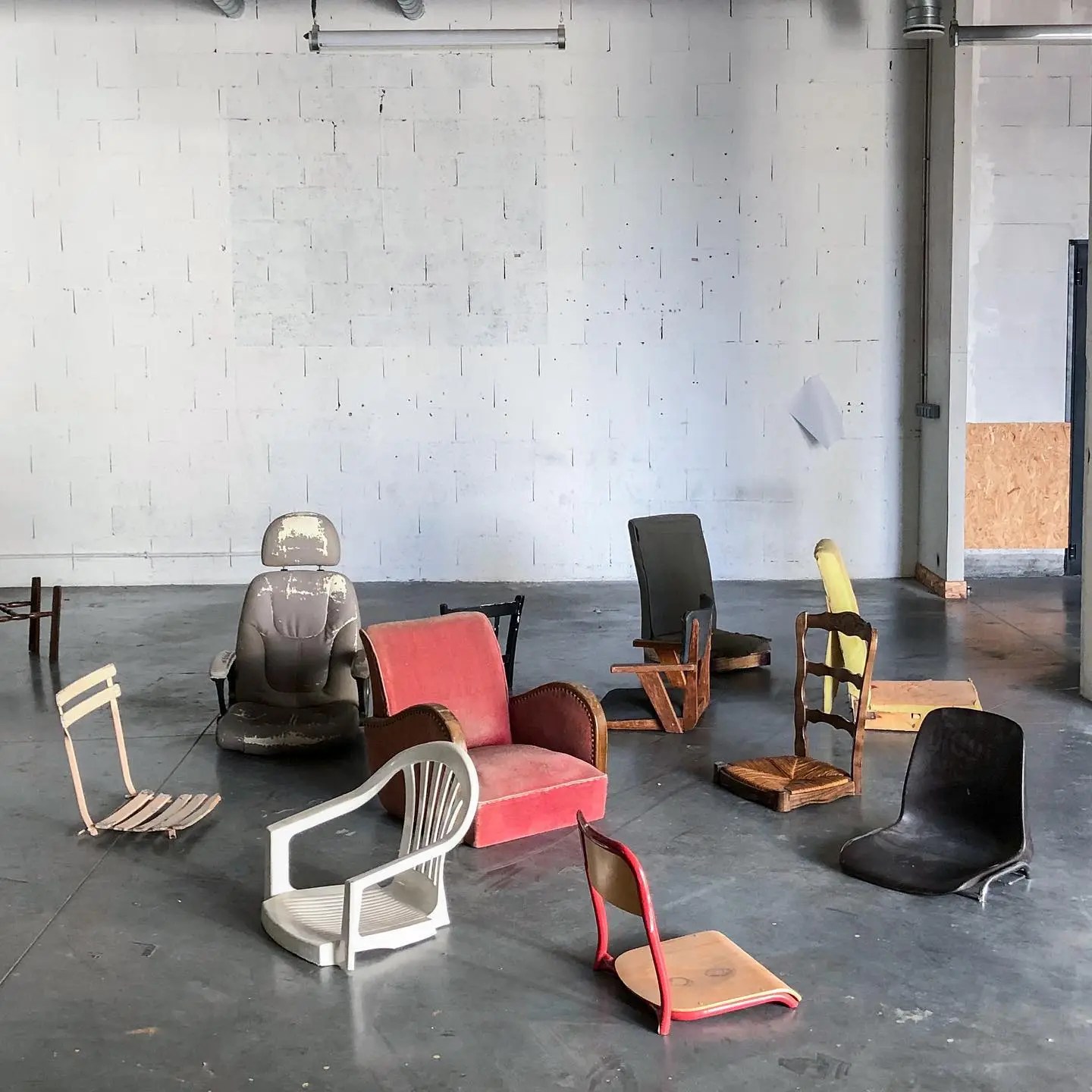
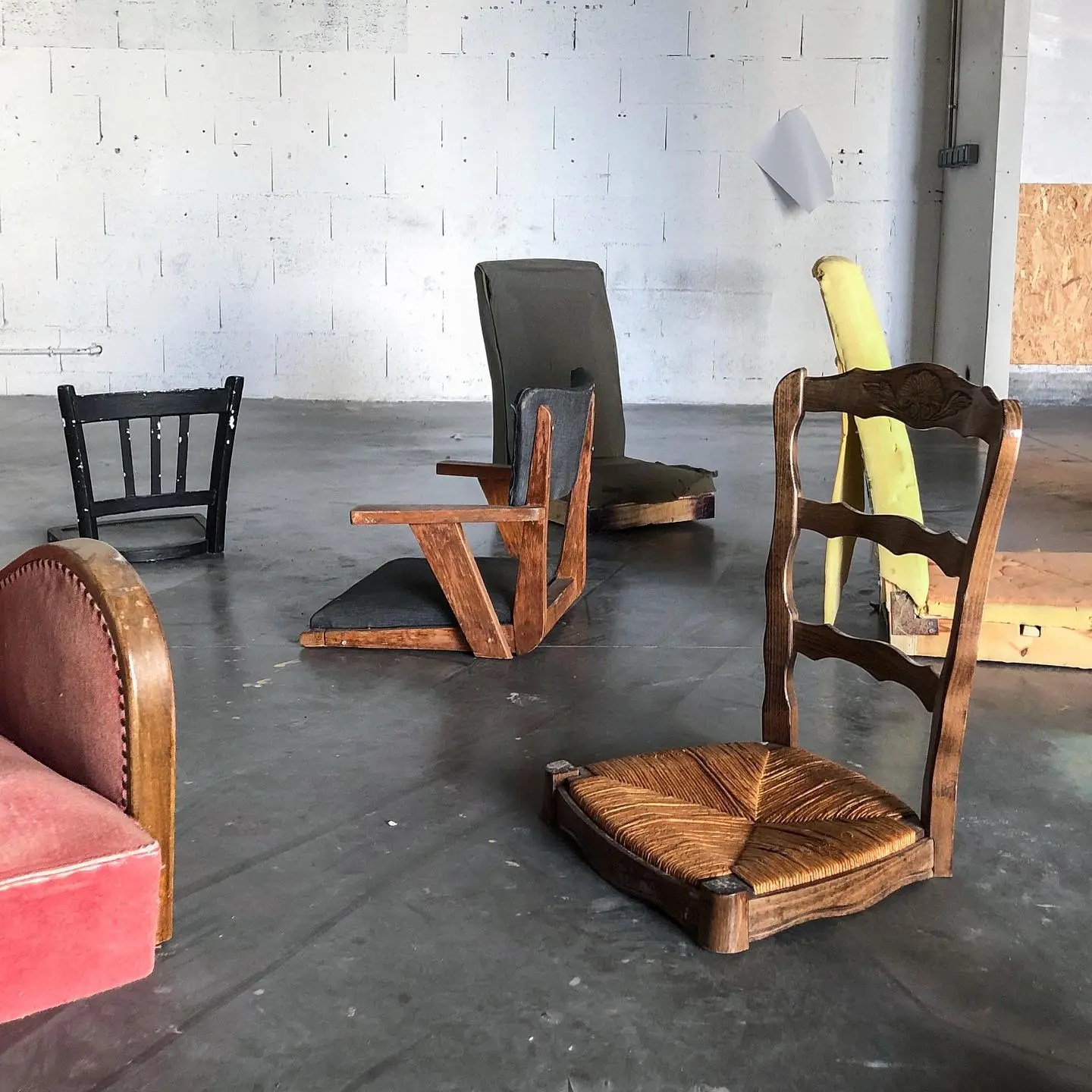
Last summer, I participated in an artist residency in Marseille, which provided the perfect environment to revisit an old project I started in 2021. The project, titled Study of Chairs, Equilibrium and Equality, is an installation that involves gathering different types of chairs and arranging them on the ground, all at the same level, with no legs or elevation.
The process began by walking through the city, observing, and collecting objects that seemed abandoned but still held traces of life and history. Each chair tells its own story—of past owners, different uses, and the passage of time.
The transformation occurs in the way the chairs are rearranged in the installation. By placing them in dialogue with one another and cutting their legs off, I aim to create a kind of gathering—almost like a silent meeting where each chair occupies its own space, yet they collectively evoke absence or disconnection. Most importantly, they are all placed on the same level—floor level—horizontally arranged and displaced, with no elevation.
Have you ever come across an object during your searches that held special meaning or inspired a unique piece of artwork? Can you share the story behind it?
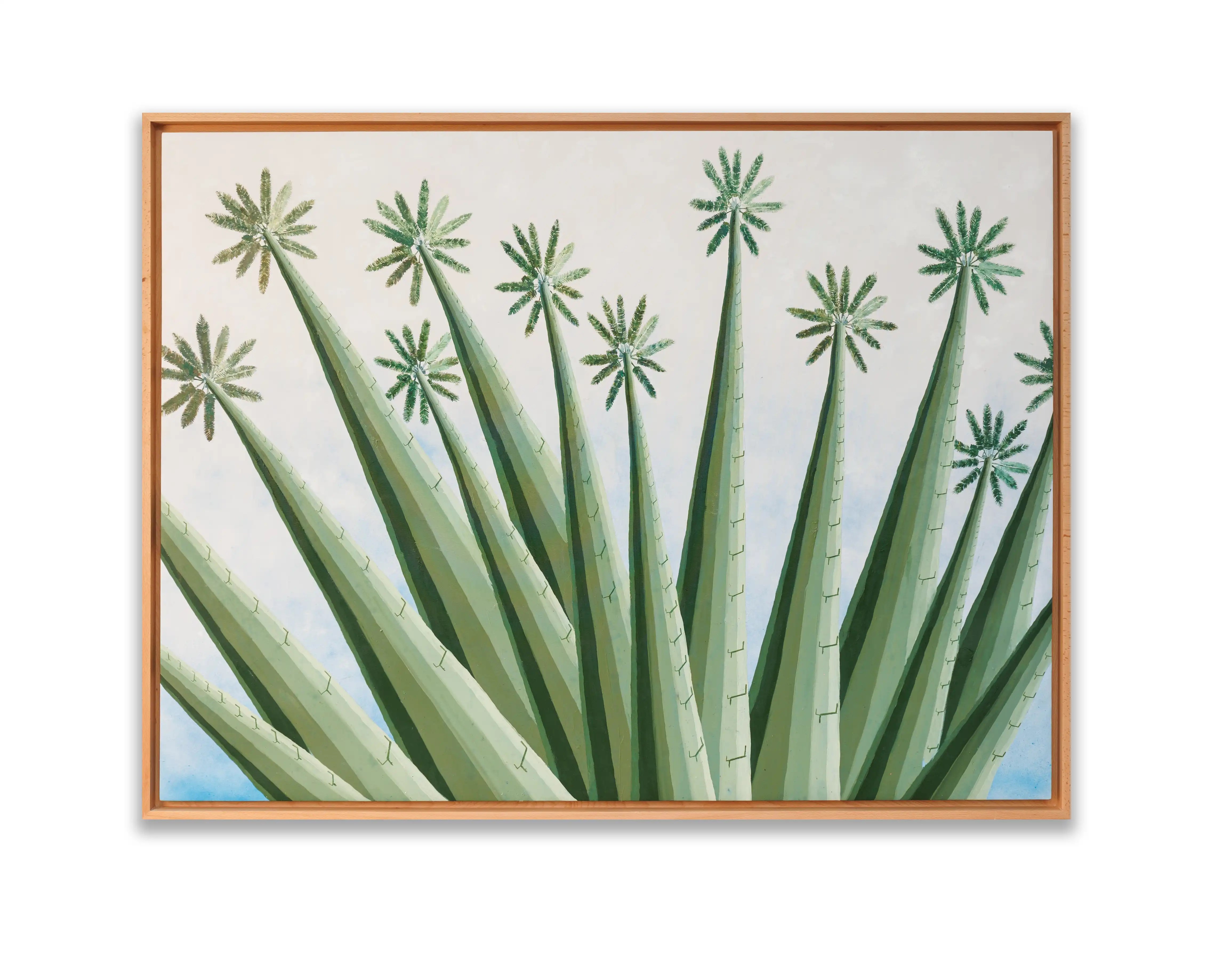
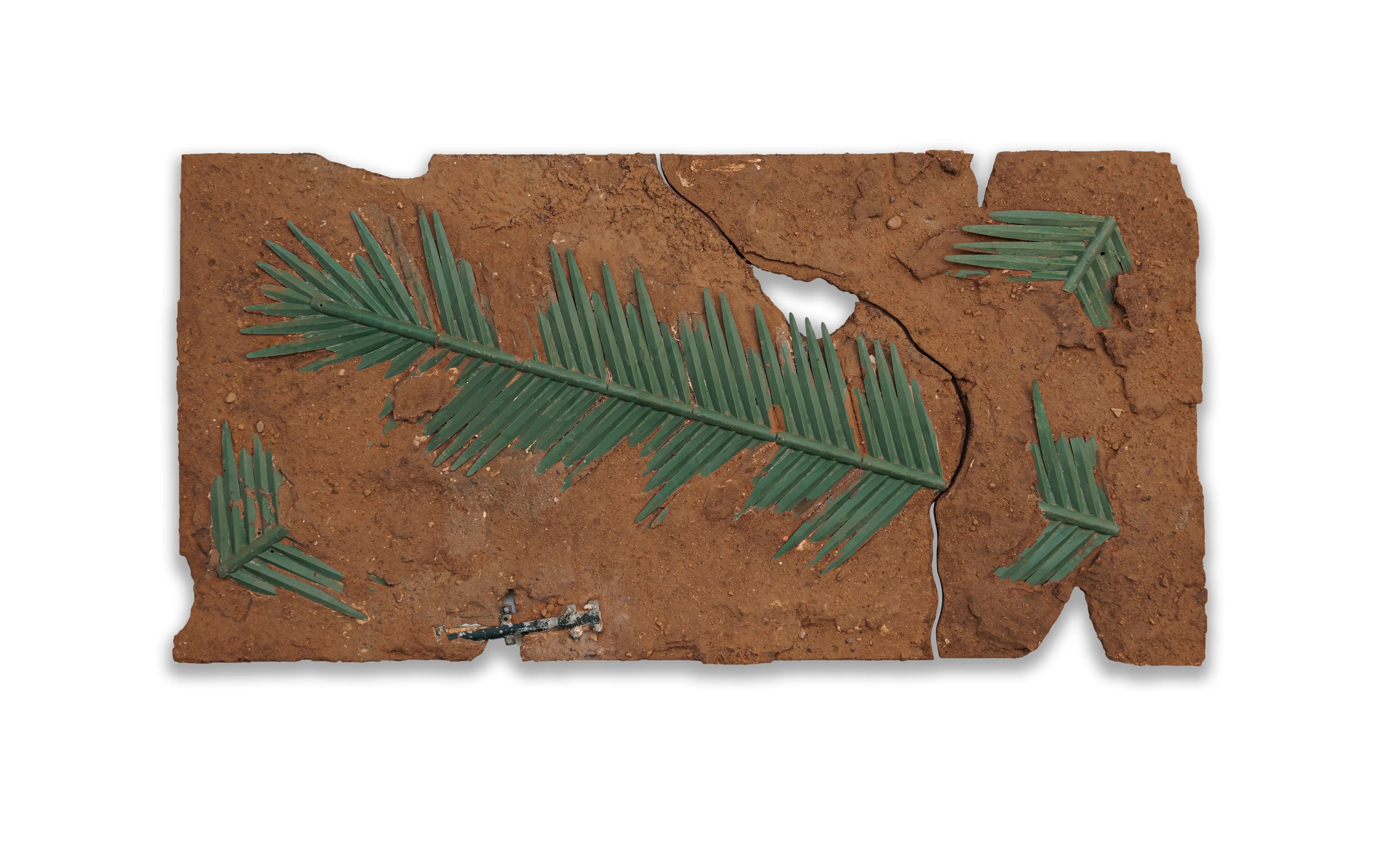
In 2022, I worked on a project around the city cell towers disguised as palm trees that you can now see almost everywhere. And I’ ‘ve always found that very alienating for a landscape. So, one day, I found a huge fake plastic branch that fell from one of these towers (the fake palm trees), and the idea of what I could do with it immediately fell into my mind as well. Which is an alternative and fictional thought of the leaf that falls from the tree during autumn. So, I wanted to make this alienating image as an installation piece made from soils, rocks and fake palm leaves.
Is there a dream project or collaboration you hope to work on someday? Perhaps a particular theme, space, or artist you’d love to explore or partner with?
I think now after around 6 years of making art, I came to the understanding of how things really work. And its really not about dreaming or hoping for something but more about keeping the work going, keep exploring and asking good questions. And what’s gonna come on the way will come eventually. But i can’t deny that yes doing big projects is always a nice thing to do, especially for the possibility of scale it gives you. And for my practice, a bigger scale means more freedom to work with. Which is a nice thing honestly.
What advice would you give to emerging artists who want to integrate everyday life elements into their creative process?
Well, I’m also an emerging artist myself, actually, and I find myself in no position to give advice, to be honest. But I would like to share a poem with whoever is gonna read this interview. It’s called ‘’ The laughing heart’’ by Charles Bukowski.
“your life is your life
don’t let it be clubbed into dank submission.
be on the watch.
there are ways out.
There is light somewhere.
it may not be much light but
it beats the darkness.
be on the watch.
the gods will offer you chances.
know them.
take them.
you can’t beat death but
you can beat death in life, sometimes.
and the more often you learn to do it,
the more light there will be.
your life is your life.
know it while you have it.
you are marvelous
the gods wait to delight
in you.”
 Mediterranean Commune*