
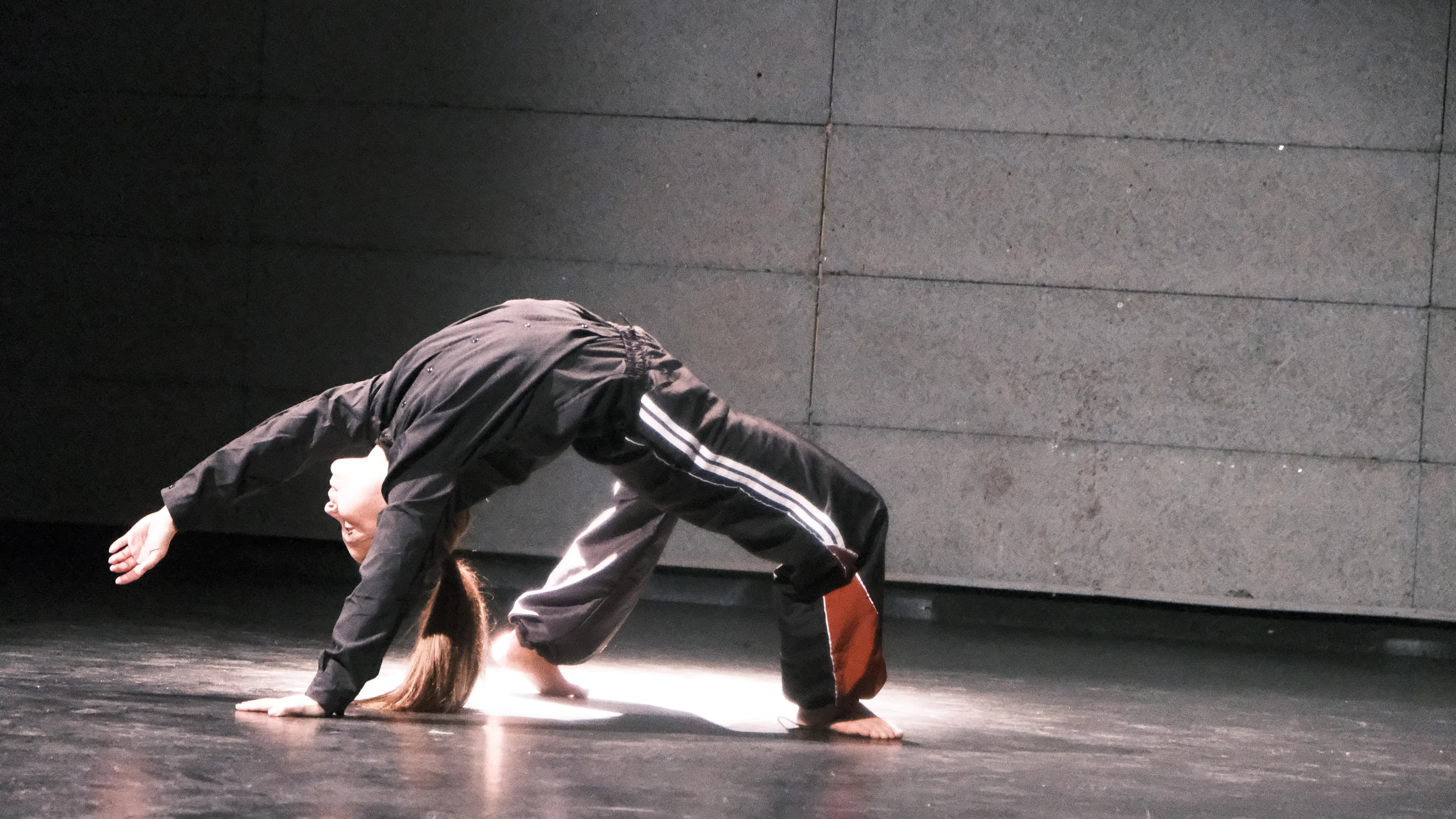
Esma Akın, born in Antalya and currently based in Istanbul, she carries the essence of the Mediterranean in her art, shaped by a deep connection to the landscapes, histories, and rhythms of the region. Her roots, spanning generations and migration stories, influence her creative lens.
As a dancer, choreographer, and multimedia artist, her work delves into themes of collective memory, identity, and resilience. She integrates movement, sound, and visual elements to craft immersive narratives, often rooted in sociopolitical contexts. From co-founding the International Improvisation Dance Festival to creating thought-provoking works like Footprint and NPC Audio Choreography, she challenges artistic boundaries and invites audiences into dynamic, collaborative experiences.
In this interview, we explore the intersection of her personal and artistic journey, discussing how her Mediterranean heritage shapes her art, her reflections on migration and displacement, and the ways she translates complex theoretical concepts into physical movement, creating works that resonate on both emotional and political levels.
Can you share details about yourself? Where are you from, where are you based, and how do you describe your art style? What experiences have influenced your artistic journey?
I’m a dancer, choreographer, and multimedia artist born in Antalya and currently based in Istanbul. My artistic journey is deeply influenced by the collective tensions and shared confinements that shape human experiences, particularly in urban and sociopolitical contexts. These moments of collective “stuckness” inform my exploration of movement as a way to navigate, resist, and transform these shared realities.
Through my work, I delve into themes of collective memory, identity, and the symbolic language that emerges in times of pressure and constraint. I see the body as a powerful medium for unraveling these layers, turning the unspoken and suppressed into dynamic and expressive forms. This exploration shapes both my choreography and my connection to audiences, as I seek to create works that resonate with the shared struggles and resilience of the human condition.
My creative process often integrates interdisciplinary approaches, merging sound, movement, and visual elements to construct immersive narratives. I use improvisation as a foundational tool, allowing spontaneity and instinct to uncover deeper emotional and conceptual layers. Each work I create is informed by a dialogue with the space, its memory, and its architecture, resulting in site-responsive performances that invite the audience into an active engagement. Whether through large-scale productions or intimate encounters, my work seeks to challenge conventional boundaries, transforming movement into a medium for storytelling, resistance, and connection.
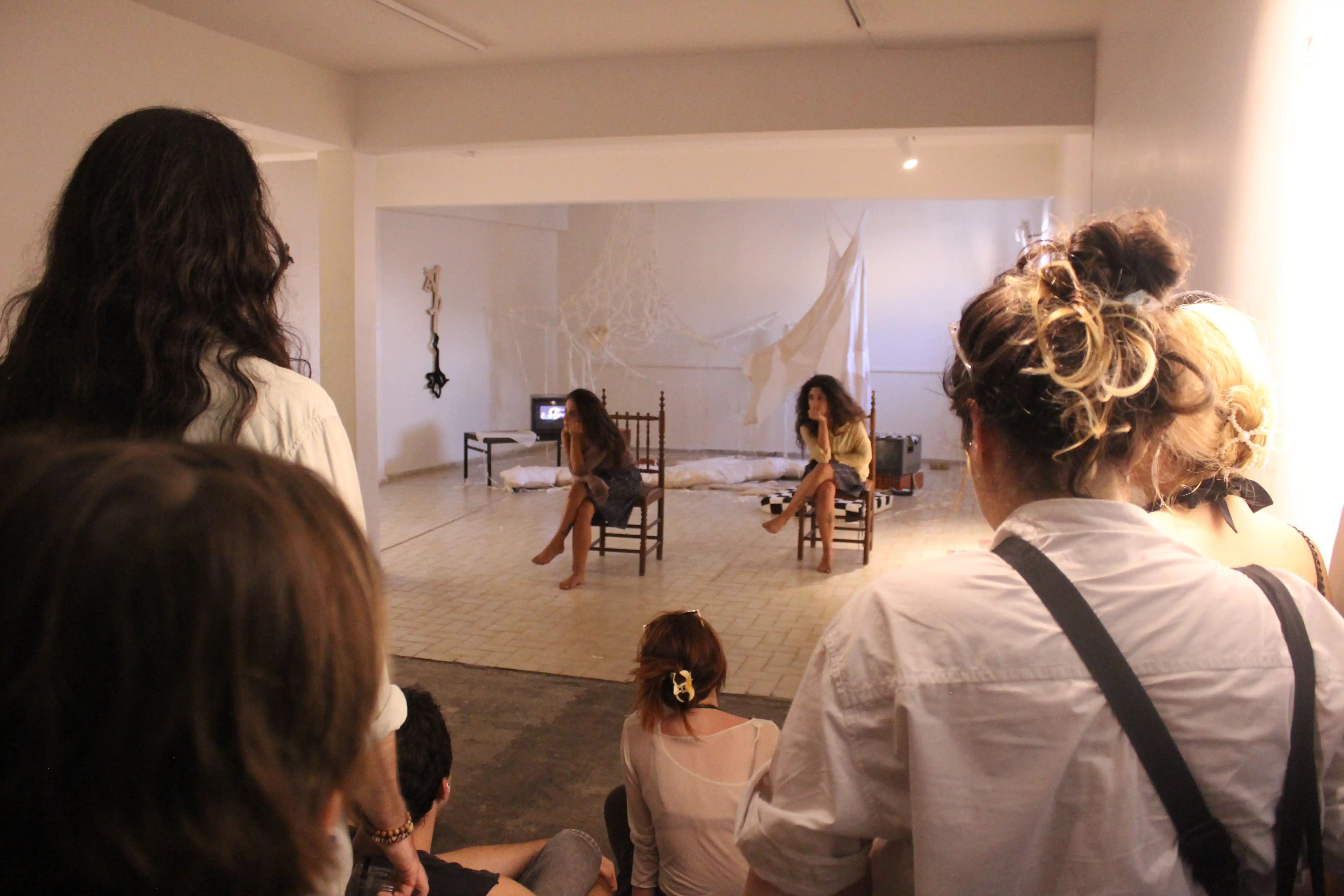
Your work often bridges the personal and political, especially through themes like migration and displacement. How do you balance such emotionally charged subjects with the physicality of dance?
The body is inherently political, inscribed with societal structures, historical processes, and power dynamics that shape its movements, its presence, and its meaning. Dance, as an embodied art form, transforms these inscriptions into expressions of resistance, freedom, and visibility. For me, dance is not merely an aesthetic choice but a political act a medium that bridges the personal and the collective, the individual and the universal.
Through dance, I navigate emotionally charged themes like migration and displacement, translating the weight of these realities into physical gestures that resonate deeply with audiences. This connection is profoundly personal. My grandmother’s journey as a Mora Greek migrant has left an indelible mark on my family’s collective memory, a legacy of uprootedness and longing for a “home” that no longer exists. This inherited sense of dislocation shapes my understanding of migration, not as a transient moment but as a profound, intergenerational experience of loss and adaptation. These stories are carried in my body, manifesting through my movements as echoes of silent traumas and enduring resilience. Dance becomes a way to embody this history, making visible the unseen and giving voice to the unspoken.
My multimedia project Footprint was deeply inspired by the story of Alan Kurdi, the Syrian child whose body washed ashore on a Bodrum shores. His image became a haunting symbol of the human cost of displacement, a stark reminder of the fragility and urgency of life amidst migration crises. In Footprint, I used dance, sound, and visual media to explore the tension between the political and the personal between the abstraction of numbers in global migration statistics and the intimate grief of a single life lost. The choreography in this piece focused on the weight of the body, the fragility of its boundaries, and its presence as both a memory and a mark. Every gesture became a statement: a reclamation of space, a reflection on erasure, and a reminder of the lives left uncounted.
Balancing such emotionally charged subjects with the physicality of dance requires an acknowledgment of the body’s dual role as both an individual and collective archive. A gesture can encapsulate the pain of departure, a pause can embody the uncertainty of liminality, and a turn can signify the fragile hope of a new beginning. These movements transcend the limits of language, engaging both performer and audience in a shared act of witnessing. Dance, in this context, is not just expression it is resistance, inquiry, and transformation.
By materializing the politicization of the body, I aim to create work that bridges the personal and political, making space for dialogue around the complexities of migration, identity, and belonging. Through movement, I strive to honor erased stories, reclaim invisible narratives, and transform silence into resonance. For me, dance is not just a medium, it is a bridge, a memory, and ultimately, a celebration of human existence in its most vulnerable yet resilient form.
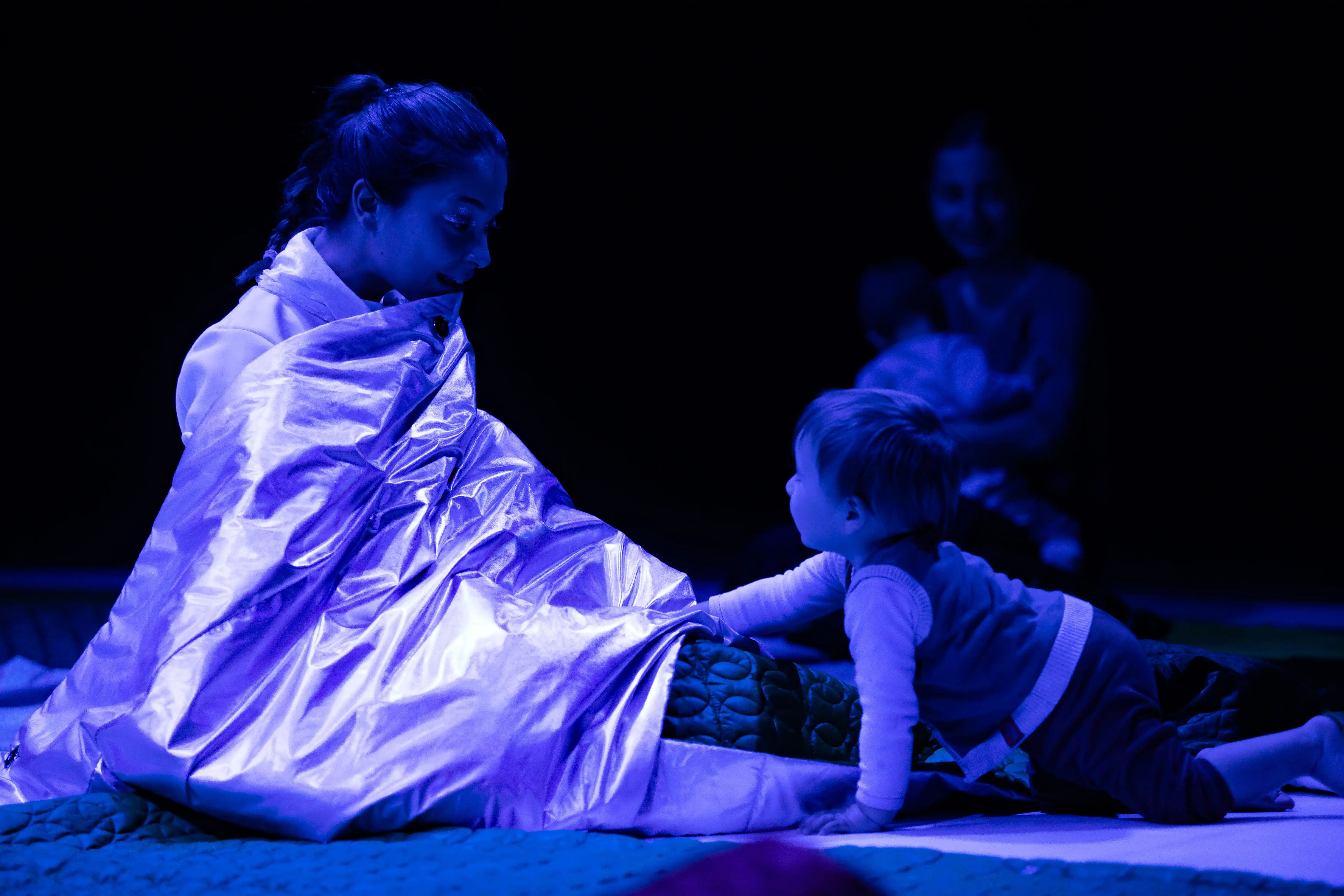
What does being a Mediterranean artist mean to you, and how do you incorporate this identity into your performances and collaborations?
Being a Mediterranean artist means embodying the essence of a region shaped by its vibrant landscapes, rich cultural heritage, and profound sense of connection. Growing up in Antalya, surrounded by the meeting point of the sea, mountains, and ancient ruins, I was immersed in the rhythms and textures of the Mediterranean. The presence of ancient Greek artifacts during my childhood instilled in me a deep awareness of art history and a desire to reimagine this legacy through contemporary forms of expression.Incorporating this Mediterranean identity into my work means embracing its layered memory and interconnectedness. The cyclical rhythms of the region, its seasons, tides, and rituals, inform the flow and structure of my choreographies. The Mediterranean’s emphasis on harmony, balance, and storytelling resonates in my practice, where movement becomes a bridge connecting the past with the present.
The communal ethos of the Mediterranean, rooted in traditions of shared narratives and dialogue, also deeply influences my collaborations. Whether performing or co-creating with others, I strive to reflect the openness and dynamism that define the region. For me, being a Mediterranean artist is not merely about geography; it is about carrying forward the resilience, creativity, and connectivity that have defined this unique part of the world, transforming them into meaningful artistic expressions.
You co-founded the International Improvisation Dance Festival. What motivated you to create this platform, and how do you see it shaping the contemporary dance landscape?
Co-founding the International Improvisation Dance Festival was born out of a deep desire to create a platform where spontaneity, experimentation, and collaboration could thrive. Improvisation, for me, represents the purest form of movement, unfiltered, raw, and deeply connected to the present moment. I wanted to provide a space where dancers, choreographers, and interdisciplinary artists could come together to explore this art form, breaking free from rigid structures and allowing for authentic creative expression.
The motivation also stemmed from recognizing a gap in the contemporary dance landscape. While many festivals celebrate choreography, few prioritize improvisation as both a practice and a performance art. Improvisation is not only about movement but also about risk-taking, adaptability, and the ability to respond to uncertainty, qualities that resonate deeply with the complexities of our modern world. By creating this platform, I aimed to highlight the transformative potential of improvisation and its capacity to foster deeper connections between artists and audiences.
I see the festival as a space that challenges traditional notions of dance and redefines its boundaries. By bringing together diverse voices and perspectives, it cultivates a sense of collective creation and mutual discovery. The festival doesn’t just showcase performances but also emphasizes workshops, discussions, and interdisciplinary collaborations, encouraging participants to engage with improvisation as a dynamic, ever-evolving practice.
In shaping the contemporary dance landscape, I believe the International Improvisation Dance Festival contributes to a shift toward inclusivity and experimentation. It celebrates the process as much as the outcome, valuing the vulnerability and authenticity that improvisation demands. This approach not only enriches the art form but also invites audiences to experience dance as a shared, living moment, unpredictable, intimate, and profoundly human.
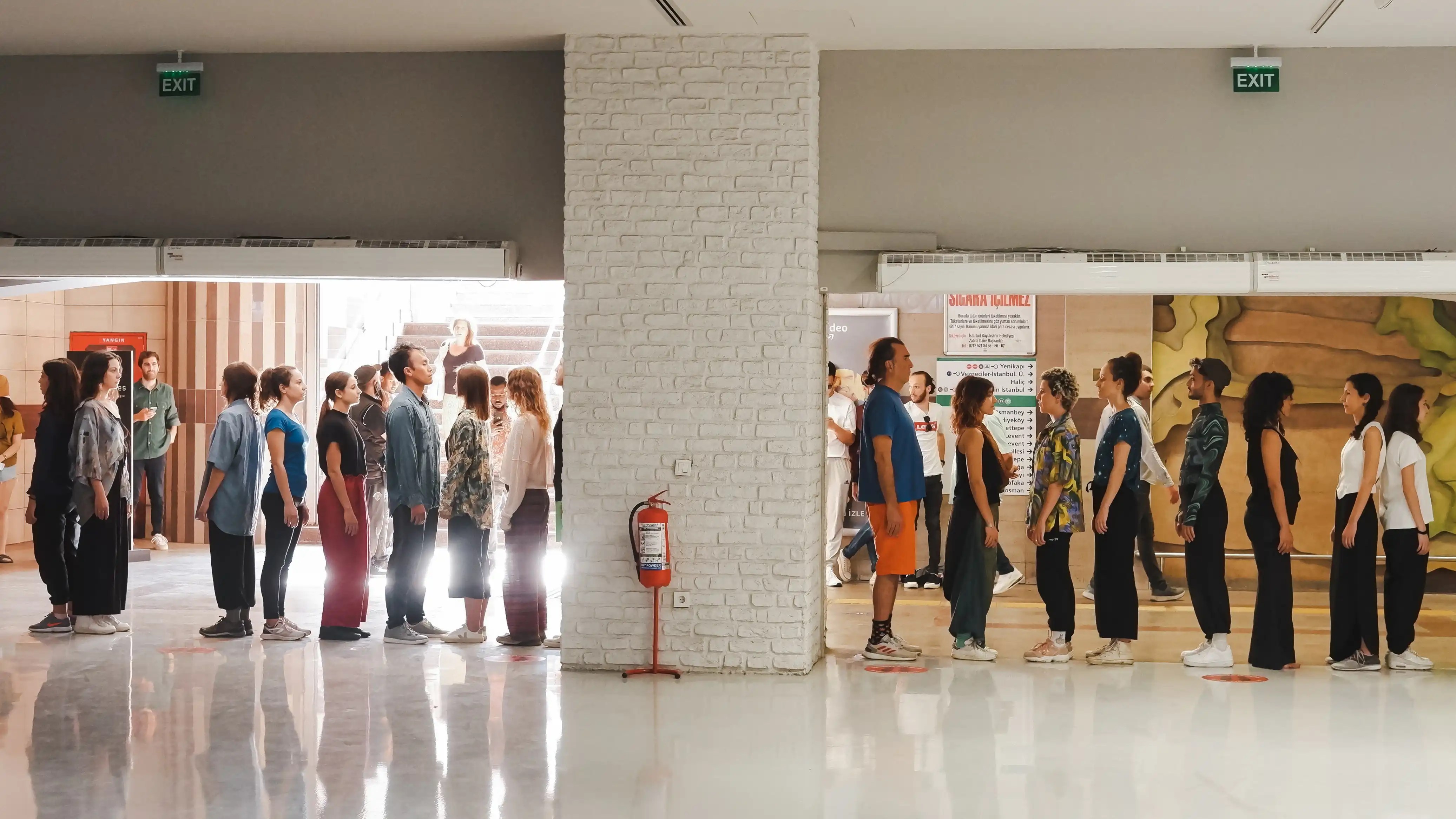
Your piece NPC Audio Choreography draws inspiration from Donna Haraway’s Cyborg Manifesto. How do you approach translating such complex theoretical concepts into physical movement?
Translating Cyborg Manifesto into physical movement is both a challenge and a deeply rewarding process. My approach begins with immersing myself in the text—not just intellectually but emotionally, allowing its core ideas and imagery to resonate within my body. For me, theoretical concepts are not static; they are alive, layered, and dynamic, much like the body itself. Dance, as a medium, offers a way to embody these abstract ideas, transforming them into visceral, tangible experiences.
In NPC Audio Choreography, I was particularly drawn to Haraway’s exploration of hybridity, the dissolution of boundaries, and the redefinition of identity in a posthuman context. These ideas naturally lend themselves to movement. The concept of the cyborg a fusion of human and machine, invites physical exploration of contrasts: organic versus mechanical, fluid versus rigid, connected versus isolated. By playing with these dualities in movement, I aimed to evoke the tensions and possibilities that Haraway presents. This site-specific performance, created as part of the Yuva exhibition at BarınHan, merged these theoretical frameworks with an exploration of “home” as both a physical and conceptual space. Audio choreography became a central technique, integrating sound design with spatial dynamics to guide participants through an immersive experience.
The soundscapes disrupted traditional rhythmic structures, introducing fragmented and layered auditory environments that shaped both the movements of the performers and the audience’s journey through the space. Participants followed audio-guided instructions, which immersed them in BarınHan’s architecture, ambiance, and narrative layers, transforming the act of movement into a collaborative exploration of “home.” Inspired by Haraway’s Cyborg Manifesto, the performance positioned artificial intelligence as an extension of the subject, blending fiction and reality to reimagine “home” as both an emotional and mental refuge. Participants were invited to actively engage with the choreography, following performers across different levels of the building. Each step offered an alternative perspective on “home,” investigating its resonance within the body and its connection to memory and environment. The interplay between sound, movement, and the memory of the space created a fictional yet tangible sense of belonging, one that reflected the hybrid and boundary-defying qualities of the cyborg.
Through this interdisciplinary approach, NPC Audio Choreography sought to capture the essence of Haraway’s ideas while simultaneously rooting them in the lived experience of the audience. By intertwining physical movement with audio-guided interactions, it explored how the concepts of identity, home, and connection are constantly being negotiated in an increasingly complex, posthuman world. This layering of sound, space, and movement allowed participants to experience the performance not just as spectators but as co-creators, embodying the tensions and possibilities inherent in the cyborg narrative.
Do you have specific practices or rituals, physical, mental, or emotional that help you break through moments of creative block?
Overcoming creative blocks requires a holistic approach that weaves together physical, mental, and emotional practices, helping me reconnect with my creative flow. Physically, I turn to movement; whether through improvisation, somatic release techniques, or walking in nature, to ground myself and clear the mental fog. These practices remind me that creativity is deeply rooted in the body, where instinct and rhythm often guide the way forward. Mentally, I reframe the block as an integral part of the process, not a failure.
Journaling, immersing myself in other art forms, or embracing “deliberate stillness” allows me to shift perspectives and invite fresh ideas to emerge. Emotionally, I honor the vulnerability that often accompanies such moments, seeing it as fertile ground for growth and transformation. Practices like meditation, collaboration, or simply sitting with my emotions enable me to transform uncertainty into insight. Together, these practices form a philosophy of trust, acknowledging that creative blocks are not obstacles but pauses, moments when the subconscious integrates deeper truths. Through this lens, I’ve come to understand creativity not as a linear act but as a dynamic cycle of stillness and movement, silence and revelation.
What advice would you give to aspiring performing artist for finding their own style?
For aspiring performing artists seeking to discover their own style, my advice is to embrace curiosity, authenticity, and patience, allowing your journey to unfold organically rather than forcing immediate results. Start by exploring widely—immerse yourself in diverse art forms, disciplines, and experiences that challenge your perspective and ignite your imagination. Inspiration often comes from unexpected places, but let these influences guide you toward experimentation rather than replication. Listen deeply to your body, as it is your most honest teacher; improvisation and instinctual movement can reveal patterns and emotions unique to you.
Authenticity requires vulnerability, so be willing to express the parts of yourself that feel raw, uncertain, or imperfect—this is where true artistry lies, in sharing your humanity. Take time to reflect on your process; your artistic style is deeply connected to your life experiences, values, and the stories you feel compelled to tell. Journaling or documenting your journey can uncover recurring themes that shape your vision. Remember, finding your style is not a destination but an ever-evolving process, shaped by personal growth and creative exploration, so give yourself the grace to change and adapt along the way.
Collaboration is another key to growth—engaging with other artists and seeking feedback can provide invaluable insights into your own practice. Ultimately, finding your style is about uncovering what feels true to you, allowing your art to reflect your evolving narrative, and trusting that the path will reveal itself as you continue to explore, create, and connect.
 Mediterranean Commune*