
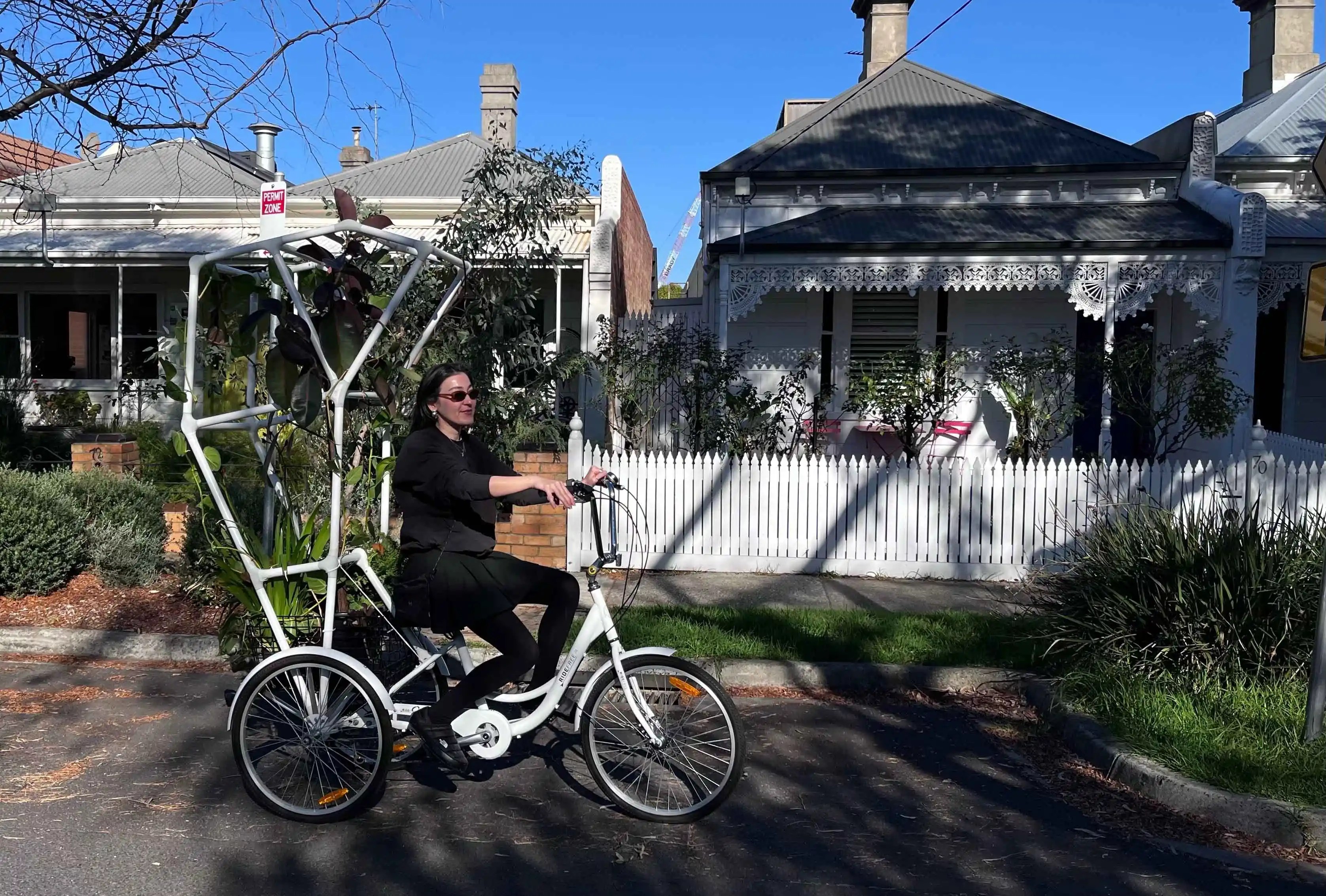
Pınar Ongun is an architectural designer and co-founder of Synthetic Architecture, born in Osmaniye (a city on the Cukurova plain’s eastern edge Turkiye) and residing in Istanbul. With more than 14 years of experience, including carpentry, teaching, and public installations, Pınar is passionate about exploring innovative, creative fields.
Her interest in AI began in 2022, challenging her to rethink traditional architectural practices. She uses AI as a tool for collaboration and creativity, combining it with her knowledge of Mediterranean architecture and history. Pınar believes in the importance of collective effort and sees AI as a way to enhance human creativity.
In this interview, Pınar Ongun shared her journey as an architectural designer, blending her Mediterranean heritage with modern design and AI technology.
Can you tell us a bit about yourself? Where are you originally from, where are you currently based, and what is your professional and personal background?
I was born and raised in Osmaniye, and I’ve been living in Istanbul for twenty years now.
I’m an architectural designer and have worked in many areas of architecture for the last fourteen years. My favorite role was teaching—it gave me so much joy and allowed me to meet younger designers, from whom I learned a lot. I gained the most life lessons from my five years of carpentry experience, and I experienced my greatest personal growth through the public installation we created for the 2024 Melbourne Design Week. Embracing the process, the experience, and all its uncertainties helped me grow, because these elements are often missing in architectural practice.
I love reading—so much so that I’ve taken two storytelling courses to gain a closer understanding of books. Today, I’m on a journey of AI storytelling, exploring how artificial intelligence will shape architecture and design. I’m someone who believes, and has witnessed, that everything we do ultimately connects.
You’re the co-founder of Synthetic Architecture, where you blend AI with creativity and design. How did you start incorporating artificial intelligence tools into your creative process, and what drew you to this intersection of technology and architecture?
When Midjourney’s beta version was released in July 2022, my partner Ozan began using it. Since we both work on design teams, we already use many tools for architectural visualization. We were curious to see whether software like this could be used for visualization purposes. Honestly, seeing how far it’s come in just two years is incredible.
When Ozan asked me to collaborate, I initially refused and said I was against AI. Then, Ozan reminded me of a memory from my first year in architecture school, about 20 years ago, when a fellow architect—who had graduated 20 years before us—used her 40-year-old practice as a point of reference to claim that if you couldn’t draw by hand, you couldn’t be an architect.
Maybe we don’t need to draw.
We can tell a story. We can show a movie. We can make a sound. There’s nothing more rewarding than experiencing a process in which a designer finds their own path. That journey itself is what’s beautiful. I don’t believe there’s a definitive end result. AI has simply become one of those paths, and in a very short time. I don’t want to be someone who clings to rigid rules or sees things only in black and white—not in life, nor in design.
What inspires you, both professionally and culturally? How do your background and roots influence the way you generate and develop ideas?
My emotions: I try not to do anything that doesn’t make me feel good. I went through an educational and professional period where “being modern”—whatever that truly means—was highly praised, but it didn’t resonate with me. My mother’s family is from Maraş, culturally and religiously diverse, and I attended boarding school there. My father is a nomad (Yörük) from Mersin—a captivating region. I miss it every day and visit whenever possible.
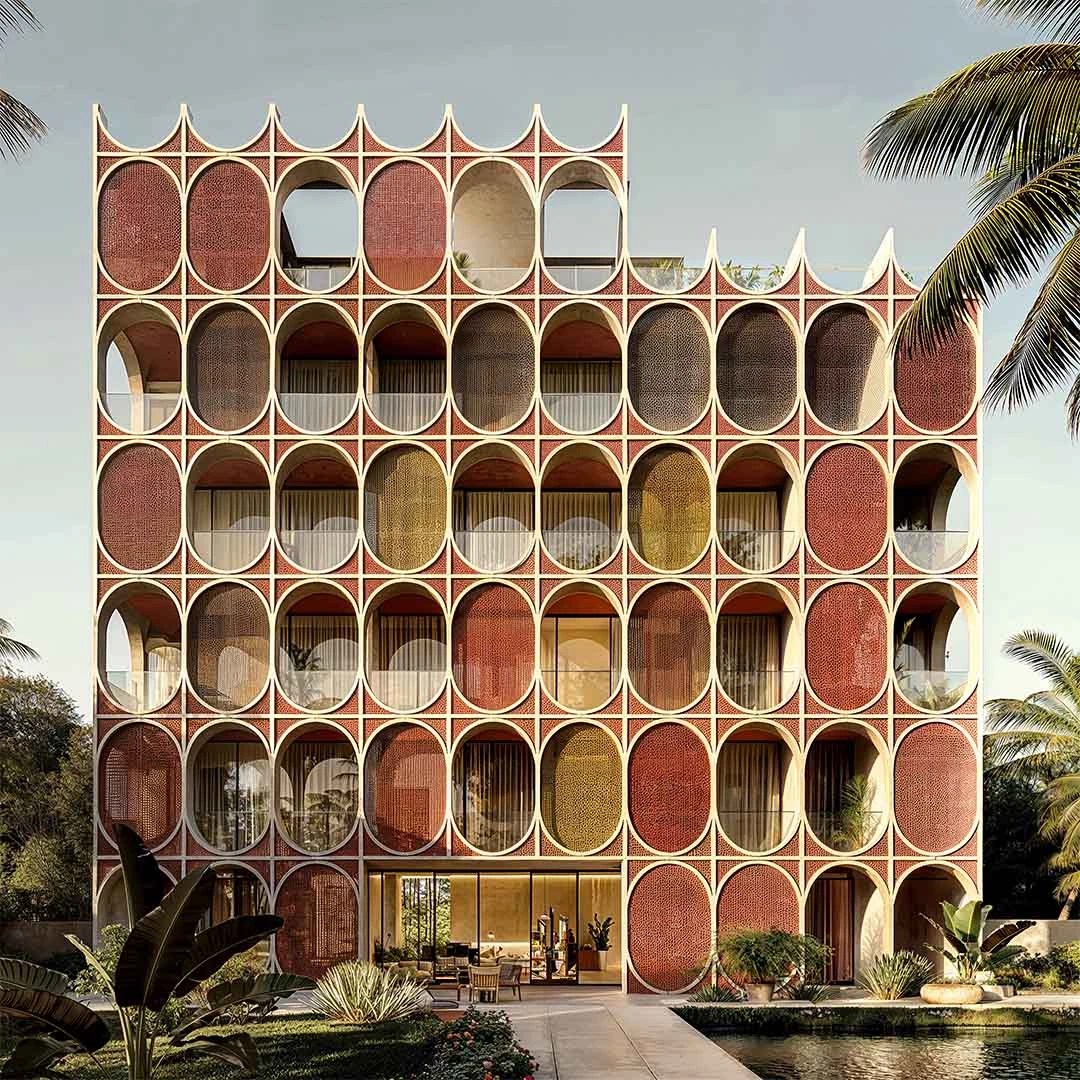
The design language of our homes, which is disappearing rapidly, holds a special place in my heart: open staircases connected from the facade, enormous balconies, hidden courtyards, rooftops. The shadow and light interplay of porous red bricks, and the grape hanging gardens that cover the roofs.
Lately, I’ve been curious about what lies beyond what I already know. I’ve been reading about the Hittites—the Hattusa Kingdom lived in these lands 2,000 years ago. When I look closely now, I see that a chair in my mother’s house is basically a 2,500-year-old design, which I find utterly fascinating.
You have several projects underway construction/ongoing. What are your thoughts on the future of architecture, and how do you see AI tools influencing the way we think and design? Do you anticipate more AI-driven projects becoming a mainstream part of the industry?
First of all, I’m not one of those people who believes architecture will disappear. Moreover, architecture is simply a profession and practice—its name and form can change. This won’t be a problem for those who embrace creative processes.
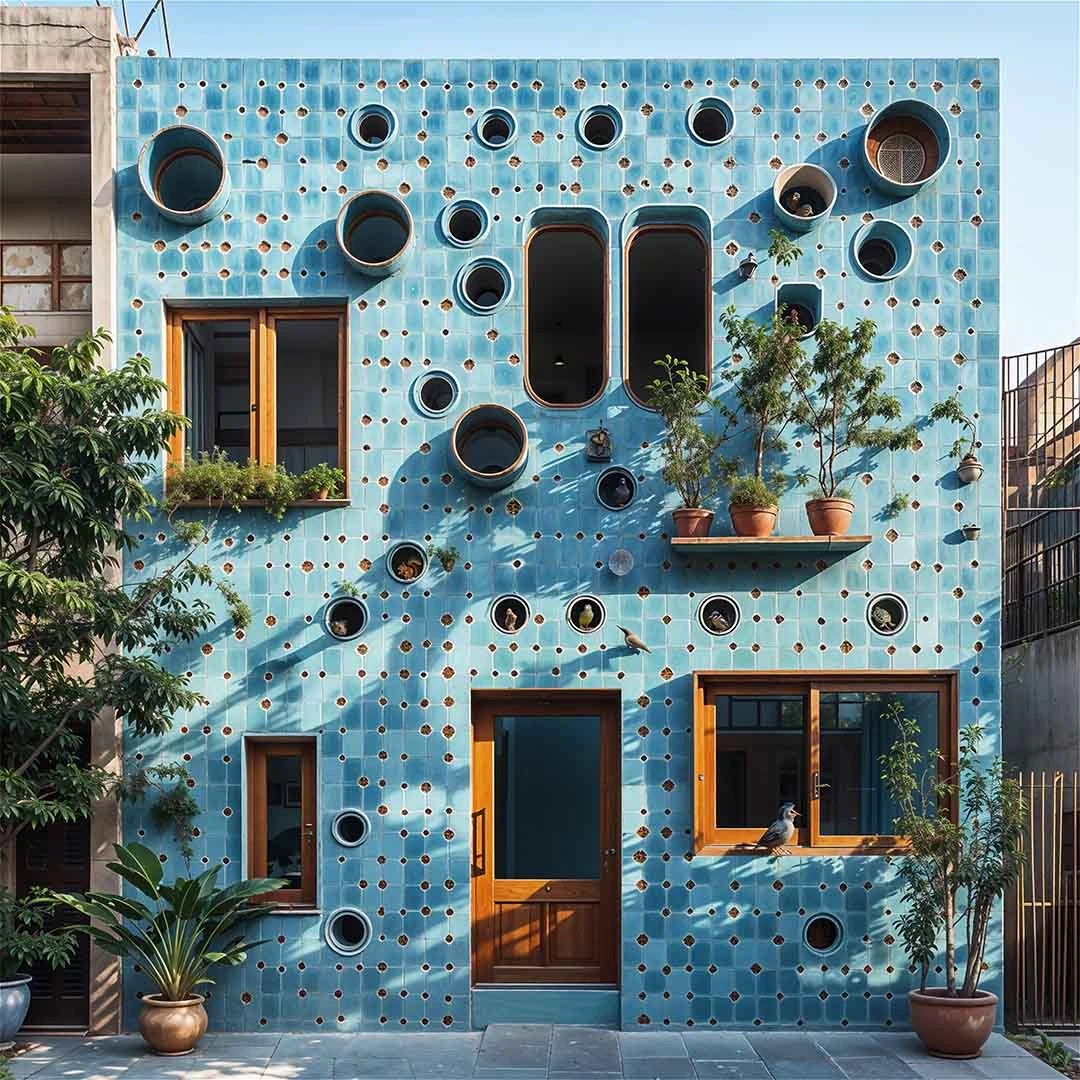
I can say that AI poses a risk of steering the thinking and designing process away from user-focused diversity. Current production trends lead to images that look alike, which aligns all too well with the architect’s historical ego. Some effort is required to make AI truly liberating. The word “synthetic” has its roots in the Greek “suntithenai,” meaning “place together.” That’s where our journey began. The clearest thing we see in our outputs is that they have no single language. We’re exploring how AI tools can communicate—whether they can truly converse with us or if they’re just generating their own algorithms.
We call these outputs AI sketches. Sketches are for thinking, and there’s a long road ahead in our projects before these ideas become final results. According to AIA, around 40% of small, medium, and large-scale offices are using AI this year, and I believe it will spread rapidly.
In the end, traditional tools and AI tools will walk hand in hand, and we’ll likely see the democratizing effect of this very soon. In the future, I definitely think large-scale architecture firms’ time will come to an end. They’ll be replaced by smaller and medium-scale firms, meaning more designers and fewer workers.
What role does human creativity play alongside AI tools? How do you strike a balance between technology and artistic intuition in your work?
The AI tools we use primarily draw on a big data pool that contains all our information—from our drives and iCloud to Instagram and digitally published materials. Undoubtedly, every image generated here is a collective production.
AI storytelling determines how much of that collective production is truly “mine.” I write very long, detailed scenarios. Otherwise, it just produces soulless images that all look alike. In other words, AI tools aren’t a main design tool, but they can serve as a kind of shared thinking tool. AI is part of a unifying collective—yet without human creativity and production to sustain it, it would be stuck in a barren loop, just another tool.
Architectural production is quite removed from artistic production, but we can say that flow and craftsmanship are part of the creative process. However, when it comes to the final output, technology, institutions, and other professionals get involved, and the process quickly moves away from art production. We nurture ourselves with art to preserve our creative spirit.
Are there any upcoming projects you’re especially excited about? Could you share a glimpse of what’s in store for Synthetic Architecture in the near future?
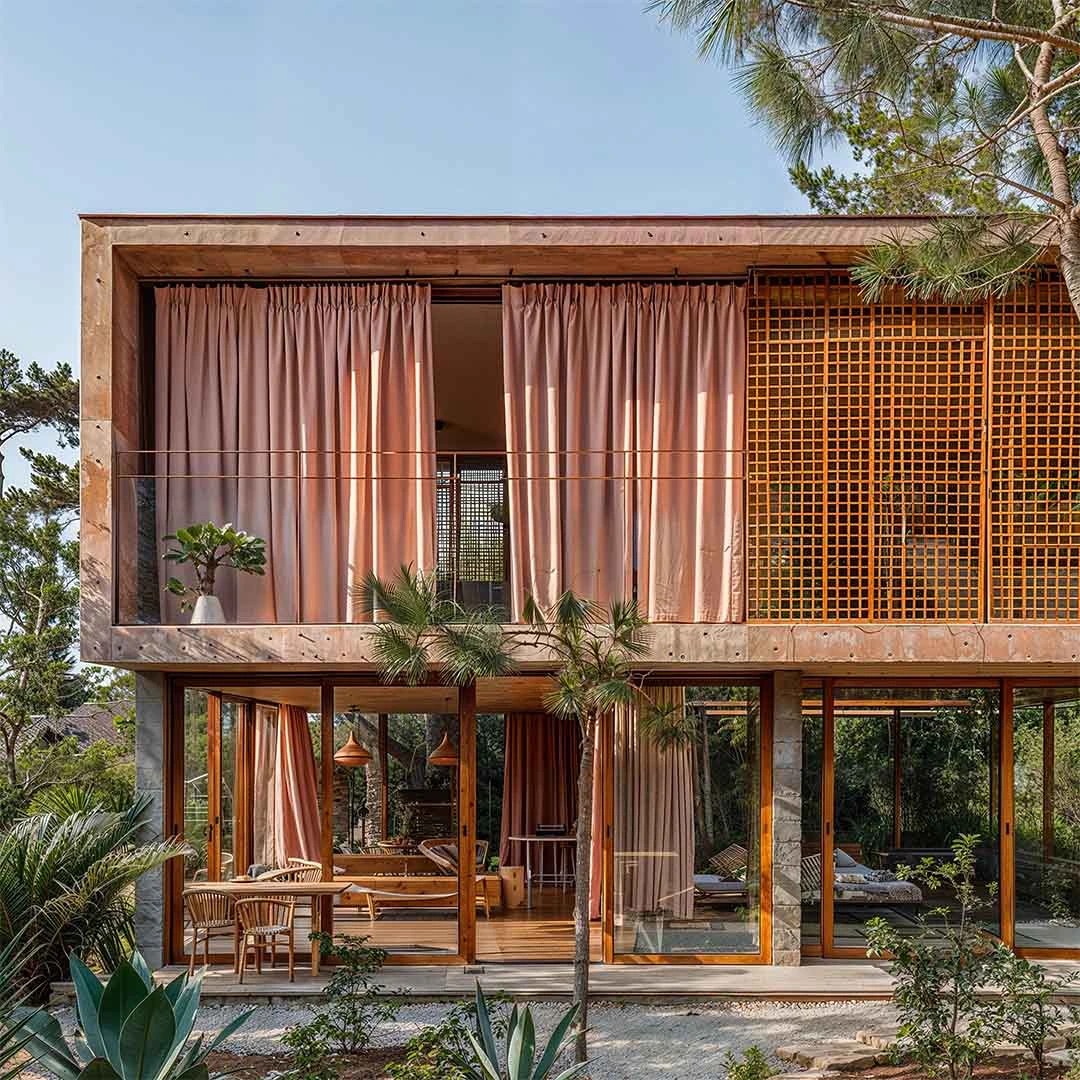
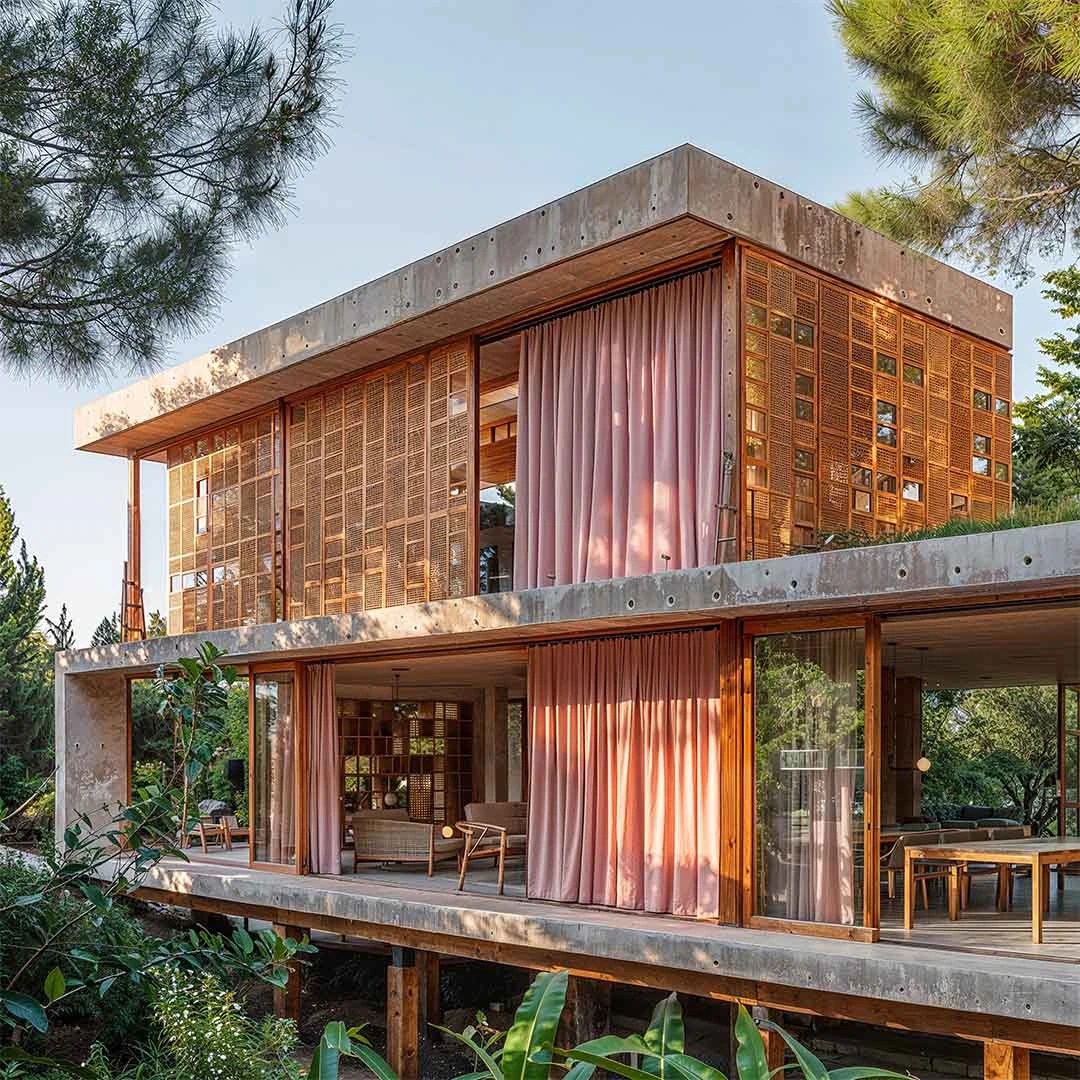
We’re designing a boutique hotel in a Mediterranean country that’s very special to us. Its vernacular architecture is unique, and we’ve been working extensively on it. In April, I’ll be attending Milan Design Week with a furniture design, which I’m particularly excited about.
From the start, our vision for Synthetic Architecture was to create a production studio where we can share our ideas. In a short time, we’ve crossed paths with many designers, and our next goal is to expand global collaborations more.
What advice would you give to aspiring creatives who want to explore AI in their work? Are there any specific tools, approaches, or mindsets they should adopt to get started effectively?
Experiencing is the most important part of any process. Each method of creation gains its own character over time, and it definitely requires patience. I spend half of my work hours simply exploring something. In some ways, it feels repetitive and exhausting, but I know that consistent effort eventually leads to results. That’s why staying excited is key.
In this sense, my advice would be not to work alone. Collaborations tend to produce more enjoyable outcomes than solo efforts. Managing processes that complement each other keeps things vibrant. As a designer, I can clearly see the difference between those who create AI outputs by themselves and those who don’t.
Discussing and curating the results together opens entirely new mental doors. After all, as I mentioned before, AI sketches are a collective production pulled from big data. The more collective the process, the richer the outcome becomes.
Being a good reader and a curious explorer of multiple cultures would be truly wonderful.
 Mediterranean Commune*