
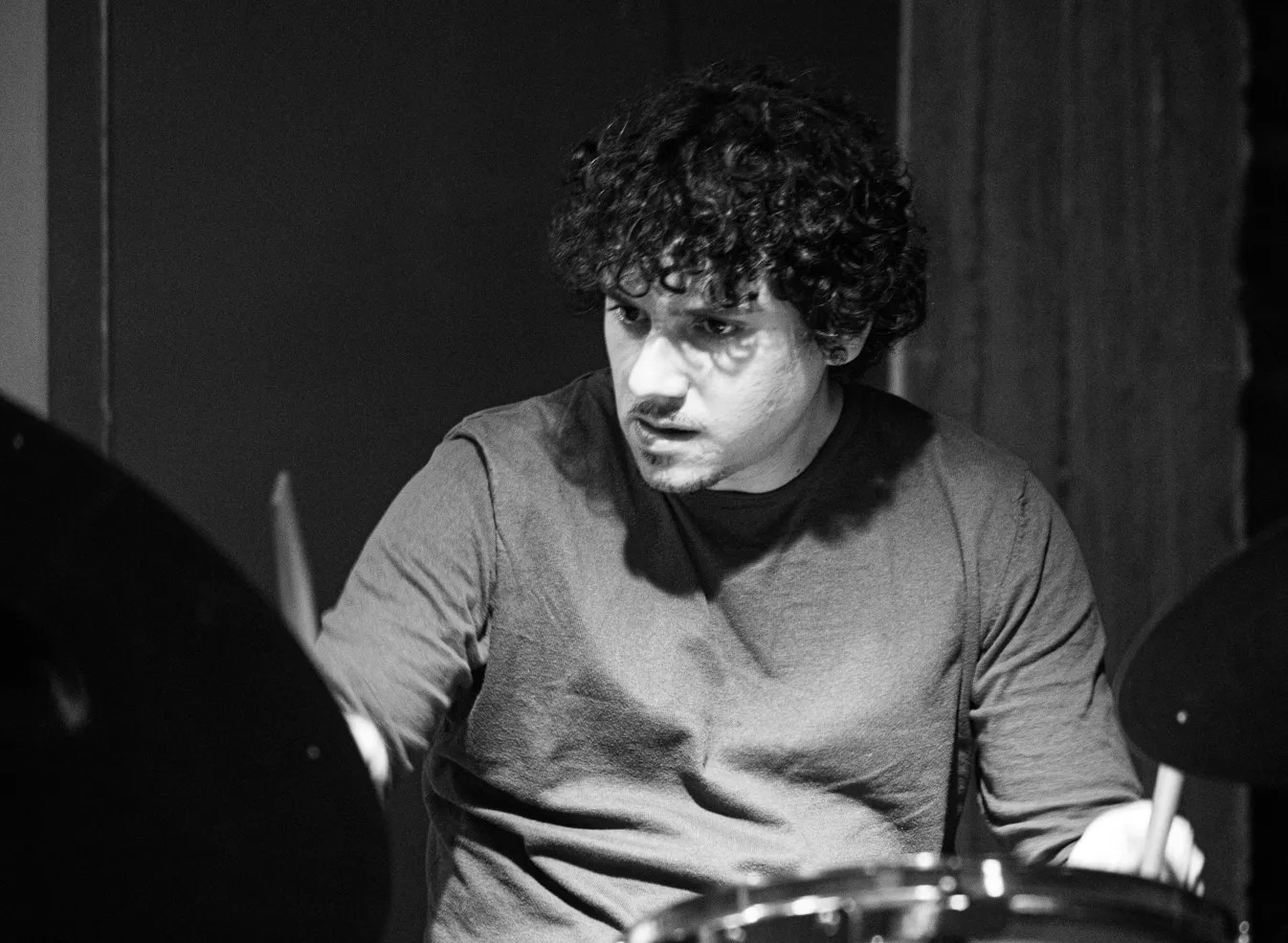
Eloi Pascual is a jazz drummer and composer originally from Vigo, Galiza, Spain, now living in Amsterdam, Netherlands.
Coming from a musical family, Eloi’s journey began with classical training and later expanded to metal, rock, and jazz. His move to Amsterdam opened up new opportunities to explore music, connect with diverse musicians, and focus on jazz in a deeper way.
In this interview, Eloi shares his story, from his roots in Spain to his experiences in Amsterdam’s vibrant music scene, and talks about the challenges and joys of blending different styles and cultures in his music.
Could you share a bit more about your background — where you’re originally from, where you’re currently based, and any personal insights into your journey as an artist?
I was born and raised in Vigo (Galiza, Spain) to a Galician father and a Catalan mother, both musicians. My mother stopped playing when I was born, but my father kept going professionally as an arranger and pianist. The drums caught my attention at a very young age, and when I was 6–7, I got into the Conservatory to study classical music. In the beginning, I got occasional drum lessons, but afterwards, it was all classical percussion material, so I kept playing drums by myself. Although my father loves jazz, I didn’t connect to it until much later. Instead, I fell in love with metal/rock, and as a teenager, I got into different local bands, one of them named “Dysnomia”, which got pretty good reception internationally. When I became curious about jazz around age 20, I started getting into the scene and taking lessons, and 3 years later, I moved to Amsterdam to study for a degree at CvA.
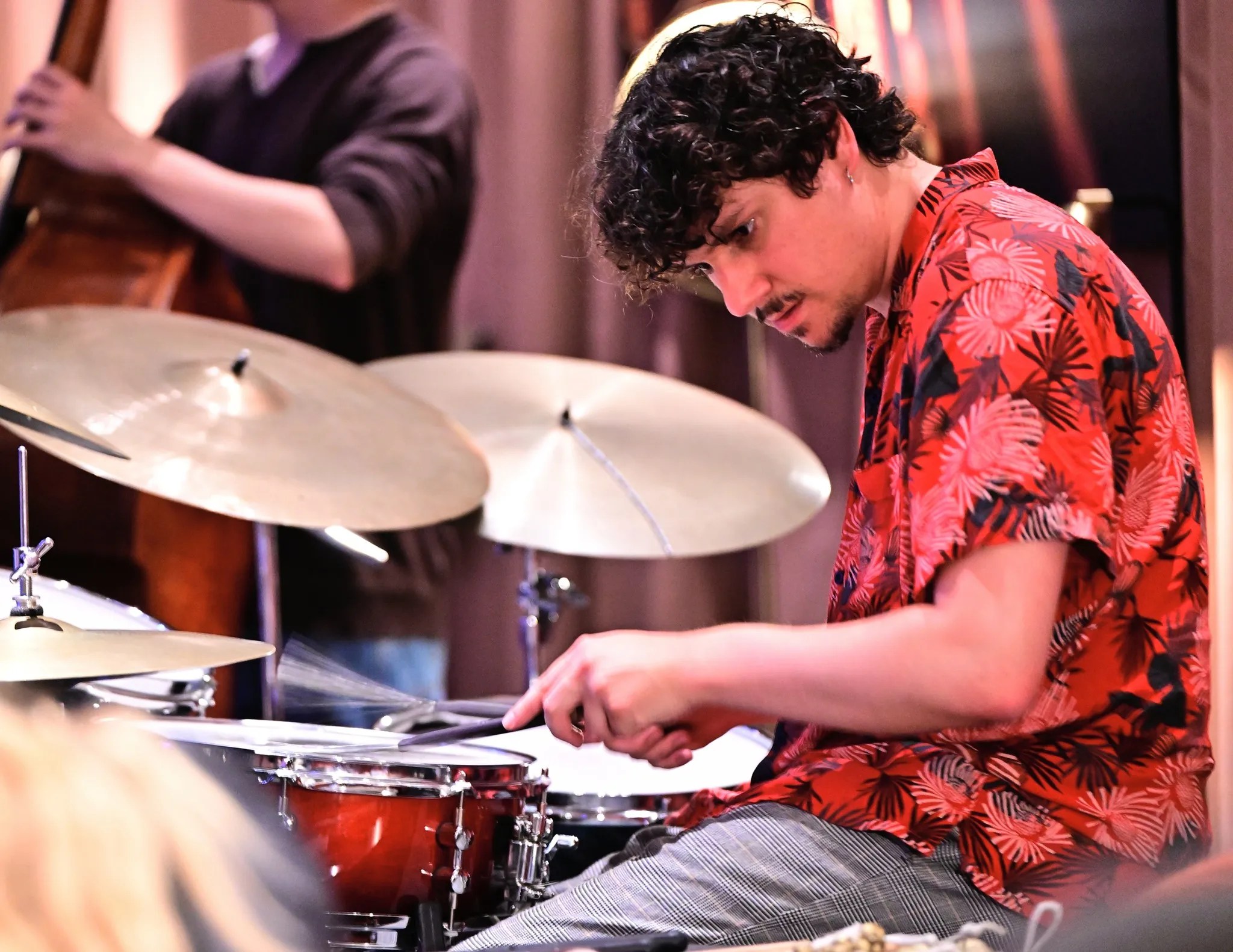
Your musical journey started at an early age and spans diverse genres. How did transitioning from metal to jazz influence your approach to drumming and composition?
Good question, I am still figuring that out. When I was in Spain, I was playing everything — metal, jazz, classical music, punk… But I was developing jazz from another completely different angle. I actually feel I had to re-learn how to play. The turning point was when I moved to Amsterdam because then I focused exclusively on jazz which eventually brought me a completely different understanding of music, the possibilities of the instrument and the importance of listening.
Also, in metal, nothing was improvised — I would write my drum parts behind the computer, learn them and perform them the same way every time, just like I was doing with classical percussion pieces. Improvisation brought me a much deeper way of communicating and relating to other human beings, which made me develop very different values. I find some of these values really beautiful since it’s necessary to put the ego aside to serve the music with kindness and honesty. Imagine what would happen to the world if those were the values of our leaders, too.
How has your Spanish heritage influenced your musical identity, and what impact has living and working in Amsterdam had on your artistic journey? Do you find inspiration in blending elements from these two cultures?
I did play a bunch of Galician/Spanish traditional music in wind bands but I don’t think it influenced me a lot because I didn’t love it so much. Galicia has Celtic roots, so Flamenco is not really a thing there either. Instead, we have bagpipe bands, but I never ventured far into that world.
However, I think I was very influenced by the jazz scene in the west of Galicia. It’s a small (but expanding) group of people from different generations who share the values I mentioned earlier. But half of us live abroad now because there are few opportunities to play — venues can barely sustain themselves, let alone afford regular fair wages for musicians. And in Spain, being a freelancer costs around 300€ per month, so the numbers simply don’t add up. On the contrary, in the Netherlands, there are a lot of private and public funds for art (although the far right is governing now so this is changing), wages are better and when that is not enough, it’s very easy to combine gigs with side jobs. Therefore I can develop a lot more music with different projects, and we all influence each other. The scene here is huge and international, so it’s extremely diverse.
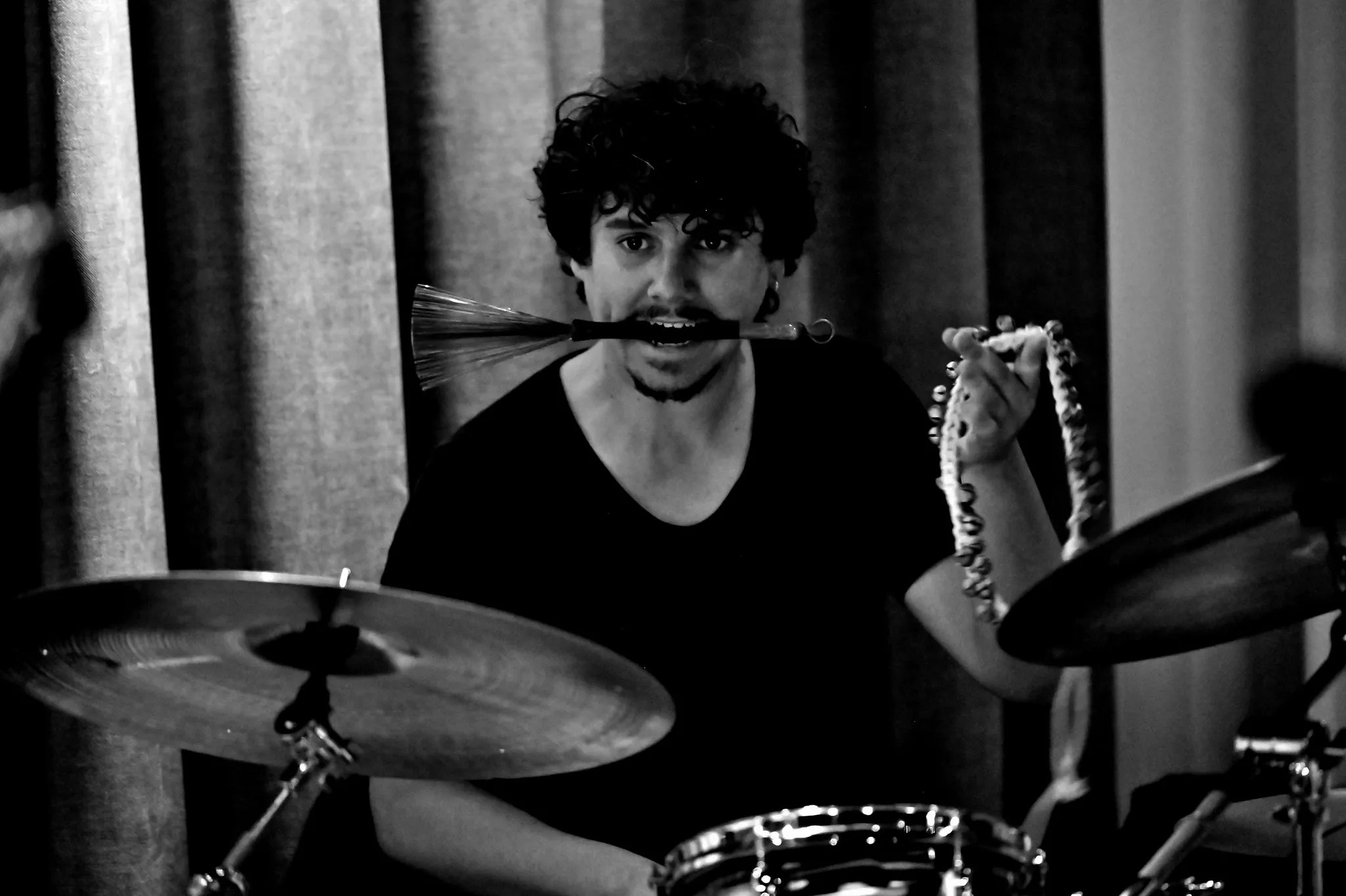
Collaborating with musicians from different cultural and musical backgrounds must bring unique experiences. What are some of the challenges and benefits of working with your trio and other diverse musicians? How does this influence your creative process?
One of the most wonderful qualities of Amsterdam is that there are many chances to find people affine to your values, vision and sensibilities. I have been living here for 7 years, and still, to this day, I continue to find new connections, whether they are already established in the scene or still upcoming. This affinity is one of the most beautiful things I see in my trio — we have been very close friends since our first week here, so we have been developing this affinity to the point where we can do whatever we want with the music. We understand each other so well. The downside of this scene is that everyone is very busy, so we can’t see each other very regularly. But that’s also good for the music because when we play, we all have different experiences, so we have fresh things to bring to the table.
Are there any upcoming projects, recordings, or performances that you’re particularly excited about?
Definitely! I have written a lot of music since I recorded Amarea back in March 2023 so I am trying to gather funds as we speak to record the next one, hopefully next spring. Simultaneously, we will be presenting Amarea around the Netherlands and Spain, but in Spain I will do it with a different quartet with Galician musicians. Additionally, I will be releasing music with a couple different projects, namely CaptainHum, led by French guitar player Fabien Vuattoux (who just launched on YouTube and blends free impro, jazz and rock) and the trio of Finish pianist Teemu Kekkonen, whose next album I recorded just last week.
What advice would you offer to young musicians?
I know everybody says this but it’s true, you have to be yourselves. It’s not about yourselves anyway, it’s about the music. But the only way to truly connect to music is to be yourselves, because it’s not what you want, it’s what you are. Music doesn’t care too much about what you want, I think. When you do what truly moves you, your whole attention is there and then it’s alive. And you also learn much deeper and faster!
 Mediterranean Commune*