
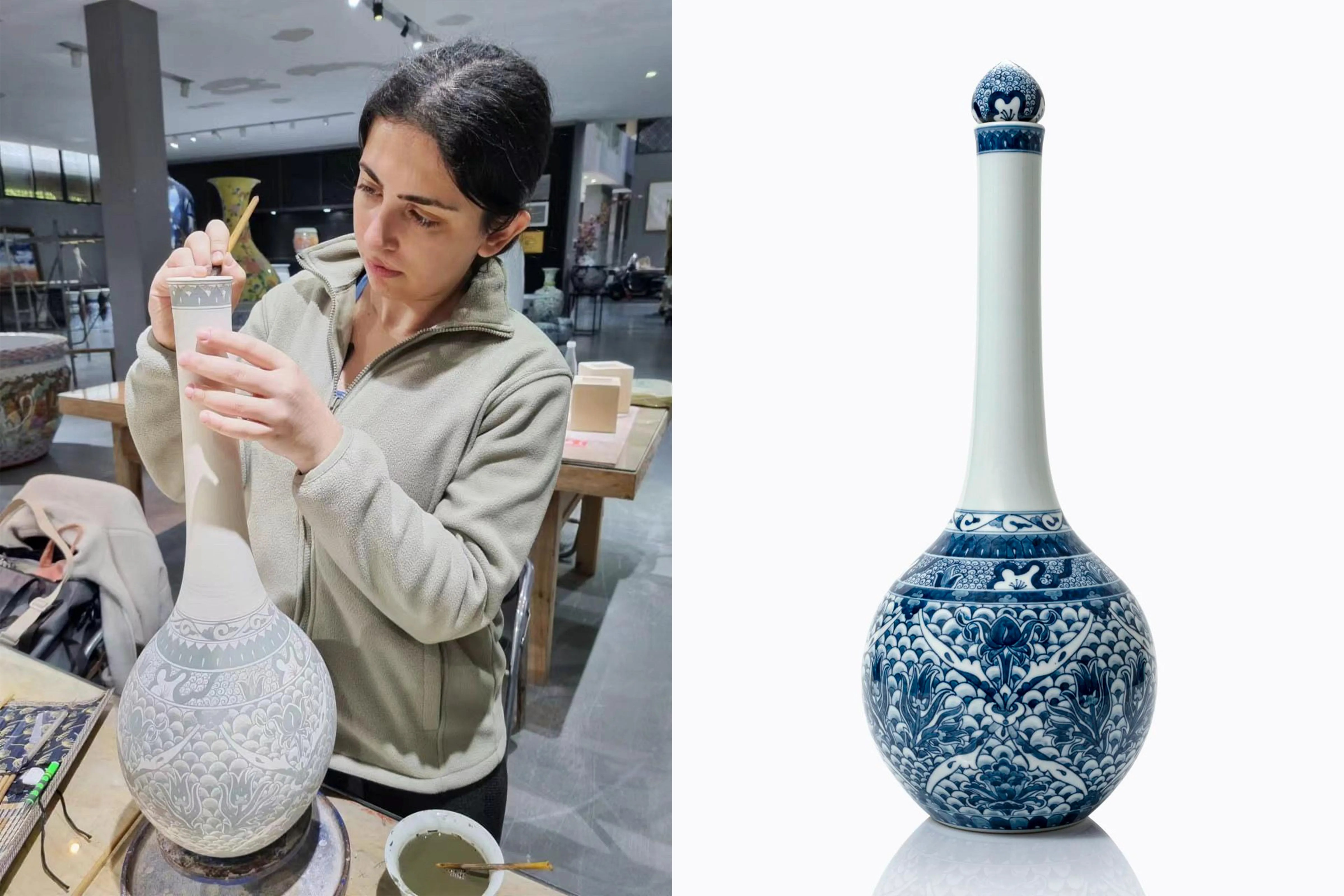
Meet Dilan Atasayar, a ceramic artist based in Jingdezhen, China, originally from Istanbul, Türkiye.
Dilan is deeply passionate about cultural history and traditional craftsmanship. After earning her bachelor’s and master’s degrees in Traditional Turkish Arts with a focus on Tile Art, she is now pursuing a PhD at Jingdezhen Ceramics University in China. Her research delves into the origins of blue-and-white porcelain, its cultural connections, and the shared influences between Turkish and Chinese ceramic traditions. Through her work, Dilan fuses traditional motifs with contemporary design, creating a harmonious dialogue between East and West.
To learn more about Dilan’s journey, please check her works.
In this interview, Dilan reflects on her artistic journey, the impact of cultural heritage on her work, and how living in China has influenced her creative process.
Can you tell us a bit about yourself? Where are you originally from, where are you currently based, and how would you describe your art style?
I was born in Istanbul, Turkiye, back in 1997. I finished my bachelor’s and master’s degrees in the Department of Traditional Turkish Arts, specifically focusing on Tile Art. Right now, I’m pursuing my PhD at Jingdezhen Ceramics University in China. My research dives into the origins of blue and white porcelain in China, its impact on different cultures, and how ceramic art has shaped national identity and design elements.
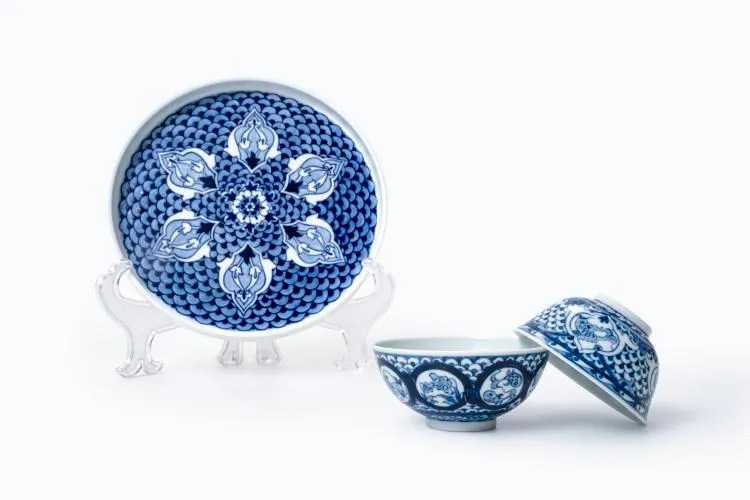
I use patterns and symbols from traditional Turkish culture into my artwork. Right now, being in China, I’m diving into the design similarities and cultural connections between Turkish and Chinese ceramics. This definitely influences my current designs. So, I’d say your recent works beautifully combine Turkish and Chinese artistic styles, especially highlighting that classic blue-and-white look.
Can you walk us through your creative process? Are there specific recurring themes or ideas that you find yourself exploring in your work?
My creative process begins with an appreciation for understanding histories, cultural narrative and the symbolic language of nations-civilization.I love to dig into historical designs, especially those from the Anatolian Seljuks, the Great Seljuks, and the stunning blue and white ceramics from the Ottoman Iznik and Chinese Yuan-Ming dynasties. These pieces really inspire me! My process involves examining original works, exploring their motifs, and grasping their cultural backgrounds to appreciate their beauty and meaning. After that, I channel all that knowledge into crafting my own ceramic designs.
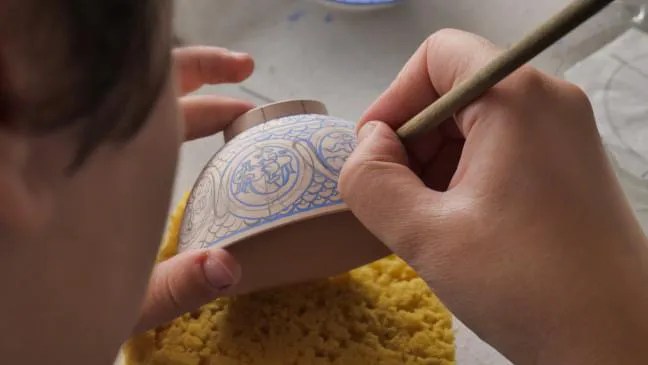
When I get inspired, I turn those influences into my own design style. Sketching is super important to my process — each pattern is carefully drawn by me, mixing classic patterns with my personal twist. I often dive into themes like cultural identity, the flow of ideas across different places, and the common threads of humanity in art traditions.
Another point can be, since I currently live in China, I can say that materiality also plays an important role in your process. I prefer to work with local clays, pigments and glazes from Jingdezhen, connecting my creations to the birthplace of Chinese porcelain.
In summary, my works often emphasizes the idea of dialogue — between past and present, East and West, tradition and innovation.I want my pieces to create cultural connections, providing a space where stories from various times and places can come together in harmony.
How does cultural heritage influence your creative process? What strategies do you use to keep traditional elements relevant in a contemporary context?
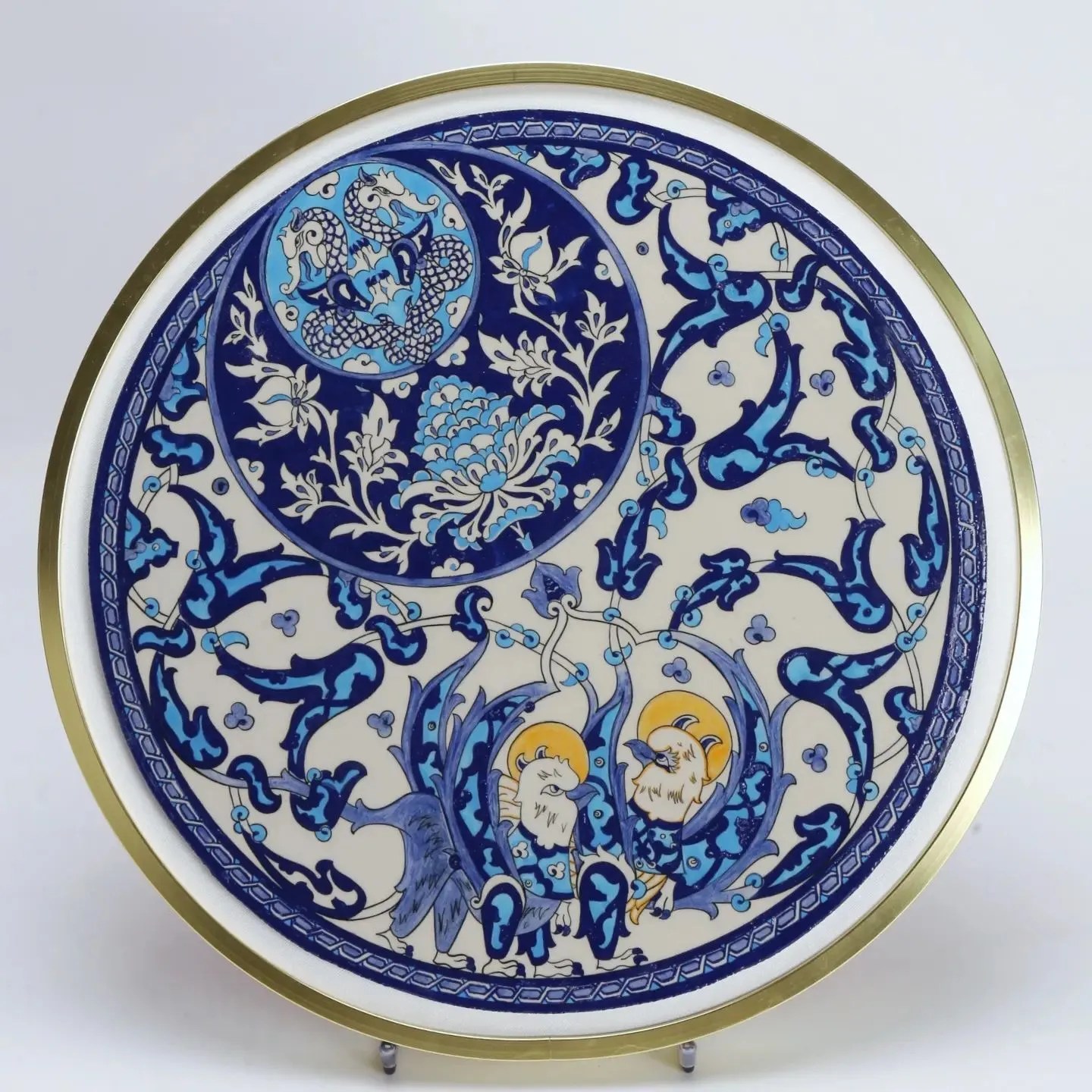
Cultural heritage plays a crucial role in my creative journey, acting as both a base and a wellspring of inspiration. I dive into it with genuine respect and curiosity, seeing traditional art forms as vibrant stories instead of just old artifacts. These elements serve as the foundation of my work, shaped by my unique perspective. For this reason, I see traces of the past and the present as the cornerstones of my creations in today’s language, without separating them from each other. Even though I produce today, I cannot separate my artworks or products ideas from the traces of the past.
In contemporary aspects, I reinterpret my drawings in new, creative ways.. Sometimes I create symbolic pieces that capture the essence of the present, while other times I focus on blending different cultures to create something meaningful that connects them. I also like to highlight symbols from the past that might fade away if we don’t pay attention.
Growing up in Turkiye and now living in China must have brought diverse cultural perspectives to your work. How have these experiences shaped your artistic identity and practice?
Growing up in Turkiye, I was immersed in a rich cultural heritage where art and tradition are deeply intertwined. At this point ceramics, provided a strong foundation for my artistic identity, with their intricate patterns and symbolism, especially nowadays I’m more into the vibrant blue-and-white aesthetics, and cultural relations. This gave me a real love for the stories behind traditional art and a dedication to keeping those tales alive in my your own creations.
Living in China has really enriched my ceramic work in so many ways. Jingdezhen, known as the center of porcelain making, has opened my eyes to hundreds of years of ceramic innovation and the art of blue-and-white porcelain.Being immersed in this rich history has shaped my technical skills, encouraging me to explore and play with materials and methods that are deeply tied to Chinese traditions. Plus, my growing interest in Chinese culture has motivated me to improve my Chinese language skills. Learning about the culture directly from locals or firsthand experiences brings me a lot of joy.
My experiences in both cultures have really influenced my artistic style, making me a link between two rich traditions and the world of ceramics. Turkiye and China have a long history of cultural interaction, especially via the Silk Road, and my art reflects that bond. By mixing Turkish and Chinese designs, shapes, and methods, I’ve developed a distinctive artistic voice that honors both backgrounds while bringing in a modern twist. For example: I love seeing the surprise on Chinese people’s faces when they discover the cultural ties between Turkiye and China.
For instance, I often use pattern design techniques from Turkiye and mix them with Chinese ceramic materials. Sometimes, I even incorporate Chinese motifs into my work. When Chinese people first glance at my designs from a distance, they assume it’s purely Chinese. But as they get closer, they realize there’s a blend of both cultures in my blue and white pieces. Then, they start chatting about the connection between Iznik and Jingdezhen, which really makes me happy because it shows they appreciate and understand or see this cultural link.
This journey has really expanded my view on cultural exchange. It’s not only about blending styles but also about the rich stories, histories, and ideas behind each tradition. My art has turned into a place where these narratives come together, promoting a sense of common humanity and respect for one another. These experiences keep fueling my creativity, shaping my quest to make art that feels both grounded and universally impactful.
Are there particular themes or narratives that you consistently explore in your ceramic and tile designs? What draws you to these stories?
In my ceramic designs, I consistently explore themes of cultural exchange, historical continuity, and shared artistic identity. Another recurring theme is the interplay between tradition and innovation. My works also reflect a deep fascination with symbolism and storytelling.
I’m really into these stories because they have this amazing power to link people from different times and places. To me, art is like a bridge that helps us understand and appreciate each other’s cultures. By weaving these narratives into my work, I’m not just celebrating their beauty; I’m also helping them grow and stay relevant, inspiring a worldwide audience.
 Mediterranean Commune*